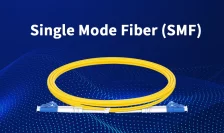
La fibre monomode utilise un cœur de petite taille pour transmettre un seul trajet lumineux, permettant des débits élevés sur de longues distances avec une perte de signal minimale et une faible dispersion.
Les applications des modules optiques 1x9 comprennent l’automatisation industrielle, le transport télécom et la modernisation des réseaux hérités pour des liaisons de données fiables et économiques.
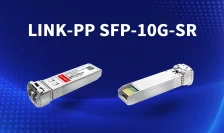
Le module SFP-10G-SR permet des connexions à courte portée rapides et fiables dans les centres de données, les réseaux d’entreprise et les environnements universitaires, en utilisant une fibre multimode.
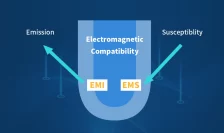
EMC, EMS, EMI expliqués : comprenez comment la compatibilité, la sensibilité et les interférences affectent la fiabilité des dispositifs, leur conformité et leurs performances électroniques.
une cage à fibres optiques (souvent appelée cage SFP), sa fonction principale est de fournir l’interface physique et électrique nécessaire pour connecter un transceiver optique
Un module optique CPO intègre des composants optiques et électroniques afin d’accroître la vitesse, l’efficacité et la bande passante des centres de données tout en réduisant la consommation d’énergie.
Discover what data bandwidth means, how it affects devices, and why it matters in digital communication. Learn how LINK-PP supports high-speed data transfer.
Le taux d’erreurs binaire (BER) mesure les erreurs de données dans les réseaux. Un BER élevé entraîne des vitesses réduites, la perte de fichiers et une mauvaise qualité des appels. Découvrez comment le BER affecte les performances.
Découvrez des analyses détaillées des déploiements FTTx, notamment la FTTH, la FTTB, la FTTC, et bien plus encore. Découvrez comment les modules optiques LINK-PP soutiennent des réseaux fibre fiables.
Learn about Google Cloud Platform (GCP), its architecture, services, and how optical transceivers enable high-performance networking within GCP’s data centers.
Microsoft Azure is a cloud platform offering scalable solutions for businesses. Learn about its architecture, services, and how optical Modules support Azure’s cloud networking.
AWS (Amazon Web Services) powers global cloud computing with scalable services and high-speed data center networks. Learn AWS basics, architecture, and how optical transceivers support AWS connectivity.
Découvrez ce qu’est un commutateur MoR (Middle-of-Rack), comment il se compare aux architectures ToR/EoR, et quels modules SFP+/SFP28/QSFP conviennent le mieux — un guide pratique pour la conception de centres de données.
Le WLAN couvre tous les réseaux locaux sans fil, tandis que le Wi-Fi est un type spécifique de WLAN utilisant des normes définies pour des connexions rapides et fiables.
What Frame Check Sequence (FCS) means, how CRC-32 detects corrupted Ethernet frames, and why FCS errors are commonly associated with cable faults, fiber issues, or optical transceiver problems.
Learn what Dispersion Compensation Fiber (DCF) is, how it reduces chromatic dispersion, where it is used, and why it matters in modern optical networks.
Learn what OEO means in optical communication, how optical-electrical-optical regeneration works, and when it is used in DWDM networks and optical links. Keywords:
Learn what a Fiber Optical Light Source is, how it works, its types, and how to choose the right one for accurate fiber testing and network performance.
Understand what a Digital Communication Analyzer (DCA) is, how it works, and why it is essential for optical module testing, eye diagrams, and signal integrity.
Learn what hyperconverged infrastructure HCI is, how it compares with virtualization and dHCI, and when Nutanix, Sangfor, or SFP-based designs fit best.
Understand SFP+ 40km (10GBASE-ER) modules, including specs, SMF compatibility, and how to choose the right extended-reach optical transceiver for your network.
Découvrez ce qu’est le 40GBASE-ER4, sa portée sur fibre monomode duplex, ses fonctionnalités prises en charge et comment choisir l’optique QSFP+ adaptée.
Subscribe to LINK-PP
newsletter
Don’t miss anything. Get all the latest posts delivered straight to your inbox.