Les émetteurs-récepteurs optiques verts réduisent la consommation d’énergie et les déchets, aidant votre centre de données durable à réduire ses coûts et son empreinte environnementale.
Découvrez comment un ordinateur industriel (IPC) communique de façon fiable avec un automate programmable (PLC) à l’aide de connecteurs RJ45 intégrés LINK-PP, assurant une isolation robuste et une résilience aux interférences électromagnétiques (EMI) dans les réseaux Ethernet industriels.
Construisez un réseau spine-leaf évolutif avec des transceivers optiques à haute densité pour une croissance efficace, une bande passante élevée et une expansion simplifiée du centre de données.
NPO contre CPO : comparez le positionnement des composants optiques, la vitesse des données, la flexibilité des mises à niveau et l’efficacité énergétique selon vos besoins en matière de centre de données.
La réduction de la consommation énergétique des émetteurs-récepteurs optiques améliore le retour sur investissement (ROI) du centre de données en diminuant les coûts énergétiques, en accroissant l’efficacité et en soutenant une croissance durable.
Comparez PROFINET et PROFIBUS, deux protocoles de communication industrielle de premier plan. Découvrez leurs différences, leurs avantages, leurs applications, ainsi que la manière dont les connecteurs LINK-PP RJ45 soutiennent l’automatisation.
Vous approvisionnez des transceivers optiques ? Assurez la fiabilité de votre réseau en vérifiant la compatibilité, les normes de qualité, la réputation du fournisseur et la garantie avant tout achat.
Les modules optiques assurent une diffusion de contenus haute vitesse et fiable dans les réseaux de diffusion de contenu (CDN), permettant un streaming rapide, une faible latence et des services cloud et IA évolutifs.
Découvrez les fondamentaux de PROFIBUS, les types de protocoles, son architecture et ses applications industrielles. Ce guide inclut une terminologie experte ainsi que les connecteurs LINK-PP RJ45 pour les systèmes hybrides.
ESD Protection for electronics is simplified with LINK-PP’s smart factory, offering robust safeguards in Optical Ms, RJ45s, Transformers, and Fiber Optic Cages.
Discover how LINK-PP’s LAN transformers deliver high speed and signal integrity, and certified electrical isolation—ideal for industrial, PoE, and IoT network.
Medical-grade RJ45 connector ensures safe, reliable, and compliant network connections in medical devices, meeting IEC 60601-1 and sterilization standards.
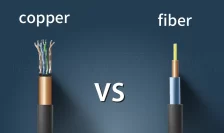
Fiber optic cable offers faster speeds, longer distances, and better reliability than copper cable, making it ideal for high-performance internet and networks.
CWDM vs DWDM: Cost-effective 8-channel metro optics vs high-density 96+ channel long-haul systems. Choose LINK-PP optical transceivers for both WDM solutions.
Cooperation Between LINK-PP and Vietnam Telecom in 2025 boosts Vietnam’s telecom with advanced optical modules, enhancing speed, reliability, and scalability.
Compare PC vs UPC vs APC fiber connectors to choose the best type for your network. Understand differences in return loss, insertion loss, and applications.
What Frame Check Sequence (FCS) means, how CRC-32 detects corrupted Ethernet frames, and why FCS errors are commonly associated with cable faults, fiber issues, or optical transceiver problems.
Discover how optical cross‑connect (OXC) enables all‑optical switching in DWDM/OTN networks, with LINK‑PP SFP modules ensuring seamless integration and superior performance.
Learn what Dispersion Compensation Fiber (DCF) is, how it reduces chromatic dispersion, where it is used, and why it matters in modern optical networks.
Learn what OEO means in optical communication, how optical-electrical-optical regeneration works, and when it is used in DWDM networks and optical links. Keywords:
Discover the LQ‑SW40‑SR4C 40GBASE‑SR module: high-speed, low-power, QSFP+ optics for multimode fibre networks. Perfect for data centres and network upgrades.
Learn what hyperconverged infrastructure HCI is, how it compares with virtualization and dHCI, and when Nutanix, Sangfor, or SFP-based designs fit best.
Découvrez ce qu’est le 40GBASE-ER4, sa portée sur fibre monomode duplex, ses fonctionnalités prises en charge et comment choisir l’optique QSFP+ adaptée.
Understand SFP+ 40km (10GBASE-ER) modules, including specs, SMF compatibility, and how to choose the right extended-reach optical transceiver for your network.
Subscribe to LINK-PP
newsletter
Don’t miss anything. Get all the latest posts delivered straight to your inbox.