Découvrez comment les connecteurs RJ45 évoluent pour répondre aux défis de latence ultra-faible et de débit ultra-élevé posés par la 6G. Découvrez les solutions Ethernet haute fréquence avancées de LINK-PP.
Un système de gestion de réseau surveille, contrôle et protège les équipements réseau, fournissant des alertes en temps réel, l’automatisation et une sécurité réseau renforcée.
Qu’est-ce que la technologie CMOS ? Découvrez les fondamentaux de la technologie complémentaire à oxyde de métal-semiconducteur, son principe de fonctionnement, ses principaux avantages, ainsi que son intégration avec la photonique sur silicium et les transcepteurs optiques.
Fibre Channel over Ethernet (FCoE) enables Fibre Channel storage traffic to run on Ethernet networks, streamlining data center connectivity and reducing costs.
Explore how 6G networks challenge optical transceivers with ultra-high bandwidth demands, and discover advanced solutions like CPO, silicon photonics, and LINK-PP 6G-ready optical modules.
A clear, authoritative guide to 6G networks: what 6G is, IMT-2030 timeline, core technologies (THz, ISAC, AI-native networks), key use cases, and implications for optical modules.
Compare Network Time Protocol (NTP) and Precision Time Protocol (PTP) to choose the right time sync solution for your network’s accuracy and hardware needs.
Découvrez comment la photonique silicium redessine les transceivers optiques avec une bande passante plus élevée, une consommation énergétique plus faible et une intégration avancée pour l'IA, la 5G et les réseaux de centre de données.
Discover how silicon photonics enables high-speed, energy-efficient optical communication by integrating photonics and silicon electronics—applications, advantages, and challenges.
Les connecteurs LINK-PP intégrés RJ45 offrent des magnétiques intégrés, une couche de protection contre l'EMI, un support PoE et des vitesses Ethernet rapides, assurant ainsi un réseau fiable et efficient.
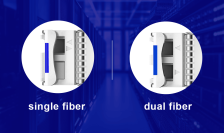
Single fiber transceivers, like the Bidi Transceiver, use one fiber for bidirectional data, while dual fiber transceivers require two fibers for separate TX and RX.
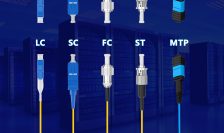
Explore common fiber connector types like SC, LC, ST, FC, and MPO/MTP, their characteristics, and applications in optical transceivers for efficient networks.
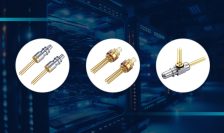
COB, BOX, and TO-CAN packaging impact optical devices by balancing size, cost, and reliability. Learn how COB excels in compact, high-speed applications.
Assurer une performance fiable des transceveurs optiques nécessite des tests réguliers pour des indicateurs tels que le BER, le rapport extinction et la sensibilité du récepteur pour éviter les perturbations du réseau.
Le TOSA, le ROSA et le BOSA sont des composants clés des transcepteurs optiques, permettant la transmission, la réception et la communication bidirectionnelle de données à haut débit dans les réseaux modernes.
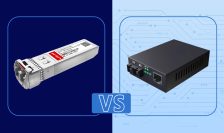
Compare optical transceivers and fiber media converters to understand their roles, advantages, and use cases in modern networking and data transmission.
What Frame Check Sequence (FCS) means, how CRC-32 detects corrupted Ethernet frames, and why FCS errors are commonly associated with cable faults, fiber issues, or optical transceiver problems.
Discover how optical cross‑connect (OXC) enables all‑optical switching in DWDM/OTN networks, with LINK‑PP SFP modules ensuring seamless integration and superior performance.
Learn what Dispersion Compensation Fiber (DCF) is, how it reduces chromatic dispersion, where it is used, and why it matters in modern optical networks.
Learn what OEO means in optical communication, how optical-electrical-optical regeneration works, and when it is used in DWDM networks and optical links. Keywords:
Discover the LQ‑SW40‑SR4C 40GBASE‑SR module: high-speed, low-power, QSFP+ optics for multimode fibre networks. Perfect for data centres and network upgrades.
Learn what hyperconverged infrastructure HCI is, how it compares with virtualization and dHCI, and when Nutanix, Sangfor, or SFP-based designs fit best.
Understand SFP+ 40km (10GBASE-ER) modules, including specs, SMF compatibility, and how to choose the right extended-reach optical transceiver for your network.