Découvrez comment fonctionne la traduction d’adresses réseau (NAT), ses types, ses avantages, ses limites, ainsi que les meilleures pratiques pour les déploiements IPv6 et en entreprise.
Le séparateur FBT offre une solution économique pour diviser les signaux optiques dans les réseaux en fibre, idéal pour les petites installations nécessitant une répartition simple et personnalisable des signaux.
L’adresse IPv4 utilise un format numérique sur 32 bits, tandis qu’IPv6 propose des adresses alphanumériques sur 128 bits, une capacité accrue et une sécurité améliorée pour les réseaux en croissance.
Le réflectomètre optique dans le domaine temporel (OTDR) localise les défauts, mesure les pertes de soudure et garantit la fiabilité des câbles en fibre optique pour une maintenance efficace des réseaux.
La durée moyenne entre pannes (MTBF) indique combien de temps un équipement fonctionne avant de tomber en panne, vous aidant ainsi à planifier la maintenance et à améliorer la fiabilité.
Une adresse IPv4 identifie de façon unique votre appareil sur un réseau, permettant l’accès à Internet et le transfert sécurisé de données entre appareils dans le monde entier.
Découvrez comment les prises magnétiques RJ45 assurent une alimentation stable, des signaux propres et des connexions réseau fiables dans les téléphones VoIP — avec les solutions RJ45 prêtes pour PoE LINK-PP.
Découvrez ce qu’ont de particulier les connecteurs RJ45, leur brochage, leurs types de câblage et la manière dont ils prennent en charge les réseaux Ethernet, PoE et Gigabit. Découvrez les solutions RJ45 de LINK-PP pour une connectivité fiable.
Les connecteurs LINK-PP intégrés RJ45 offrent des magnétiques intégrés, une couche de protection contre l'EMI, un support PoE et des vitesses Ethernet rapides, assurant ainsi un réseau fiable et efficient.
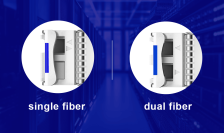
Single fiber transceivers, like the Bidi Transceiver, use one fiber for bidirectional data, while dual fiber transceivers require two fibers for separate TX and RX.
COB, BOX, and TO-CAN packaging impact optical devices by balancing size, cost, and reliability. Learn how COB excels in compact, high-speed applications.
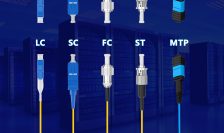
Explore common fiber connector types like SC, LC, ST, FC, and MPO/MTP, their characteristics, and applications in optical transceivers for efficient networks.
Assurer une performance fiable des transceveurs optiques nécessite des tests réguliers pour des indicateurs tels que le BER, le rapport extinction et la sensibilité du récepteur pour éviter les perturbations du réseau.
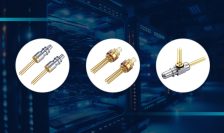
Le TOSA, le ROSA et le BOSA sont des composants clés des transcepteurs optiques, permettant la transmission, la réception et la communication bidirectionnelle de données à haut débit dans les réseaux modernes.
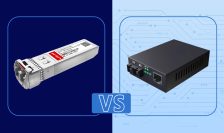
Compare optical transceivers and fiber media converters to understand their roles, advantages, and use cases in modern networking and data transmission.
What Frame Check Sequence (FCS) means, how CRC-32 detects corrupted Ethernet frames, and why FCS errors are commonly associated with cable faults, fiber issues, or optical transceiver problems.
Discover how optical cross‑connect (OXC) enables all‑optical switching in DWDM/OTN networks, with LINK‑PP SFP modules ensuring seamless integration and superior performance.
Learn what Dispersion Compensation Fiber (DCF) is, how it reduces chromatic dispersion, where it is used, and why it matters in modern optical networks.
Learn what OEO means in optical communication, how optical-electrical-optical regeneration works, and when it is used in DWDM networks and optical links. Keywords:
Discover the LQ‑SW40‑SR4C 40GBASE‑SR module: high-speed, low-power, QSFP+ optics for multimode fibre networks. Perfect for data centres and network upgrades.
Learn what hyperconverged infrastructure HCI is, how it compares with virtualization and dHCI, and when Nutanix, Sangfor, or SFP-based designs fit best.
Understand SFP+ 40km (10GBASE-ER) modules, including specs, SMF compatibility, and how to choose the right extended-reach optical transceiver for your network.