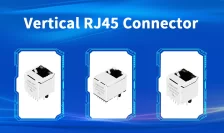
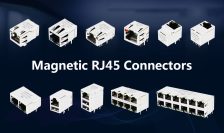
Découvrez les connecteurs RJ45 verticaux LINK-PP. Économisez de l’espace sur la carte grâce à des conceptions à entrée supérieure offrant des magnétiques intégrés, un blindage et des performances Ethernet fiables.
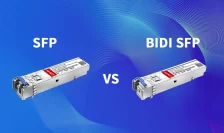
Comparez SFP et SFP BiDi : différences clés, exigences en matière de fibre, compatibilité et cas d’usage recommandés pour vous aider à choisir le module SFP adapté à votre réseau.
Les IFR (interférences de fréquence radio) sont des signaux radio indésirables qui perturbent les dispositifs électroniques, provoquant des problèmes de performance et de communication.
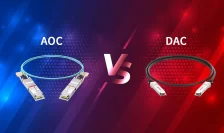
Différences entre DAC et AOC : les DAC conviennent aux liaisons courtes et à faible coût ; les AOC excellent dans les réseaux à longue distance et sensibles aux interférences électromagnétiques (EMI). Choisissez le câble adapté à vos besoins.
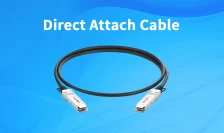
Learn what Direct Attach Cables are, how they work, their advantages over fiber optics & AOCs, common types, and why they dominate short-reach data center links
Découvrez comment les connecteurs RJ45 intégrés LINK-PP améliorent l’intégrité du signal grâce à l’isolation, à la suppression du bruit et à l’adaptation de l’impédance.
Ce que signifie la certification RoHS, quelles substances sont restreintes et pourquoi la conformité est essentielle pour les fabricants et importateurs de produits électroniques.
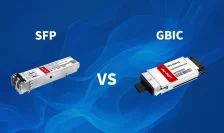
SFP contre GBIC : comparez taille, débit, compatibilité et coût pour choisir le module le mieux adapté à votre réseau de 2025. Découvrez pourquoi le SFP est privilégié pour les nouvelles installations.
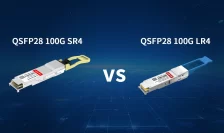
Comparez les transceivers QSFP28 100G SR4 et LR4 pour choisir le bon transceiver 100G adapté à votre réseau, en fonction de la distance, du type de fibre, des connecteurs et du budget.
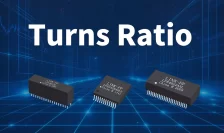
Le rapport de transformation dans les transformateurs LAN définit la relation entre les enroulements, généralement 1:1, garantissant l’intégrité du signal, la stabilité de la tension et la conformité aux normes Ethernet.
Les connecteurs LINK-PP intégrés RJ45 offrent des magnétiques intégrés, une couche de protection contre l'EMI, un support PoE et des vitesses Ethernet rapides, assurant ainsi un réseau fiable et efficient.
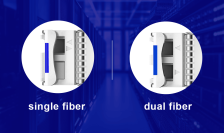
Single fiber transceivers, like the Bidi Transceiver, use one fiber for bidirectional data, while dual fiber transceivers require two fibers for separate TX and RX.
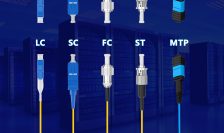
Explore common fiber connector types like SC, LC, ST, FC, and MPO/MTP, their characteristics, and applications in optical transceivers for efficient networks.
L’emballage COB, BOX et TO-CAN influence les dispositifs optiques en équilibrant taille, coût et fiabilité. Découvrez comment le COB se distingue dans les applications compactes et à haute vitesse.
Assurer une performance fiable des transceveurs optiques nécessite des tests réguliers pour des indicateurs tels que le BER, le rapport extinction et la sensibilité du récepteur pour éviter les perturbations du réseau.
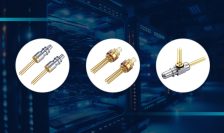
Le TOSA, le ROSA et le BOSA sont des composants clés des transcepteurs optiques, permettant la transmission, la réception et la communication bidirectionnelle de données à haut débit dans les réseaux modernes.
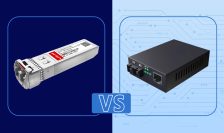
Comparez les transcepteurs optiques et les convertisseurs de support fibre afin de comprendre leurs rôles, leurs avantages et leurs cas d’utilisation dans les réseaux modernes et la transmission de données.
Explorez les technologies des photodiodes PIN et APD, leurs principes de fonctionnement, leurs différences fondamentales ainsi que leurs applications dans les communications optiques.
What Frame Check Sequence (FCS) means, how CRC-32 detects corrupted Ethernet frames, and why FCS errors are commonly associated with cable faults, fiber issues, or optical transceiver problems.
Discover how optical cross‑connect (OXC) enables all‑optical switching in DWDM/OTN networks, with LINK‑PP SFP modules ensuring seamless integration and superior performance.
Learn what Dispersion Compensation Fiber (DCF) is, how it reduces chromatic dispersion, where it is used, and why it matters in modern optical networks.
Learn what OEO means in optical communication, how optical-electrical-optical regeneration works, and when it is used in DWDM networks and optical links. Keywords:
Discover the LQ‑SW40‑SR4C 40GBASE‑SR module: high-speed, low-power, QSFP+ optics for multimode fibre networks. Perfect for data centres and network upgrades.
Learn what hyperconverged infrastructure HCI is, how it compares with virtualization and dHCI, and when Nutanix, Sangfor, or SFP-based designs fit best.
Understand SFP+ 40km (10GBASE-ER) modules, including specs, SMF compatibility, and how to choose the right extended-reach optical transceiver for your network.