What are SFP ports on a switch? Learn how SFP ports support fiber and Ethernet connections, how they compare with RJ45 and SFP+, and which module you need.
What Frame Check Sequence (FCS) means, how CRC-32 detects corrupted Ethernet frames, and why FCS errors are commonly associated with cable faults, fiber issues, or optical transceiver problems.
Discover the LQ‑SW40‑SR4C 40GBASE‑SR module: high-speed, low-power, QSFP+ optics for multimode fibre networks. Perfect for data centres and network upgrades.
Discover how optical cross‑connect (OXC) enables all‑optical switching in DWDM/OTN networks, with LINK‑PP SFP modules ensuring seamless integration and superior performance.
What are SFP ports on a switch? Learn how SFP ports support fiber and Ethernet connections, how they compare with RJ45 and SFP+, and which module you need.
An SGMII SFP transceiver enables fast Ethernet connections over copper or fiber, supporting flexible speeds and device compatibility in modern networks.
Qu’est-ce que le LWDM ? Le LWDM est une technologie LAN WDM utilisant plusieurs longueurs d’onde pour augmenter la bande passante et l’efficacité dans les réseaux locaux et les centres de données.
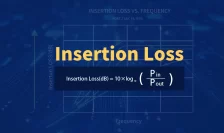
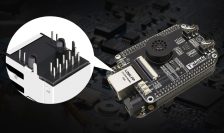
Les pertes d’insertion dans les connecteurs RJ45 affaiblissent la puissance du signal, ce qui nuit à la fiabilité du réseau. Découvrez comment minimiser les pertes d’insertion pour obtenir des performances optimales.
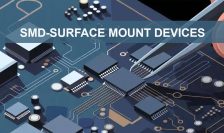
Un composant monté en surface (SMD) est un composant électronique compact monté directement sur une carte de circuit imprimé (PCB), permettant des dispositifs électroniques modernes plus petits, plus rapides et plus efficaces.
Découvrez ce qu’est un laser DFB (laser à rétroaction distribuée), son principe de fonctionnement, sa structure et ses principales différences avec les lasers FP et VCSEL.
Un amplificateur à fibre dopée à l’erbium (EDFA) renforce les signaux optiques dans les réseaux en fibre, permettant des communications sur de longues distances avec des pertes minimales et une grande efficacité.
Le CPRI (Interface radio publique commune) relie les unités de baseband aux unités radio distantes, permettant des communications haut débit et à faible latence dans les réseaux sans fil.
La CEM (compatibilité électromagnétique) garantit le fonctionnement sûr et fiable des appareils dans des environnements partagés, en réduisant au minimum les interférences et en respectant les normes de conformité.
L’interférence électromagnétique (IEM) perturbe les appareils électroniques en introduisant une énergie électromagnétique indésirable, provoquant des dysfonctionnements et des problèmes de performance.
La technologie à trou traversant (THT) consiste à insérer les broches des composants dans des trous percés dans la carte de circuit imprimé (PCB) puis à les souder, assurant ainsi des connexions robustes pour des applications exigeant une haute fiabilité.
La SMT (technologie de montage en surface) est une méthode permettant de monter directement des composants électroniques sur la surface des cartes de circuit imprimé (PCB), ce qui permet des conceptions compactes et une fabrication efficace.
Understand SFP+ 40km (10GBASE-ER) modules, including specs, SMF compatibility, and how to choose the right extended-reach optical transceiver for your network.
Complete guide to GLC-SX-MMD 1000BASE-SX SFP module: specs, MMF vs SMF, DOM features, compatibility, and best alternatives for cost-effective deployment.
Learn how compatible transceivers work and how to ensure switch compatibility. Avoid SFP errors, vendor locks, and choose the right module confidently.
Learn how a 1000BASE-T SFP transceiver module works with Category 5 copper wire, including compatibility limits, heat issues, and real-world deployment tips.
Learn the SFP28 standard, including its 25G capabilities, SFP28 vs. SFP+ differences, fiber and copper options, and how to choose the right 25G solution.
Subscribe to LINK-PP
newsletter
Don’t miss anything. Get all the latest posts delivered straight to your inbox.