Teknologi Wi-Fi memungkinkan akses internet nirkabel untuk perangkat seperti telepon, laptop, dan tablet menggunakan gelombang radio untuk konektivitas cepat tanpa kabel.
Pelajari apa itu switch ToR (Top-of-Rack), cara kerja arsitektur ToR, dan mengapa ini merupakan model jaringan pilihan di pusat data modern. Termasuk manfaat, kasus penggunaan, serta solusi transceiver optik kompatibel dari LINK-PP.
Temukan Equalizer Umpan Balik Keputusan (DFE), teknik nonlinear yang penting untuk meminimalkan ISI. Pelajari cara DFE meningkatkan bit BER pada transceiver optik dan tautan data jarak jauh.
Pelajari apa itu FFE (Equalizer Umpan Maju), cara kerja equalisasi transmisi, dan mengapa FFE penting bagi modul optik berkecepatan tinggi serta integritas sinyal SerDes.
WLAN mencakup semua jaringan area lokal nirkabel, sedangkan Wi-Fi adalah jenis WLAN tertentu yang menggunakan standar baku untuk koneksi cepat dan andal.
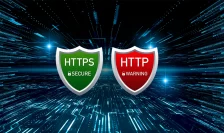
HTTP vs HTTPS: HTTPS mengenkripsi data untuk transmisi aman, sedangkan HTTP membiarkan informasi terbuka. Pilih HTTPS untuk privasi, kepercayaan, dan kepatuhan.
Jaringan area lokal nirkabel (WLAN) menghubungkan perangkat seperti laptop dan ponsel menggunakan gelombang radio, memungkinkan jaringan fleksibel tanpa kabel di rumah, sekolah, atau kantor.
Pelajari cara Continuous-Time Linear Equalizer (CTLE) secara signifikan meningkatkan integritas sinyal dalam modul SFP, secara efektif melawan kehilangan saluran dan memaksimalkan kinerja tautan.
Discover how LINK-PP RJ45 Magjack improves QoS stability by enhancing signal integrity, reducing EMI, and ensuring reliable transmission for modern networks.
Interoperability in networking means devices and systems from different vendors can connect, share data, and work together seamlessly using common standards.
Explore the roles of LSRs and LERs in MPLS networks. Learn their functions, differences, and how LINK-PP products support high-speed, reliable label-switched paths.
Discover the differences between P2P, P2MP, MP2P, and MP2MP network architectures. Learn how LINK-PP optical transceivers enable efficient, high-speed connectivity.
Keguruan dalam optik menyebabkan blur gambar dan kesalahan data dalam sistem optik. Pelajari jenis-jenis, dampak, penyebab, dan cara mengukur serta mengurangi keguruan.
Discover the differences between silicon photonic modulators and traditional optical modulators, their working principles, advantages, and role in next-generation optical transceivers.
Explore how RJ45 connectors evolve to meet 6G’s ultra-low latency and ultra-high-speed communication challenges. Discover LINK-PP’s advanced high-frequency Ethernet solutions.
What Frame Check Sequence (FCS) means, how CRC-32 detects corrupted Ethernet frames, and why FCS errors are commonly associated with cable faults, fiber issues, or optical transceiver problems.
Discover how optical cross‑connect (OXC) enables all‑optical switching in DWDM/OTN networks, with LINK‑PP SFP modules ensuring seamless integration and superior performance.
Learn what Dispersion Compensation Fiber (DCF) is, how it reduces chromatic dispersion, where it is used, and why it matters in modern optical networks.
Learn what OEO means in optical communication, how optical-electrical-optical regeneration works, and when it is used in DWDM networks and optical links. Keywords:
Discover the LQ‑SW40‑SR4C 40GBASE‑SR module: high-speed, low-power, QSFP+ optics for multimode fibre networks. Perfect for data centres and network upgrades.
Learn what hyperconverged infrastructure HCI is, how it compares with virtualization and dHCI, and when Nutanix, Sangfor, or SFP-based designs fit best.
Understand SFP+ 40km (10GBASE-ER) modules, including specs, SMF compatibility, and how to choose the right extended-reach optical transceiver for your network.