Welcome to the LINK-PP Community

More Posts

100G Coherent DWDM Solution Overview: High data rates, spectral efficiency, and scalability for telecom, data centers, and enterprise networks.
Compare Wi-Fi 5 ONU vs Wi-Fi 6 ONU for 2025. Discover faster speeds, better security, and improved efficiency with Wi-Fi 6 for modern multi-device networks.
Compare xPON WDM solutions for FTTH and FTTB networks. Discover their bandwidth, cost, and scalability to choose the best fit for your deployment needs.
Filter FWDM combines or separates light wavelengths in optical networks, optimizing bandwidth, reducing costs, and enabling high-speed data transmission.
ODN in PON networks connects OLTs to ONUs, ensuring efficient optical signal transmission, scalability, and cost-effective high-speed connectivity.
xPON WDM combines PON and WDM technologies to enhance optical networks, enabling scalable, high-speed data transmission over a single fiber.
Gain basic knowledge of LAN WDM, a technology optimizing data transmission in LANs with high-speed, low-latency connectivity for modern networks in 2025.
Understand the essential role of ROADM in cloud networks, enabling flexibility, efficiency, security, and scalability for modern cloud infrastructure.
Understand how Wavelength Selective Switches (WSS) enable dynamic wavelength routing in ROADMs, enhancing flexibility, scalability, and bandwidth efficiency.
10G PON delivers up to 10 Gbps speeds using advanced fiber optics, ensuring reliable, high-speed internet for homes, businesses, and modern applications.
Discover how LINK-PP RJ45 Magjack improves QoS stability by enhancing signal integrity, reducing EMI, and ensuring reliable transmission for modern networks.
Interoperability in networking means devices and systems from different vendors can connect, share data, and work together seamlessly using common standards.
Network visualization uses graphs and diagrams to reveal connections, patterns, and relationships in complex data sets.
Solve common network problems in data center networks, including outages, slow speeds, and configuration errors, with practical troubleshooting tips.
Explore the roles of LSRs and LERs in MPLS networks. Learn their functions, differences, and how LINK-PP products support high-speed, reliable label-switched paths.
Discover the differences between P2P, P2MP, MP2P, and MP2MP network architectures. Learn how LINK-PP optical transceivers enable efficient, high-speed connectivity.
Reduce jitter in optical networks by optimizing design, using QoS, upgrading hardware, and monitoring performance for stable, low-latency connections.
Jitter in optics causes image blur and data errors in optical systems. Learn about its types, effects, causes, and ways to measure and reduce jitter.
Explore how RJ45 connectors evolve to meet 6G’s ultra-low latency and ultra-high-speed communication challenges. Discover LINK-PP’s advanced high-frequency Ethernet solutions.
Discover the differences between silicon photonic modulators and traditional optical modulators, their working principles, advantages, and role in next-generation optical transceivers.
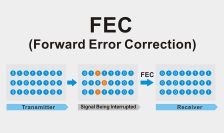
FEC (Forward Error Correction) in optical communication adds redundancy to detect and correct errors, ensuring reliable, high-speed data transmission.
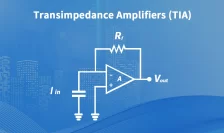
Transimpedance Amplifiers (TIAs) convert sensor current to voltage using an op-amp and feedback resistor, enabling accurate signal measurement.
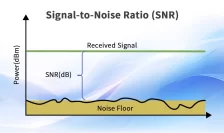
SNR, or signal-to-noise ratio, measures signal strength versus noise. High SNR means clearer audio, images, and data for better overall signal quality.
Learn what an Ethernet PHY is, how it connects MAC to network medium, core functions, signal types, and how it pairs with LINK‑PP Magnetics for Ethernet design.
RFI Radio Frequency Interference is unwanted radio signals that disrupt electronic devices, causing performance issues and communication problems.
Turns ratio in LAN transformers defines the winding relationship, typically 1:1, ensuring signal integrity, voltage stability, and Ethernet compliance.
What RoHS certification means, which substances are restricted, and why compliance matters for electronic manufacturers and importers.
PAM4 is a four-level pulse amplitude modulation method that transmits two bits per symbol, doubling data rates for high-speed networks.
Non-Return-to-Zero (NRZ) is a digital encoding method using two voltage levels for binary data, offering simplicity and efficiency in digital communication.
Open circuit inductance (OCL) in Ethernet transformers affects signal integrity and EMI suppression; Higher OCL prevents data loss.
Discover the LQ‑SW40‑SR4C 40GBASE‑SR module: high-speed, low-power, QSFP+ optics for multimode fibre networks. Perfect for data centres and network upgrades.
Learn what hyperconverged infrastructure HCI is, how it compares with virtualization and dHCI, and when Nutanix, Sangfor, or SFP-based designs fit best.
What an FC SFP module is, how it differs from Ethernet SFPs, which speeds and fiber types it supports, and how to choose the right one.
Learn the real difference between 1000base-lh and 1000base-lx, including wavelength, fiber compatibility, Cisco naming, and when to use each.
Learn what a Gigabit SFP transceiver is, compare 1000BASE-SX, LX, and T options, and solve common compatibility and setup issues with confidence.
Learn what a 10/100/1000BASE-T SFP is, how RJ45 copper SFP modules work, compatibility issues, heat concerns, and best use cases in networks.
Compare CFP4 vs. QSFP28 by size, power, density, and deployment fit. Learn which 100G module is better for data centers, telecom, and upgrades.
Explore the Netgear AGM731F datasheet with specs, LC connector, OM1/OM3/OM4 distances, compatibility, power use, and operating limits.
Understand SFP+ 40km (10GBASE-ER) modules, including specs, SMF compatibility, and how to choose the right extended-reach optical transceiver for your network.

Learn QSFP+ 40GBASE-LR4 specs, distance limits, compatibility tips, and buying advice. Avoid common deployment issues with this expert guide.

Add Your Heading Text Here