Descubra como os módulos ópticos de 1310 nm desempenham papéis essenciais em centros de dados, redes metropolitanas e ligações empresariais. Conheça casos de uso e explore os módulos confiáveis da LINK-PP.
Explore a diferença entre DDMI (interface) e DDM (diagnósticos) em transceptores ópticos. Saiba como cada um suporta o monitoramento em tempo real e como os produtos LINK-PP os aproveitam.
O Remote Direct Memory Access aumenta a velocidade de transferência de dados, reduz a latência e diminui o uso da CPU para computação de alto desempenho e aplicações em nuvem.
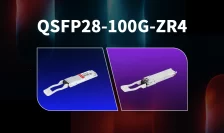
O transceptor QSFP28-100G-ZR4 permite a transmissão de dados a 100 Gbps em distâncias de até 80 km usando fibra monomodo, ideal para conexões de rede de longa distância e alta velocidade.
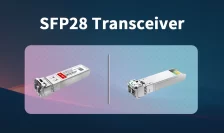
Os transceptores SFP28 LS-MM8532-S1C oferecem velocidades de 25G/32G, ampla compatibilidade, baixo consumo de energia e economia de custos — ideais para preparar seu data center para o futuro.
Solucione problemas em transceptores ópticos de forma eficiente com o Monitoramento Digital de Diagnóstico. Monitore dados em tempo real para detectar falhas precocemente e manter a confiabilidade da rede.
Discover how DDMI—the Digital Diagnostic Monitoring Interface—gives real-time insights into optical transceivers. Learn its key metrics, benefits, and how LINK-PP modules support it.
Uma Storage Area Network (SAN) conecta servidores ao armazenamento compartilhado, oferecendo acesso rápido, confiável e centralizado a dados para empresas com grandes necessidades de dados.
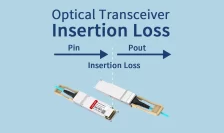
Learn what optical transceiver insertion loss is, how it affects link budgets, BER, and FEC. Includes LC/MPO numbers, control tips, and LINK-PP insights.
A modulação BPSK utiliza dois estados de fase para transmitir dados digitais de forma confiável, oferecendo forte resistência ao ruído e projeto de sistema simples.
Explore os componentes essenciais e os tipos de servidores, incluindo infraestruturas em rack, blade e hiperconvergentes. Saiba como os servidores impulsionam os sistemas de TI modernos e apoiam empresas em todo o mundo.
Compare os transceptores CFP e QSFP28 para decidir qual é o mais adequado à sua rede. O CFP se destaca na transmissão de longa distância, enquanto o QSFP28 oferece alta densidade de portas.
Fibre Channel é um protocolo de alta velocidade e sem perdas para transferência confiável de dados entre servidores e armazenamento em redes de área de armazenamento (SANs) e data centers.
Desmistificando os transceptores ópticos de 100G! Explore as diferenças entre os fatores de forma CFP, CFP2 e CFP4, suas aplicações e por que escolher o certo — como os módulos confiáveis da LINK-PP — é crucial para o desempenho da sua rede.
Explore the IEEE 802.3ba standard—defining both 40GbE & 100GbE—its technical design and applications, plus how LINK-PP’s 40G QSFP+ modules align perfectly with this high-speed Ethernet evolution.
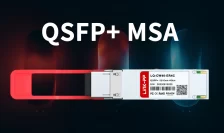
Liberte o poder do QSFP+ MSA: um padrão multi-fornecedor para transceptores de 40G que garante interoperabilidade perfeita. Descubra as opções 40G QSFP+ da LINK-PP, como SR4, LR4 e FR4.
O transceptor QSFP+ 40G ER4 é um dispositivo de 40G para links de longa distância e alta velocidade, com alcance de até 40 km, ideal para data centers e redes corporativas que utilizam fibra monomodo.
O QSFP+ 40G LR4 permite transferência de dados de alta velocidade e longo alcance para data centers, empresas e operadoras de telecomunicações, apoiando o crescimento confiável de redes de 40G em 2025.
O QSFP+ 40G SR4 fornece desempenho confiável de 40 Gbps, conectividade de curto alcance e forte compatibilidade para centros de dados e redes empresariais.
What Frame Check Sequence (FCS) means, how CRC-32 detects corrupted Ethernet frames, and why FCS errors are commonly associated with cable faults, fiber issues, or optical transceiver problems.
Discover how optical cross‑connect (OXC) enables all‑optical switching in DWDM/OTN networks, with LINK‑PP SFP modules ensuring seamless integration and superior performance.
Learn what Dispersion Compensation Fiber (DCF) is, how it reduces chromatic dispersion, where it is used, and why it matters in modern optical networks.
Learn what OEO means in optical communication, how optical-electrical-optical regeneration works, and when it is used in DWDM networks and optical links. Keywords:
Discover the LQ‑SW40‑SR4C 40GBASE‑SR module: high-speed, low-power, QSFP+ optics for multimode fibre networks. Perfect for data centres and network upgrades.
Learn what hyperconverged infrastructure HCI is, how it compares with virtualization and dHCI, and when Nutanix, Sangfor, or SFP-based designs fit best.
Understand SFP+ 40km (10GBASE-ER) modules, including specs, SMF compatibility, and how to choose the right extended-reach optical transceiver for your network.