A comparação entre VRF e VLAN explica as principais diferenças, casos de utilização e benefícios em termos de segurança de cada método de segmentação de rede, ajudando-o a escolher a solução adequada.
O Machine Learning (ML) permite que computadores aprendam com dados, identifiquem padrões e façam previsões, impulsionando ferramentas como assistentes por voz e sistemas de recomendação.
Maximizar a eficiência da rede com dicas práticas da LS-Explore e implementações recomendadas para o módulo SFP+ BiDi LINK-PP LS-BL332710-60C de 10G (60 km). Saiba quando optar por BiDi, como validar ligações e quais itens verificar nas listas de verificação de implementação.
Descubra como a TSN (Time-Sensitive Networking) proporciona entrega de dados determinística, com baixa latência e confiável às redes Ethernet industriais 4.0 e automotivas.
O SSL criptografa os dados entre o seu navegador e os websites, garantindo privacidade e segurança. Os certificados SSL verificam a identidade do site e protegem informações sensíveis.
O Protocolo de Datagrama de Usuário permite a transferência rápida e sem conexão de dados para aplicações em tempo real, como streaming, jogos e DNS, priorizando a velocidade em vez da confiabilidade.
Descubra como os transceptores ópticos impulsionam as redes inteligentes da Indústria 4.0 — permitindo conectividade de alta velocidade, baixa latência e confiável nas fábricas modernas com módulos de 1 G, 10 G e 25 G certificados para uso industrial.
Explore the LINK-PP LS-SM3125-10I industrial-grade SFP28 transceiver, delivering 25 Gb/s over 10 km single-mode fibre at 1310 nm, with DOM and wide-temperature support for backbone and 5G front-haul.
SSH vs SSL: SSH protege acesso remoto e transferências de arquivos, enquanto SSL protege a comunicação web. Escolha o protocolo certo para suas necessidades de segurança.
OSI vs TCP/IP: OSI is ideal for learning network concepts, while TCP/IP is used for real-world networking. Compare their layers, uses, and main differences.
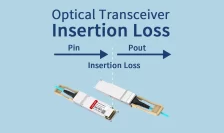
Learn what optical transceiver insertion loss is, how it affects link budgets, BER, and FEC. Includes LC/MPO numbers, control tips, and LINK-PP insights.
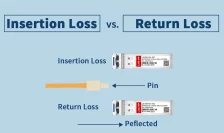
Learn the difference between insertion loss and return loss in optical transceivers, their impact on performance, measurement methods, and LINK-PP product guidance.
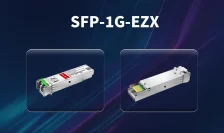
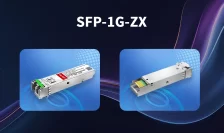
Compare sfp-1g-zx vs sfp-1g-ezx for long-distance fiber. Find out which SFP suits your network’s range, from 80 km to 120 km, and ensure reliable gigabit links.
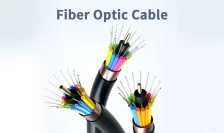
A fiber optic cable uses thin glass or plastic fibers to transmit data as light pulses, enabling fast, clear, and reliable communication over long distances.
Discover what CMIS is and why it’s vital for managing modern optical modules (QSFP-DD, OSFP, etc.). Learn how LINK-PP’s future-ready modules comply with CMIS .
What Frame Check Sequence (FCS) means, how CRC-32 detects corrupted Ethernet frames, and why FCS errors are commonly associated with cable faults, fiber issues, or optical transceiver problems.
Discover how optical cross‑connect (OXC) enables all‑optical switching in DWDM/OTN networks, with LINK‑PP SFP modules ensuring seamless integration and superior performance.
Learn what Dispersion Compensation Fiber (DCF) is, how it reduces chromatic dispersion, where it is used, and why it matters in modern optical networks.
Learn what OEO means in optical communication, how optical-electrical-optical regeneration works, and when it is used in DWDM networks and optical links. Keywords:
Discover the LQ‑SW40‑SR4C 40GBASE‑SR module: high-speed, low-power, QSFP+ optics for multimode fibre networks. Perfect for data centres and network upgrades.
Learn what hyperconverged infrastructure HCI is, how it compares with virtualization and dHCI, and when Nutanix, Sangfor, or SFP-based designs fit best.
Understand SFP+ 40km (10GBASE-ER) modules, including specs, SMF compatibility, and how to choose the right extended-reach optical transceiver for your network.