Compare módulos ópticos monomodo e multimodo pelo tamanho do núcleo, distância, velocidade e custo. Escolha o módulo adequado para as necessidades da sua rede.
Os transceptores ópticos convertem sinais elétricos em luz para transferência rápida de dados em telecomunicações, centros de dados e redes 5G. Aprenda seus tipos e usos.
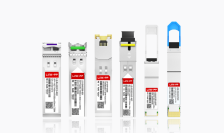
Os módulos ópticos atuam como os "tradutores" das redes ópticas de fibra, permitindo a conversão sem empecilhos entre sinais elétricos (E/O) e ópticos (O/E).
Optical transceiver modules convert electrical signals to light, enabling high-speed data transmission in fiber optic networks for modern communication.
Os módulos transceptores SFP+ permitem transferência de dados em alta velocidade, comunicação contínua e conectividade flexível em centros de dados, apoiando redes eficientes.
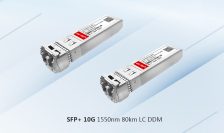
O transceptor LINK-PP 10G SFP+ LS-SM5510-80C oferece velocidade de 10,7 Gbps, alcance de 80 km, baixo consumo de energia e compatibilidade com os principais dispositivos de rede.
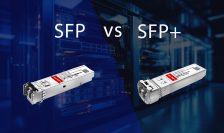
Os transceptores SFP e SFP+ diferem em velocidade, compatibilidade e uso. O SFP suporta até 1 Gbps, enquanto o SFP+ alcança até 10 Gbps para redes mais rápidas.
Escolha o melhor transceptor LINK-PP SFP considerando tipo de cabo, distância, velocidade e compatibilidade para um desempenho de rede confiável e eficiente.
SFP+ 10G transceivers deliver high-speed data transfer, low latency, energy efficiency, and compatibility with various devices for modern network setups.
Os transceptores 100G SFP-DD aumentam o desempenho de redes de alta densidade com velocidades rápidas de 100 Gbps, design compacto, eficiência energética e transmissão de dados a longa distância de até 40 km.
Technical hurdles of 1.6T optical transceivers include signal integrity, power, and cooling, driving a connector revolution for reliable high-speed networks.
Learn what the SFF-8402 specification is, how it defines the SFP28 interface standard, and why it is essential for 25G / 28G optical module interoperability and system reliability.
Explore how Smart Industry 4.0 Networks enable intelligent manufacturing through high-speed Ethernet, fibre optics, IIoT, and edge computing integration.
Semiconductor material properties determine optical module speed, efficiency, and reliability by affecting bandgap, carrier mobility, and thermal conductivity.
Explore how RJ45 Magjack connectors enable robust Ethernet communication between PLCs and SCADA hosts in industrial automation, ensuring signal integrity and system reliability.
Learn how optical modules enhance PLC system performance, enabling high-speed, long-distance communication and reliable industrial automation networks.
Discover how LINK-PP 25G SFP28 optical modules enhance hyperscale data centers with high bandwidth, low latency, and energy efficiency. Learn key benefits and use cases.
What Frame Check Sequence (FCS) means, how CRC-32 detects corrupted Ethernet frames, and why FCS errors are commonly associated with cable faults, fiber issues, or optical transceiver problems.
Discover how optical cross‑connect (OXC) enables all‑optical switching in DWDM/OTN networks, with LINK‑PP SFP modules ensuring seamless integration and superior performance.
Learn what Dispersion Compensation Fiber (DCF) is, how it reduces chromatic dispersion, where it is used, and why it matters in modern optical networks.
Learn what OEO means in optical communication, how optical-electrical-optical regeneration works, and when it is used in DWDM networks and optical links. Keywords:
Discover the LQ‑SW40‑SR4C 40GBASE‑SR module: high-speed, low-power, QSFP+ optics for multimode fibre networks. Perfect for data centres and network upgrades.
Learn what hyperconverged infrastructure HCI is, how it compares with virtualization and dHCI, and when Nutanix, Sangfor, or SFP-based designs fit best.
Understand SFP+ 40km (10GBASE-ER) modules, including specs, SMF compatibility, and how to choose the right extended-reach optical transceiver for your network.