Aprenda como funciona o NAT (Tradução de Endereços de Rede), seus tipos, benefícios, limitações e melhores práticas para implantações em IPv6 e em ambientes empresariais.
O divisor FBT oferece uma forma econômica de dividir sinais ópticos em redes de fibra, ideal para instalações pequenas que necessitam de distribuição simples e personalizável de sinais.
O endereço IPv4 utiliza um formato numérico de 32 bits, enquanto o IPv6 oferece endereços alfanuméricos de 128 bits, maior capacidade e segurança aprimorada para redes em crescimento.
O refletômetro óptico no domínio do tempo localiza falhas, mede perdas em emendas e garante a confiabilidade dos cabos de fibra óptica para uma manutenção eficiente de rede.
Aprenda o que é a FCC, como as Partes 15 e 68 da FCC afetam dispositivos de rede e como os conectores magnéticos RJ45 LINK-PP suportam a conformidade da FCC com relação à interferência eletromagnética (EMI).
Saiba como os conectores magnéticos RJ45 possibilitam alimentação estável, sinais limpos e conexões de rede confiáveis em telefones VoIP — com soluções RJ45 prontas para PoE da LINK-PP.
Learn what RJ45 connectors are, their pinout, wiring types, and how they support Ethernet, PoE, and Gigabit networks. Discover LINK-PP’s RJ45 solutions for reliable connectivity.
Os conectores RJ45 integrados LINK-PP oferecem magnéticos embutidos, blindagem contra EMI, suporte a PoE e velocidades rápidas de Ethernet, garantindo redes confiáveis e eficientes.
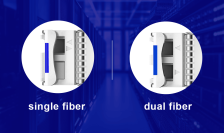
Transceptores de fibra única, como o Transceptor BiDi, usam uma única fibra para dados bidirecionais, enquanto transceptores de fibra dupla exigem duas fibras para TX e RX separados.
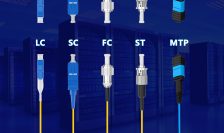
Explore tipos comuns de conectores de fibra, como SC, LC, ST, FC e MPO/MTP, suas características e aplicações em transceptores ópticos para redes eficientes.
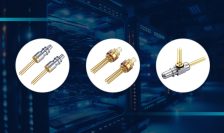
As embalagens COB, BOX e TO-CAN impactam os dispositivos ópticos ao equilibrar tamanho, custo e confiabilidade. Saiba como o COB se destaca em aplicações compactas e de alta velocidade.
Garanta o desempenho confiável do transceptor óptico com testes regulares para métricas como BER, razão de extinção e sensibilidade do receptor para evitar interrupções na rede.
TOSA, ROSA e BOSA são componentes essenciais em transceptores ópticos, permitindo transmissão de dados de alta velocidade, recepção e comunicação bidirecional em redes modernas.
Compreenda a faixa de temperatura de operação dos transceptores ópticos, incluindo as classes comercial (0 °C–70 °C), estendida (−20 °C–85 °C) e industrial (−40 °C–85 °C).
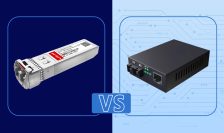
Compare transceptores ópticos e conversores de mídia de fibra para compreender seus papéis, vantagens e casos de uso em redes modernas e transmissão de dados.
O padrão MSA padroniza projetos de transceptores ópticos, garantindo compatibilidade, reduzindo custos e impulsionando a inovação em equipamentos de rede.
What Frame Check Sequence (FCS) means, how CRC-32 detects corrupted Ethernet frames, and why FCS errors are commonly associated with cable faults, fiber issues, or optical transceiver problems.
Discover how optical cross‑connect (OXC) enables all‑optical switching in DWDM/OTN networks, with LINK‑PP SFP modules ensuring seamless integration and superior performance.
Learn what Dispersion Compensation Fiber (DCF) is, how it reduces chromatic dispersion, where it is used, and why it matters in modern optical networks.
Learn what OEO means in optical communication, how optical-electrical-optical regeneration works, and when it is used in DWDM networks and optical links. Keywords:
Discover the LQ‑SW40‑SR4C 40GBASE‑SR module: high-speed, low-power, QSFP+ optics for multimode fibre networks. Perfect for data centres and network upgrades.
Learn what hyperconverged infrastructure HCI is, how it compares with virtualization and dHCI, and when Nutanix, Sangfor, or SFP-based designs fit best.
Understand SFP+ 40km (10GBASE-ER) modules, including specs, SMF compatibility, and how to choose the right extended-reach optical transceiver for your network.