Banda larga é o próprio serviço de internet, enquanto Wi-Fi é a tecnologia sem fio que o distribui. Saiba quais são suas diferenças e como os transceptores ópticos da LINK-PP melhoram o desempenho da banda larga.
Descubra como os transceptores ópticos impulsionam redes de banda larga ao permitir dados de fibra de alta velocidade, baixa latência e infraestrutura escalável com soluções da LINK-PP.
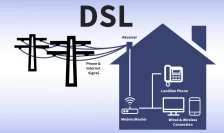
Saiba o que é DSL (Linha Digital de Assinante), como funciona e qual é a diferença entre ADSL, VDSL e outros tipos. Descubra as vantagens, limitações e o futuro da tecnologia DSL no acesso à banda larga.
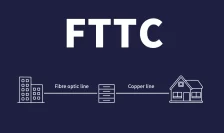
Saiba o que é FTTC (Fibra até à Calçada), como funciona, suas vantagens e desvantagens, e como se compara com FTTH e DSL. Descubra aplicações, necessidades de equipamento e tendências futuras no acesso à banda larga.
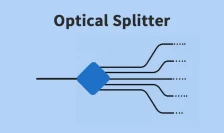
explica como os divisores ópticos permitem a FTTH, os seus tipos (FBT vs. PLC), as principais proporções e como se integram com os módulos ópticos LINK-PP para uma rede perfeita.
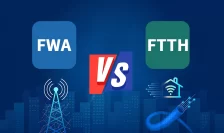
Compare as tecnologias de banda larga FTTH e FWA. Saiba quais são as diferenças em termos de velocidade, custo, implantação e casos de utilização. Descubra como os módulos SFP da LINK-PP suportam ambas as redes.
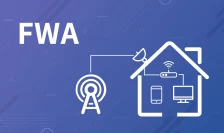
Descubra o que é FWA, como fornece banda larga através de redes sem fio 4G/5G e por que é relevante para a conectividade. Saiba quais são os seus benefícios, desafios e como os módulos SFP da LINK-PP suportam implementações fiáveis de FWA.
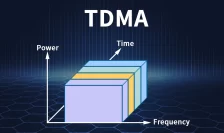
O Acesso Múltiplo por Divisão de Tempo permite que múltiplos usuários compartilhem um único canal atribuindo-lhes intervalos de tempo, garantindo chamadas nítidas e dados eficientes nas redes modernas.
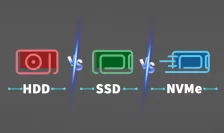
Explore the differences between HDD, SSD, and NVMe drives. Learn about speed, cost, and best use cases, and see how LINK-PP connectivity solutions support storage systems.
Understand the key differences between XLPPI and XLAUI electrical interfaces, how they work in 40G/100G Ethernet systems, and which interface modern QSFP modules use.
Discover the advantages of XLPPI electrical interface in high-speed networking. Learn how it reduces latency, lowers power consumption, and future-proofs modern data transmission.
Learn about Google Cloud Platform (GCP), its architecture, services, and how optical transceivers enable high-performance networking within GCP’s data centers.
Microsoft Azure is a cloud platform offering scalable solutions for businesses. Learn about its architecture, services, and how optical Modules support Azure’s cloud networking.
Multi-Gig Ethernet boosts network speeds to 2.5, 5, or 10Gbps using existing cables, making upgrades easy for faster streaming, gaming, and file transfers.
AWS (Amazon Web Services) powers global cloud computing with scalable services and high-speed data center networks. Learn AWS basics, architecture, and how optical transceivers support AWS connectivity.
Learn what EoR (End-of-Row) switches are, how the architecture works, its pros and cons, EoR vs ToR differences, deployment best practices, and recommended optical modules.
What Frame Check Sequence (FCS) means, how CRC-32 detects corrupted Ethernet frames, and why FCS errors are commonly associated with cable faults, fiber issues, or optical transceiver problems.
Discover how optical cross‑connect (OXC) enables all‑optical switching in DWDM/OTN networks, with LINK‑PP SFP modules ensuring seamless integration and superior performance.
Learn what Dispersion Compensation Fiber (DCF) is, how it reduces chromatic dispersion, where it is used, and why it matters in modern optical networks.
Learn what OEO means in optical communication, how optical-electrical-optical regeneration works, and when it is used in DWDM networks and optical links. Keywords:
Discover the LQ‑SW40‑SR4C 40GBASE‑SR module: high-speed, low-power, QSFP+ optics for multimode fibre networks. Perfect for data centres and network upgrades.
Learn what hyperconverged infrastructure HCI is, how it compares with virtualization and dHCI, and when Nutanix, Sangfor, or SFP-based designs fit best.
Understand SFP+ 40km (10GBASE-ER) modules, including specs, SMF compatibility, and how to choose the right extended-reach optical transceiver for your network.