FBT splitter offers a cost-effective way to split optical signals in fiber networks, ideal for small setups needing simple, customizable signal distribution.
IPv4 Address uses a 32-bit numeric format, while IPv6 offers 128-bit alphanumeric addresses, more capacity, and improved security for growing networks.
Saiba como os conectores magnéticos RJ45 possibilitam alimentação estável, sinais limpos e conexões de rede confiáveis em telefones VoIP — com soluções RJ45 prontas para PoE da LINK-PP.
Learn what RJ45 connectors are, their pinout, wiring types, and how they support Ethernet, PoE, and Gigabit networks. Discover LINK-PP’s RJ45 solutions for reliable connectivity.
Discover what a MoR switch (Middle-of-Rack switch) is, how MoR compares to ToR/EoR, and which SFP+/SFP28/QSFP modules work best — a practical guide for datacenter design.
Saiba o que é um switch ToR (Top-of-Rack), como funciona a arquitetura ToR e por que ela é o modelo de rede preferido em data centers modernos. Inclui benefícios, casos de uso e soluções compatíveis de transceptores ópticos da LINK-PP.
WLAN abrange todas as redes locais sem fio, enquanto Wi-Fi é um tipo específico de WLAN que utiliza padrões definidos para conexões rápidas e confiáveis.
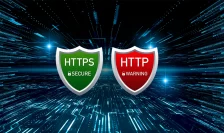
HTTP vs HTTPS: HTTPS criptografa os dados para transmissão segura, enquanto HTTP deixa as informações expostas. Escolha HTTPS para privacidade, confiança e conformidade.
Compare os transceivers 100G LR4, CWDM4 e PSM4 para encontrar o melhor transceiver 100G para a sua rede com base na distância, custo e requisitos de cabeamento.
Descubra o que é um backplane, como os canais de backplane suportam Ethernet de alta velocidade 40G/100G, principais padrões e desafios de projeto. Saiba como os conectores LINK-PP RJ45 aprimoram o desempenho do backplane.
Conheça o padrão IEEE 802.3bj para Ethernet 100G em backplane e interconexões por cabo de cobre. Explore PAM4, FEC, PHYs KP4/KR4/CR4 e como os módulos LINK-PP suportam redes de alta velocidade.
Descubra o papel do Gearbox nos transceptores ópticos modernos. Saiba como ele permite o alinhamento de canais, conversão de taxa e divisão (breakout) para redes de 50G, 100G e 200G.
Saiba o que o IEEE 802.3cd define para Ethernet 50G, 100G e 200G. Explore a tecnologia PAM4, os principais PMDs, casos de uso de implantação e transceptores ópticos LINK-PP adequados.
What Frame Check Sequence (FCS) means, how CRC-32 detects corrupted Ethernet frames, and why FCS errors are commonly associated with cable faults, fiber issues, or optical transceiver problems.
Discover how optical cross‑connect (OXC) enables all‑optical switching in DWDM/OTN networks, with LINK‑PP SFP modules ensuring seamless integration and superior performance.
Learn what Dispersion Compensation Fiber (DCF) is, how it reduces chromatic dispersion, where it is used, and why it matters in modern optical networks.
Learn what OEO means in optical communication, how optical-electrical-optical regeneration works, and when it is used in DWDM networks and optical links. Keywords:
Discover the LQ‑SW40‑SR4C 40GBASE‑SR module: high-speed, low-power, QSFP+ optics for multimode fibre networks. Perfect for data centres and network upgrades.
Learn what hyperconverged infrastructure HCI is, how it compares with virtualization and dHCI, and when Nutanix, Sangfor, or SFP-based designs fit best.
Understand SFP+ 40km (10GBASE-ER) modules, including specs, SMF compatibility, and how to choose the right extended-reach optical transceiver for your network.