Discover how LINK-PP’s LAN transformers deliver high speed and signal integrity, and certified electrical isolation—ideal for industrial, PoE, and IoT network.
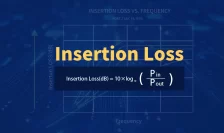
Insertion loss in RJ45 connectors weakens signal strength, impacting network reliability. Learn how to minimize insertion loss for optimal performance.
Medical-grade RJ45 connector ensures safe, reliable, and compliant network connections in medical devices, meeting IEC 60601-1 and sterilization standards.
A Surface-Mount Device (SMD) is a compact electronic component mounted directly on a PCB, enabling smaller, faster, and more efficient modern electronics.
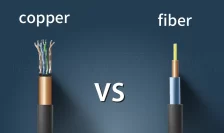
Fiber optic cable offers faster speeds, longer distances, and better reliability than copper cable, making it ideal for high-performance internet and networks.
Understand the key differences between XLPPI and XLAUI electrical interfaces, how they work in 40G/100G Ethernet systems, and which interface modern QSFP modules use.
Discover the advantages of XLPPI electrical interface in high-speed networking. Learn how it reduces latency, lowers power consumption, and future-proofs modern data transmission.
Learn about Google Cloud Platform (GCP), its architecture, services, and how optical transceivers enable high-performance networking within GCP’s data centers.
Microsoft Azure is a cloud platform offering scalable solutions for businesses. Learn about its architecture, services, and how optical Modules support Azure’s cloud networking.
AWS (Amazon Web Services) powers global cloud computing with scalable services and high-speed data center networks. Learn AWS basics, architecture, and how optical transceivers support AWS connectivity.
Learn what EoR (End-of-Row) switches are, how the architecture works, its pros and cons, EoR vs ToR differences, deployment best practices, and recommended optical modules.
Discover what a MoR switch (Middle-of-Rack switch) is, how MoR compares to ToR/EoR, and which SFP+/SFP28/QSFP modules work best — a practical guide for datacenter design.
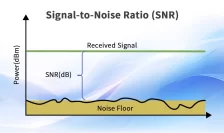
SNR, or signal-to-noise ratio, measures signal strength versus noise. High SNR means clearer audio, images, and data for better overall signal quality.
Learn what an Ethernet PHY is, how it connects MAC to network medium, core functions, signal types, and how it pairs with LINK‑PP Magnetics for Ethernet design.
Turns ratio in LAN transformers defines the winding relationship, typically 1:1, ensuring signal integrity, voltage stability, and Ethernet compliance.
Non-Return-to-Zero (NRZ) is a digital encoding method using two voltage levels for binary data, offering simplicity and efficiency in digital communication.
Discover the LQ‑SW40‑SR4C 40GBASE‑SR module: high-speed, low-power, QSFP+ optics for multimode fibre networks. Perfect for data centres and network upgrades.
Learn what hyperconverged infrastructure HCI is, how it compares with virtualization and dHCI, and when Nutanix, Sangfor, or SFP-based designs fit best.
Understand SFP+ 40km (10GBASE-ER) modules, including specs, SMF compatibility, and how to choose the right extended-reach optical transceiver for your network.