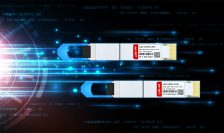
The LINK-PP LQD-CW400-LR4C 400G QSFP-DD LR4 Transceiver offers 10km range, 400Gbps speed, and energy efficiency, ideal for data centers and enterprise networks.
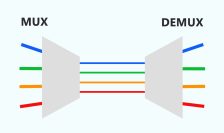
Wavelength Division Multiplexing (WDM) uses optical transceiver modules to send multiple data streams through a single fiber, boosting bandwidth and efficiency.
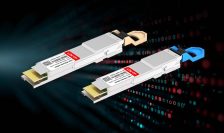
QSFP-DD Optical Transceivers deliver up to 800Gbps speeds, offering high bandwidth, energy efficiency, and compatibility for modern networks and data centers.
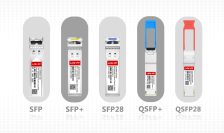
Compare SFP, SFP+, SFP28, QSFP+, and QSFP28 optical transceivers. Learn how form factors affect speed, compatibility, and performance in modern networks.
About LINK-PP: A global leader in magnetic components, offering high-quality RJ45 Connectors, LAN Transformers, and Optical Transceivers for reliable networks.
The Receiver Optical Sub-Assembly (ROSA) is a critical optoelectronic component in Optical Tranceivers, responsible for converting incoming optical signals into
Learn how optical pulses transmit high-speed data in fiber networks. Explore principles, applications, and why LINK-PP optical transceivers deliver cleaner, more reliable pulses.
Unlock high-speed industrial automation with EtherCAT. Learn how EtherCAT achieves sub-microsecond synchronization, its principles, and why it is critical for modern motion control and smart factories.
Data center virtualization uses software to create virtual servers, storage, and networks, improving efficiency, reducing costs, and boosting flexibility.
A fiber optic coupler splits or combines light signals in optical networks, improving data flow, reliability, and network flexibility for various applications.
Discover the Decision Feedback Equalizer (DFE), the nonlinear technique essential for minimizing ISI. Learn how DFE improves bit BER in optics transceivers and long-haul data links.
Learn what FFE (Feed-Forward Equalizer) is, how transmit equalization works, and why FFE is essential for high-speed optical modules and SerDes signal integrity.
A wireless LAN (WLAN) connects devices like laptops and phones using radio waves, enabling flexible, cable-free networking in homes, schools, or offices.
Learn how the Continuous-Time Linear Equalizer (CTLE) dramatically improves signal integrity in SFP modules, effectively combating channel loss and maximizing link performance.
Understand TDCEQ, the critical PAM4 transmitter quality metric for modern optical modules. Learn how tdecq measures vertical eye closure and affects 50/100/400g module performance and compliance.
exploring cloud migration and its benefits, strategies, best practices, also delve into the essential hardware, like optical modules, that make it all possible.
Learn what the EtherCAT Slave Controller (ESC) is and how it processes real-time frames, manages FMMU mapping, and enables high-speed industrial automation.
Discover the LQ‑SW40‑SR4C 40GBASE‑SR module: high-speed, low-power, QSFP+ optics for multimode fibre networks. Perfect for data centres and network upgrades.
Learn what hyperconverged infrastructure HCI is, how it compares with virtualization and dHCI, and when Nutanix, Sangfor, or SFP-based designs fit best.
Understand SFP+ 40km (10GBASE-ER) modules, including specs, SMF compatibility, and how to choose the right extended-reach optical transceiver for your network.