What are SFP ports on a switch? Learn how SFP ports support fiber and Ethernet connections, how they compare with RJ45 and SFP+, and which module you need.
What Frame Check Sequence (FCS) means, how CRC-32 detects corrupted Ethernet frames, and why FCS errors are commonly associated with cable faults, fiber issues, or optical transceiver problems.
Discover the LQ‑SW40‑SR4C 40GBASE‑SR module: high-speed, low-power, QSFP+ optics for multimode fibre networks. Perfect for data centres and network upgrades.
Discover the key electrical, mechanical, and environmental specs of integrated RJ45 connectors to select the right solution for your Ethernet applications.
Understand the role of 1x9 transceivers in fiber optic networks, their cost-effectiveness, compatibility with legacy systems, and reliable data transmission.
Compare XFP and SFP+ transceivers: XFP offers long-distance, high-speed performance, while SFP+ is compact, energy-efficient, and ideal for short-range tasks.
Power Over Ethernet (PoE) combines power and data delivery via a single cable, simplifying installations for devices like IP cameras, VoIP phones, and IoT systems.
Quality certifications like ISO 9001:2015, RoHS, and FCC ensure optical transceivers meet strict standards for reliability, compliance, and performance.
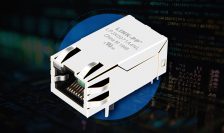
An RJ45 with magnetics integrates transformers and chokes to enhance signal quality, suppress EMI, and simplify designs. Ideal for Magnetic RJ45 Jack use.
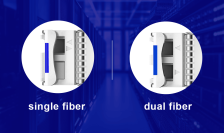
Single fiber transceivers, like the Bidi Transceiver, use one fiber for bidirectional data, while dual fiber transceivers require two fibers for separate TX and RX.
COB, BOX, and TO-CAN packaging impact optical devices by balancing size, cost, and reliability. Learn how COB excels in compact, high-speed applications.
Optical transceivers enable high-speed, reliable data transfer in submarine cables, powering global connectivity and meeting growing bandwidth demands underwater.
Understand the differences between FTTH and FTTB. Learn how LINK-PP’s optical transceivers support both fiber access architectures for reliable connectivity.
Wave Soldering vs. Reflow Soldering: Compare processes, applications, costs, and best uses for PCB assembly to choose the right method for your project.
Explore detailed insights into FTTx deployments including FTTH, FTTB, FTTC, and more. Learn how LINK-PP’s optical modules support reliable fiber networks.
5G backhaul links cell sites to core networks, enabling high-speed, low-latency 5G services. Strong backhaul is vital for 2025’s data and device growth.
RJ45 connector with magnetics boosts network switch performance by improving signal integrity, reducing EMI, and enabling reliable Power over Ethernet.
What Frame Check Sequence (FCS) means, how CRC-32 detects corrupted Ethernet frames, and why FCS errors are commonly associated with cable faults, fiber issues, or optical transceiver problems.
Discover how optical cross‑connect (OXC) enables all‑optical switching in DWDM/OTN networks, with LINK‑PP SFP modules ensuring seamless integration and superior performance.
Learn what Dispersion Compensation Fiber (DCF) is, how it reduces chromatic dispersion, where it is used, and why it matters in modern optical networks.
Learn what OEO means in optical communication, how optical-electrical-optical regeneration works, and when it is used in DWDM networks and optical links. Keywords:
Complete guide to GLC-SX-MMD 1000BASE-SX SFP module: specs, MMF vs SMF, DOM features, compatibility, and best alternatives for cost-effective deployment.
Learn how compatible transceivers work and how to ensure switch compatibility. Avoid SFP errors, vendor locks, and choose the right module confidently.
Learn how a 1000BASE-T SFP transceiver module works with Category 5 copper wire, including compatibility limits, heat issues, and real-world deployment tips.
Learn the SFP28 standard, including its 25G capabilities, SFP28 vs. SFP+ differences, fiber and copper options, and how to choose the right 25G solution.
Subscribe to LINK-PP
newsletter
Don’t miss anything. Get all the latest posts delivered straight to your inbox.