Learn what the SFP standard really means, including specifications, compatibility rules, and real-world limitations. Avoid costly mistakes when choosing SFP modules.
Learn the SFP28 standard, including its 25G capabilities, SFP28 vs. SFP+ differences, fiber and copper options, and how to choose the right 25G solution.
Learn how a 1000BASE-T SFP transceiver module works with Category 5 copper wire, including compatibility limits, heat issues, and real-world deployment tips.
Learn how to clean an SFP transceiver properly to prevent signal loss, reduce errors, and extend module lifespan using industry-approved tools and methods.
Understand SFP form-factor, SFP vs SFP+ differences, compatibility rules, and real-world deployment insights to choose the right transceiver for your network.
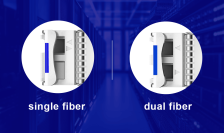
Single fiber transceivers, like the Bidi Transceiver, use one fiber for bidirectional data, while dual fiber transceivers require two fibers for separate TX and RX.
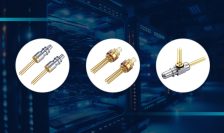
COB, BOX, and TO-CAN packaging impact optical devices by balancing size, cost, and reliability. Learn how COB excels in compact, high-speed applications.
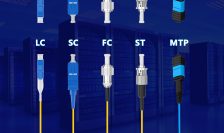
Explore common fiber connector types like SC, LC, ST, FC, and MPO/MTP, their characteristics, and applications in optical transceivers for efficient networks.
Ensure reliable optical transceiver performance with regular tests for metrics like BER, extinction ratio, and receiver sensitivity to avoid network disruptions.
TOSA, ROSA, and BOSA are key components in optical transceivers, enabling high-speed data transmission, reception, and bidirectional communication in modern networks.
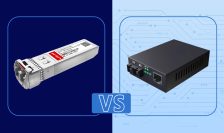
Compare optical transceivers and fiber media converters to understand their roles, advantages, and use cases in modern networking and data transmission.
Understand the operating temperature range of optical transceivers, including commercial (0°C-70°C), extended (-20°C-85°C), and industrial (-40°C-85°C) grades.
What Frame Check Sequence (FCS) means, how CRC-32 detects corrupted Ethernet frames, and why FCS errors are commonly associated with cable faults, fiber issues, or optical transceiver problems.
Discover how optical cross‑connect (OXC) enables all‑optical switching in DWDM/OTN networks, with LINK‑PP SFP modules ensuring seamless integration and superior performance.
Learn what Dispersion Compensation Fiber (DCF) is, how it reduces chromatic dispersion, where it is used, and why it matters in modern optical networks.
Learn what OEO means in optical communication, how optical-electrical-optical regeneration works, and when it is used in DWDM networks and optical links. Keywords:
Learn the main applications of 1550nm optical modules in backbone, metro, and enterprise networks. Discover LINK-PP transceivers designed for long-distance fiber links.
LS-MM8532-S1C SFP28 Transceivers offer 25G/32G speeds, broad compatibility, low power use, and cost savings—ideal for future-proofing your data center.
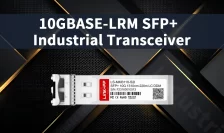
10GBASE-LRM Industrial Transceiver Supports 10.3Gbps, 220m MMF reach, industrial temperature (-40~85°C), and full compatibility with Cisco, Arista, Dell, H3C.
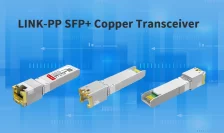
Discover the LINK-PP 10GBase-T Copper SFP+ Transceiver. Supporting 10Gbps over Cat6a/7 cables up to 80m. Compatible with Cisco, Dell, H3C, Juniper, and Arista.
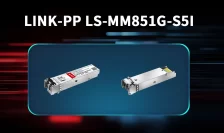
Discover how the LINK-PP LS-MM851G-S5I 1000BASE-SX transceiver offers a 100% compatible, high-performance, and cost-effective solution to replace GLC-SX-MMD.
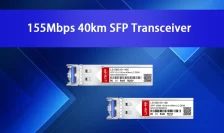
Review of the LINK-PP LS-SM3101-40C SFP 155Mbps 40km SMF Optical Transceiver Module, covering features, compatibility, diagnostics, and value for networks.