What are SFP ports on a switch? Learn how SFP ports support fiber and Ethernet connections, how they compare with RJ45 and SFP+, and which module you need.
What Frame Check Sequence (FCS) means, how CRC-32 detects corrupted Ethernet frames, and why FCS errors are commonly associated with cable faults, fiber issues, or optical transceiver problems.
Discover the LQ‑SW40‑SR4C 40GBASE‑SR module: high-speed, low-power, QSFP+ optics for multimode fibre networks. Perfect for data centres and network upgrades.
Discover what Integrated Circuits (ICs) are, how they work, and their role in electronics. Learn about IC types, applications, and how LINK-PP networking products complement ICs.
Discover how optical transceivers power broadband networks by enabling high-speed fiber data, low latency, and scalable infrastructure with LINK-PP solutions.
Broadband is the internet service itself, while WiFi is the wireless technology that distributes it. Learn their differences and how LINK-PP’s optical transceivers enhance broadband performance.
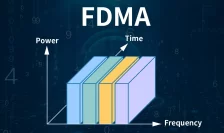
Frequency Division Multiple Access assigns each user a unique frequency band, enabling clear, simultaneous communication in phones, radios, and satellites.
Optical Distribution Network ensures fast, reliable FTTH by linking providers to homes with scalable, passive fiber, supporting high-speed broadband delivery.
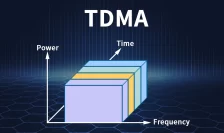
Time Division Multiple Access allows multiple users to share one channel by assigning time slots, ensuring clear calls and efficient data in modern networks.
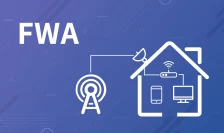
Discover what FWA is, how it delivers broadband using 4G/5G wireless networks, and why it matters for connectivity. Learn its benefits, challenges, and how LINK-PP SFP modules support reliable FWA deployments.
Đi sâu vào tiêu chuẩn IEEE 802.3bs — nền tảng cho Ethernet 200G và 400G hiện đại. Khám phá các thông số kỹ thuật, điều chế PAM4 và cách công nghệ này thúc đẩy các trung tâm dữ liệu quy mô lớn nhờ bộ thu phát quang.
Tìm hiểu IEEE 802.3bm là gì và cách nó xác định các giao diện PHY chính cho Ethernet 40G và 100G. Khám phá các công nghệ SR4, LR4, CR4 và lý do tiêu chuẩn này làm nền tảng cho các trung tâm dữ liệu hiện đại.
Quang học mở và việc tách rời trong mạng trung tâm dữ liệu giúp cắt giảm chi phí, tăng tính linh hoạt và cải thiện hiệu năng, đồng thời giảm sự phụ thuộc vào nhà cung cấp duy nhất cũng như mức tiêu thụ năng lượng.
Các bài kiểm tra lão hóa và đốt nóng trước (burn-in) đảm bảo độ tin cậy của bộ thu phát quang bằng cách phát hiện sớm các lỗi, cải thiện hiệu suất và kéo dài tuổi thọ mô-đun.
Quang học cắm vào mang lại khả năng nâng cấp linh hoạt, trong khi quang học tích hợp trên bo mạch cung cấp tốc độ cao hơn và mức độ tích hợp cao hơn. So sánh cả hai giải pháp để lựa chọn phù hợp với nhu cầu trung tâm dữ liệu của bạn.
Tìm hiểu cách TX Fault và RX LOS ảnh hưởng đến bộ thu phát quang. Hướng dẫn này giải thích chức năng của chúng, các nguyên nhân phổ biến và các bước khắc phục sự cố thực tế.
Tìm hiểu cách kết nối các mô-đun SFP với bộ chuyển mạch hoặc bộ chuyển đổi truyền thông của bạn bằng cách kiểm tra tính tương thích, tốc độ, loại sợi quang, bước sóng và khoảng cách. Một hướng dẫn rõ ràng và thực tiễn.
Learn the difference between MTTR and MTBF, how they impact system reliability, and how LINK-PP industrial connectors and SFP/SFP+ modules help improve network uptime.
What Frame Check Sequence (FCS) means, how CRC-32 detects corrupted Ethernet frames, and why FCS errors are commonly associated with cable faults, fiber issues, or optical transceiver problems.
Discover how optical cross‑connect (OXC) enables all‑optical switching in DWDM/OTN networks, with LINK‑PP SFP modules ensuring seamless integration and superior performance.
Learn what Dispersion Compensation Fiber (DCF) is, how it reduces chromatic dispersion, where it is used, and why it matters in modern optical networks.
Learn what OEO means in optical communication, how optical-electrical-optical regeneration works, and when it is used in DWDM networks and optical links. Keywords:
Discover the LQ‑SW40‑SR4C 40GBASE‑SR module: high-speed, low-power, QSFP+ optics for multimode fibre networks. Perfect for data centres and network upgrades.
Learn what hyperconverged infrastructure HCI is, how it compares with virtualization and dHCI, and when Nutanix, Sangfor, or SFP-based designs fit best.