MUX und DEMUX optimieren die Datenübertragung, indem sie Signale kombinieren und aufteilen, Kabel reduzieren und die Netzwerkeffizienz sowie Zuverlässigkeit verbessern.
Erfahren Sie, was das PMA (Physical Medium Attachment) ist, wie es Seriellisierung und Clock Recovery handhabt, und warum es für moderne Hochgeschwindigkeitsoptiktransceiver essentiell ist.
Physical Medium Dependent (PMD) definiert die optischen und elektrischen Regeln eines PHY – Wellenlänge, Leistung, Reichweite und Testpunkte. Verstehen Sie PMD-Spezifikationen und wie sie bei der Auswahl von Transceivern helfen.
Erfahren Sie, was die PCS (Physical Coding Sublayer) ist, wie sie zuverlässiger Ethernet-Übertragung ermöglicht und warum sie für Hochgeschwindigkeitsoptiktransceiver und Netzwerkdesign wichtig ist.
Erfahren Sie, wie PCS, PMA und PMD innerhalb der Ethernet-PHY-Schicht zusammenarbeiten, um eine zuverlässige Hochgeschwindigkeitsdatenübertragung über Glasfaser- und Kupfernetzwerke zu ermöglichen.
Nutzen Sie die Hochgeschwindigkeits-Industrieautomatisierung mit EtherCAT. Erfahren Sie, wie EtherCAT eine Synchronisation im Submikrosekundenbereich erreicht, welche Prinzipien dahinterstehen und warum sie für moderne Antriebssteuerung und intelligente Fabriken entscheidend ist.
Ein cloudbasiertes Netzwerk ermöglicht die Fernsteuerung von Geräten über ein Web-Dashboard und bietet einfache Verwaltung, automatische Updates sowie hohe Sicherheit.
Vergleichen Sie die Funktionen von Glasfaser-Verteilern und Kupplern, Signalverluste und beste Anwendungsfälle, um das richtige Gerät für eine effiziente moderne Netzwerkverteilung auszuwählen.
Die Virtualisierung von Rechenzentren nutzt Software, um virtuelle Server, Speicher und Netzwerke zu erstellen, wodurch Effizienz gesteigert, Kosten gesenkt und Flexibilität erhöht werden.
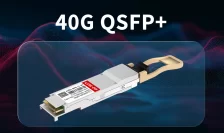
Erfahren Sie, was IEEE 802.3bm ist und wie dieser Standard die wichtigsten PHY-Schnittstellen für 40G- und 100G-Ethernet definiert. Erforschen Sie die Technologien SR4, LR4 und CR4 sowie die Gründe dafür, dass dieser Standard moderne Rechenzentren antreibt.
What are SFP ports on a switch? Learn how SFP ports support fiber and Ethernet connections, how they compare with RJ45 and SFP+, and which module you need.
An SGMII SFP transceiver enables fast Ethernet connections over copper or fiber, supporting flexible speeds and device compatibility in modern networks.
What Frame Check Sequence (FCS) means, how CRC-32 detects corrupted Ethernet frames, and why FCS errors are commonly associated with cable faults, fiber issues, or optical transceiver problems.
Discover how optical cross‑connect (OXC) enables all‑optical switching in DWDM/OTN networks, with LINK‑PP SFP modules ensuring seamless integration and superior performance.
Learn what Dispersion Compensation Fiber (DCF) is, how it reduces chromatic dispersion, where it is used, and why it matters in modern optical networks.
Learn what OEO means in optical communication, how optical-electrical-optical regeneration works, and when it is used in DWDM networks and optical links. Keywords:
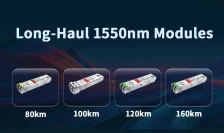
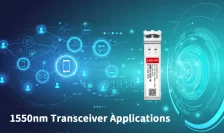
Learn the main applications of 1550nm optical modules in backbone, metro, and enterprise networks. Discover LINK-PP transceivers designed for long-distance fiber links.
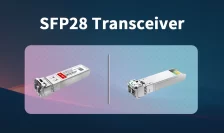
LS-MM8532-S1C SFP28 Transceivers offer 25G/32G speeds, broad compatibility, low power use, and cost savings—ideal for future-proofing your data center.
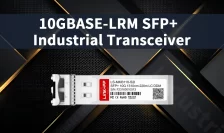
10GBASE-LRM Industrial Transceiver Supports 10.3Gbps, 220m MMF reach, industrial temperature (-40~85°C), and full compatibility with Cisco, Arista, Dell, H3C.
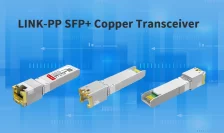
Discover the LINK-PP 10GBase-T Copper SFP+ Transceiver. Supporting 10Gbps over Cat6a/7 cables up to 80m. Compatible with Cisco, Dell, H3C, Juniper, and Arista.
Discover how the LINK-PP LS-MM851G-S5I 1000BASE-SX transceiver offers a 100% compatible, high-performance, and cost-effective solution to replace GLC-SX-MMD.
Überblick über den LINK-PP LS-SM3101-40C SFP 155Mbps 40km SMF Optiktransceiver-Modul, einschließlich Merkmale, Kompatibilität, Diagnosen und Wert für Netzwerke.