Die räumliche Multiplexierung (Space Division Multiplexing) erhöht die Kapazität von Glasfasernetzwerken, indem mehrere Datenströme über separate Pfade innerhalb eines einzigen Kabels gesendet werden.
Entdecken Sie die Rolle von Gehäusen für optische Module in Rechenzentren und 5G. Erfahren Sie mehr über Materialien wie Keramik und Legierungen, thermische Herausforderungen und erkunden Sie die optischen Transceiver von Link-PP.
Erforschen Sie die kritischen Herausforderungen bei Gehäusen für optische Module im Zeitalter von 400G/800G: Wärmemanagement, Materialgrenzen, Signalintegrität und wie Innovationen diese bewältigen.
OTU4 vs. 100GE: Vergleichen Sie Geschwindigkeit, Zuverlässigkeit und Einsatzgebiete, um das beste Hochgeschwindigkeitsprotokoll für die Anforderungen Ihres Netzwerks und sein zukünftiges Wachstum auszuwählen.
Erfahren Sie, wie Mikrocontroller-Einheiten (MCUs) optische Transceiver durch Echtzeitüberwachung, diagnosefähige Module (DOM) und präzise Lasersteuerung unterstützen. Entdecken Sie ihre entscheidende Rolle in LINK-PP-Modulen für eine verbesserte Zuverlässigkeit.
TDM (Zeitmultiplexverfahren) ermöglicht es mehreren Signalen, einen Kanal gemeinsam zu nutzen, indem Zeitfenster zugewiesen werden, wodurch die Effizienz in der Telekommunikation, im Rundfunk und in Netzwerken verbessert wird.
Frequenzmultiplexverfahren (FDM) ermöglicht es mehreren Signalen, auf einem Kanal zu übertragen, wodurch eine klare und effiziente Kommunikation für Telefone, Fernsehen und das Internet gewährleistet wird.
Lernen Sie die wichtigsten Anwendungen optischer 1550-nm-Module in Kern-, Metro- und Unternehmensnetzwerken kennen. Entdecken Sie die LINK-PP-Transceiver, die für langstreckige Glasfaserverbindungen ausgelegt sind.
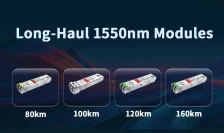
Erfahren Sie, wie weit optische 1550-nm-Transceiver über Einmodenfaser übertragen können – bis zu 160 km. Sehen Sie sich die LINK-PP-Modelle an, die für den Langstreckeneinsatz konzipiert wurden.
Understand the key differences between XLPPI and XLAUI electrical interfaces, how they work in 40G/100G Ethernet systems, and which interface modern QSFP modules use.
Discover the advantages of XLPPI electrical interface in high-speed networking. Learn how it reduces latency, lowers power consumption, and future-proofs modern data transmission.
Learn about Google Cloud Platform (GCP), its architecture, services, and how optical transceivers enable high-performance networking within GCP’s data centers.
Microsoft Azure is a cloud platform offering scalable solutions for businesses. Learn about its architecture, services, and how optical Modules support Azure’s cloud networking.
Multi-Gig Ethernet boosts network speeds to 2.5, 5, or 10Gbps using existing cables, making upgrades easy for faster streaming, gaming, and file transfers.
AWS (Amazon Web Services) powers global cloud computing with scalable services and high-speed data center networks. Learn AWS basics, architecture, and how optical transceivers support AWS connectivity.
Learn what EoR (End-of-Row) switches are, how the architecture works, its pros and cons, EoR vs ToR differences, deployment best practices, and recommended optical modules.
What Frame Check Sequence (FCS) means, how CRC-32 detects corrupted Ethernet frames, and why FCS errors are commonly associated with cable faults, fiber issues, or optical transceiver problems.
Discover how optical cross‑connect (OXC) enables all‑optical switching in DWDM/OTN networks, with LINK‑PP SFP modules ensuring seamless integration and superior performance.
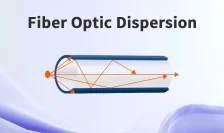
Learn what Dispersion Compensation Fiber (DCF) is, how it reduces chromatic dispersion, where it is used, and why it matters in modern optical networks.
Learn what OEO means in optical communication, how optical-electrical-optical regeneration works, and when it is used in DWDM networks and optical links. Keywords:
Discover the LQ‑SW40‑SR4C 40GBASE‑SR module: high-speed, low-power, QSFP+ optics for multimode fibre networks. Perfect for data centres and network upgrades.
Learn what hyperconverged infrastructure HCI is, how it compares with virtualization and dHCI, and when Nutanix, Sangfor, or SFP-based designs fit best.
Understand SFP+ 40km (10GBASE-ER) modules, including specs, SMF compatibility, and how to choose the right extended-reach optical transceiver for your network.