What are SFP ports on a switch? Learn how SFP ports support fiber and Ethernet connections, how they compare with RJ45 and SFP+, and which module you need.
What Frame Check Sequence (FCS) means, how CRC-32 detects corrupted Ethernet frames, and why FCS errors are commonly associated with cable faults, fiber issues, or optical transceiver problems.
Discover the LQ‑SW40‑SR4C 40GBASE‑SR module: high-speed, low-power, QSFP+ optics for multimode fibre networks. Perfect for data centres and network upgrades.
Discover how optical cross‑connect (OXC) enables all‑optical switching in DWDM/OTN networks, with LINK‑PP SFP modules ensuring seamless integration and superior performance.
Erfahren Sie, was RJ45-Steckverbinder sind, wie ihr Pinout aussieht, welche Verdrahtungstypen es gibt und wie sie Ethernet-, PoE- und Gigabit-Netzwerke unterstützen. Entdecken Sie die RJ45-Lösungen von LINK-PP für zuverlässige Konnektivität.
Erfahren Sie, was VoIP-Telefone sind, wie sie funktionieren und warum sie für moderne Kommunikation wichtig sind. Lernen Sie die zentralen Vorteile kennen und erfahren Sie, wie RJ45-Steckverbinder von LINK-PP sie unterstützen.
Vermeide teure Faseroptik-Einrichtungsfehler durch das Erkennen von Kinken, mangelnder Reinigung und schlechten Splices. Halte dein Fasernetzwerk stark mit diesen Expertentipps.
RDMA über Converged Ethernet ermöglicht schnelle, latenzarme Datenübertragungen unter Verwendung standardisierter Ethernet-Hardware und reduziert den CPU-Verbrauch sowie verbessert die Netzwerkeffizienz.
Eine IPv6-Adresse ermöglicht sichere, effiziente Geräteverbindungen im Internet und bietet einen umfangreichen Adressraum sowie eine verbesserte Netzwerkverwaltung gegenüber IPv4.
Lernen Sie die wichtigsten Unterschiede zwischen IEEE 802.3af (PoE), 802.3at (PoE+) und 802.3bt (PoE++) kennen. Erfahren Sie mehr über Leistungsstufen, Kompatibilität und Anwendungsfälle mit den PoE-Magnetlösungen von LINK-PP.
Edge-Computing verarbeitet Daten nahe ihrer Quelle und ermöglicht schnellere Entscheidungen, geringere Latenzzeiten und eine effiziente Bandbreitennutzung für Echtzeitanwendungen.
Lernen Sie den Unterschied zwischen PSE und PD in PoE-Netzwerken kennen, erfahren Sie, wie Erkennung und Klassifizierung funktionieren, und welche LINK-PP-PoE-RJ45-Produkte für Ihren WAP-, Kamera- oder VoIP-Einsatz geeignet sind.
Die faseroptischen Gehäusebaugruppen von LINK-PP bieten hochdichte, EMI-geschirmte und thermisch optimierte Lösungen für die Anforderungen des 400G-Transceiver-Formfaktors.
LINK-PP-Optiktransceiver bieten volle Kompatibilität mit Cisco Catalyst-9300-Switches und gewährleisten zuverlässige Leistung sowie kosteneffiziente Netzwerkerweiterung.
Power Over Ethernet (PoE) combines power and data delivery via a single cable, simplifying installations for devices like IP cameras, VoIP phones, and IoT systems.
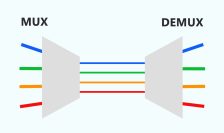
Wavelength Division Multiplexing (WDM) uses optical transceiver modules to send multiple data streams through a single fiber, boosting bandwidth and efficiency.
The Receiver Optical Sub-Assembly (ROSA) is a critical optoelectronic component in Optical Tranceivers, responsible for converting incoming optical signals into
DDM/DOM in optical transceivers provides real-time monitoring of key parameters like temperature and power, ensuring network reliability and early issue detection.
Learn what LX SFP (1000BASE-LX) modules are, how they differ from LR/LH/SX, and practical tips for compatibility, multimode use, and real-world deployment.
Explore the complete guide to 1G SX SFP modules, including specs, compatibility, deployment tips, and real user insights for optimal network performance.
Learn what a short range SFP module is, its transmission distance, fiber types, and how to choose the right SR SFP for data center and enterprise network connections.
Learn how electrical SFP compares with fiber SFP in speed, distance, power consumption, and cost. A practical guide for data centers, network engineers, and enterprise deployments.
Subscribe to LINK-PP
newsletter
Don’t miss anything. Get all the latest posts delivered straight to your inbox.