Welcome to the LINK-PP Community
More Posts
822
What are SFP ports on a switch? Learn how SFP ports support fiber and Ethernet connections, how they compare with RJ45 and SFP+, and which module you need.
Learn what an SFP link is, why it fails, and how to fix compatibility, cabling, and link-flap issues with practical checks and clear steps.
Optical transceivers in UAVs enable high-speed, secure, and low-latency drone communication for real-time video, telemetry, and mission-critical data.
Explore the technology behind 400 G QSFP‑DD transceivers, including form factor, modulation, optical lanes, and thermal design.
Understand hot‑pluggable optical modules insertion cycle limits, and learn care tips—including ESD-safe handling, dust prevention, and heat management.
Understand what CRC is, how cyclic redundancy check errors happen, how to fix them, and why CRC matters in networking, storage, and SFP modules.
What Frame Check Sequence (FCS) means, how CRC-32 detects corrupted Ethernet frames, and why FCS errors are commonly associated with cable faults, fiber issues, or optical transceiver problems.
Discover the LQ‑SW40‑SR4C 40GBASE‑SR module: high-speed, low-power, QSFP+ optics for multimode fibre networks. Perfect for data centres and network upgrades.
Discover how optical cross‑connect (OXC) enables all‑optical switching in DWDM/OTN networks, with LINK‑PP SFP modules ensuring seamless integration and superior performance.
Discover how EML works in optical modules, why it’s vital for high‑speed, long‑distance links, and how LINK‑PP brings EML‑based optical transceivers.
498
Learn what EoR (End-of-Row) switches are, how the architecture works, its pros and cons, EoR vs ToR differences, deployment best practices, and recommended optical modules.
Erfahren Sie, was ein ToR-Switch (Top-of-Rack) ist, wie die ToR-Architektur funktioniert und warum sie das bevorzugte Netzwerkmodell in modernen Rechenzentren ist. Enthält Vorteile, Anwendungsfälle und kompatible optische Transceiver-Lösungen von LINK-PP.

WLAN umfasst alle drahtlosen lokalen Netzwerke, während Wi-Fi ein bestimmter WLAN-Typ ist, der festgelegte Standards für schnelle, zuverlässige Verbindungen verwendet.
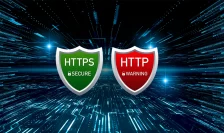
HTTP vs. HTTPS: HTTPS verschlüsselt Daten für eine sichere Übertragung, während HTTP Informationen ungeschützt offenlegt. Wählen Sie HTTPS für Privatsphäre, Vertrauen und Compliance.
Vergleichen Sie 100G LR4, CWDM4 und PSM4, um den besten 100G-Transceiver für Ihr Netzwerk basierend auf Reichweite, Kosten und Verkabelungsanforderungen zu finden.
Erfahren Sie, was ein Backplane ist, wie Backplane-Kanäle Hochgeschwindigkeits-40G/100G-Ethernet unterstützen, welche wichtigen Standards gelten und welche Designherausforderungen bestehen. Lernen Sie, wie LINK-PP-RJ45-Steckverbinder die Backplane-Leistung verbessern.
Lernen Sie den IEEE-802.3bj-Standard für 100G-Ethernet-Backplane- und Kupferkabelverbindungen kennen. Erforschen Sie PAM4, FEC sowie KP4/KR4/CR4-PHYs und erfahren Sie, wie LINK-PP-Module Hochgeschwindigkeitsnetzwerke unterstützen.
VLAN vs SVI explained: VLAN segments networks at Layer 2, while SVI enables inter-VLAN routing at Layer 3 for communication between VLANs.
Erfahren Sie mehr über die Rolle des Gearbox in modernen optischen Transceivern. Erfahren Sie, wie es Kanalausrichtung, Bitratenkonvertierung und Breakout für 50-G-, 100-G- und 200-G-Netzwerke ermöglicht.
216
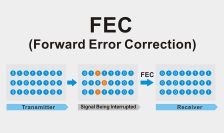
FEC (Forward Error Correction) in der optischen Kommunikation fügt Redundanz hinzu, um Fehler zu erkennen und zu korrigieren, und gewährleistet so eine zuverlässige, hochgeschwindigkeitsfähige Datenübertragung.
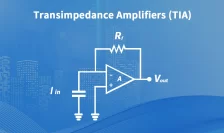
Transimpedanzverstärker (TIAs) wandeln Sensorstrom mithilfe eines Operationsverstärkers und eines Rückkopplungswiderstands in Spannung um und ermöglichen so eine präzise Signalmessung.
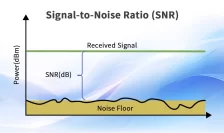
SNR, oder Signal-Rausch-Verhältnis, misst die Signalstärke im Verhältnis zum Rauschen. Ein hoher SNR bedeutet klareren Ton, schärfere Bilder und zuverlässigere Daten – also insgesamt bessere Signalqualität.
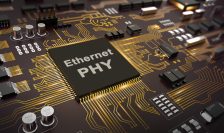
Erfahren Sie, was ein Ethernet-PHY ist, wie es den MAC mit dem Netzwerkmedium verbindet, welche Kernfunktionen es erfüllt, welche Signaltypen es verarbeitet und wie es sich mit den LINK‑PP-Magneten für Ethernet-Designs kombinieren lässt.
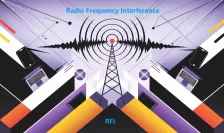
RFI (Radio Frequency Interference) sind unerwünschte Funksignale, die elektronische Geräte stören und zu Leistungsproblemen sowie Kommunikationsstörungen führen.
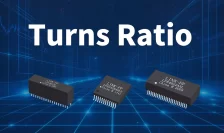
Das Windungsverhältnis bei LAN-Transformatoren definiert das Verhältnis der Wicklungen – typischerweise 1:1 – und gewährleistet Signalintegrität, Spannungsstabilität sowie die Einhaltung der Ethernet-Standards.
Was die RoHS-Zertifizierung bedeutet, welche Stoffe eingeschränkt sind und warum die Einhaltung für Hersteller und Importeure elektronischer Geräte wichtig ist.
PAM4 ist ein vierstufiges Pulsamplitudenmodulationsverfahren, das zwei Bits pro Symbol überträgt und so die Datenraten für Hochgeschwindigkeitsnetzwerke verdoppelt.
Nicht-Rückkehr-zu-Null (NRZ) ist ein digitales Codierungsverfahren, das zwei Spannungsebenen für binäre Daten verwendet und dadurch Einfachheit und Effizienz in der digitalen Kommunikation bietet.
Die Leerlaufinduktivität (OCL) bei Ethernet-Transformatoren beeinflusst die Signalintegrität und die Unterdrückung elektromagnetischer Störungen (EMI); eine höhere OCL verhindert Datenverlust.
108
Authoritative guide to LR SFP modules (10GBASE-LR): technical specs, typical 10 km reach, fiber requirements, vendor compatibility, procurement checklist and deployment best practices.
This guide explains SR SFP modules, including wavelength, fiber requirements, typical reach, compatibility issues, and selection tips for short-range optical networking.
Professional guide to 10GbE SFP+ modules covering types, pricing, compatibility, power, and supplier selection for reliable enterprise and data center deployments.
QSFP28 vs. QSFP-DD explained for engineers. Compare electrical lanes, speed, power, compatibility, and deployment scenarios to select the right 100G or 400G optical module.
Compare Cisco SFP-10G-T-X with compatible 10GBASE-T SFP+ modules. Learn differences in power, distance, compatibility, and when a third-party option makes sense.
Solve data center bottlenecks with 40GBASE-SR4 Optical Modules for high bandwidth, low latency, and scalable, future-proof network performance.
1000BASE-SX SFP Optical Transceiver specs: 1.25Gbps, 850nm, up to 550m on multimode fiber, LC connector, DOM, and broad device compatibility explained.
Unlock flexible, high-density 100G/112G connectivity. The LQ-LW112-LR4C is a dual-rate QSFP28 10km transceiver supporting both 100GBASE-LR4 and 112GBASE-OTU4 over SMF.
Spine-Leaf Architecture in optical networks enables scalable, non-blocking connectivity and high performance for modern data centers.
LPJ26204ADNL 1x2 RJ45 Magjack delivers reliable 10/100 Ethernet, compact dual-port design, robust EMI shielding, and broad industry certifications.
Subscribe to LINK-PP
newsletter
Don’t miss anything. Get all the latest posts delivered straight to your inbox.
Video
00:41
Global Delivery Service | LINK-PP
https://resources.l-p.com/wp-content/uploads/2026/06/f3707104ff423f50cb51a7617d4e6a25.mp4
Jun 26, 2024
- 1.2k
- 888
×