What are SFP ports on a switch? Learn how SFP ports support fiber and Ethernet connections, how they compare with RJ45 and SFP+, and which module you need.
What Frame Check Sequence (FCS) means, how CRC-32 detects corrupted Ethernet frames, and why FCS errors are commonly associated with cable faults, fiber issues, or optical transceiver problems.
Discover the LQ‑SW40‑SR4C 40GBASE‑SR module: high-speed, low-power, QSFP+ optics for multimode fibre networks. Perfect for data centres and network upgrades.
What are SFP ports on a switch? Learn how SFP ports support fiber and Ethernet connections, how they compare with RJ45 and SFP+, and which module you need.
What Frame Check Sequence (FCS) means, how CRC-32 detects corrupted Ethernet frames, and why FCS errors are commonly associated with cable faults, fiber issues, or optical transceiver problems.
Discover the LQ‑SW40‑SR4C 40GBASE‑SR module: high-speed, low-power, QSFP+ optics for multimode fibre networks. Perfect for data centres and network upgrades.
Discover how optical cross‑connect (OXC) enables all‑optical switching in DWDM/OTN networks, with LINK‑PP SFP modules ensuring seamless integration and superior performance.
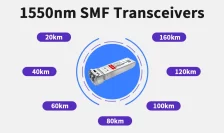
Erfahren Sie, wie ein 1550-nm-Optik-Transceiver elektrische Signale in Licht für langstreckige Glasfaser-Verbindungen umwandelt. Lernen Sie seine Vorteile, technischen Spezifikationen und LINK-PP-Modelle kennen.
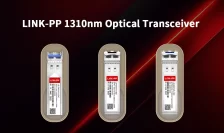
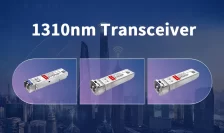
Das 1310-nm-Optikmodul bietet zuverlässige und kosteneffiziente Datenübertragung für Metro-, Campus- und Unternehmensnetzwerke. Vergleichen Sie Leistung, Reichweite und Einsatzfälle.
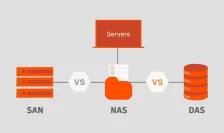
Vergleichen Sie DAS, NAS und SAN, um die beste Datenspeicherlösung hinsichtlich Geschwindigkeit, Skalierbarkeit, Zuverlässigkeit und Kosten für Ihre geschäftlichen oder privaten Anforderungen zu finden.
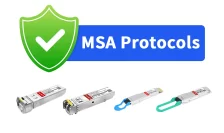
Erforschen Sie die gängigsten MSA-Protokolle, die in optischen Transceivern verwendet werden. Lernen Sie SFP, SFP+, QSFP, CFP und weitere kennen – sowie, wie kompatible Module von LINK-PP eine zuverlässige Leistung liefern.
Entdecken Sie, wie 1310-nm-Optikmodule essentielle Rollen in Rechenzentren, Metropolitan-Netzwerken und Unternehmensverbindungen übernehmen. Erfahren Sie mehr über Einsatzszenarien und erkunden Sie die zuverlässigen Module von LINK-PP.
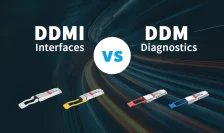
Erforschen Sie den Unterschied zwischen DDMI (Schnittstelle) und DDM (Diagnosefunktionen) in optischen Transceivern. Erfahren Sie, wie jede Funktion die Echtzeitüberwachung unterstützt, und wie LINK-PP-Produkte diese nutzen.
Führen Sie die Fehlersuche bei optischen Transceivern effizient mit digitaler Diagnoseüberwachung durch. Überwachen Sie Echtzeitdaten, um Fehler frühzeitig zu erkennen und die Netzwerkzuverlässigkeit zu gewährleisten.
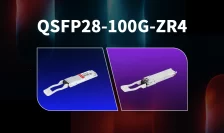
Der QSFP28-100G-ZR4-Transceiver ermöglicht die 100G-Datenübertragung über bis zu 80 km mittels Single-Mode-Glasfaser und eignet sich ideal für langstreckige, hochgeschwindigkeitsfähige Netzwerkverbindungen.
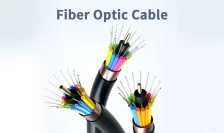
Ein Glasfaserkabel verwendet dünne Glas- oder Kunststofffasern, um Daten als Lichtimpulse zu übertragen und ermöglicht so eine schnelle, klare und zuverlässige Kommunikation über große Entfernungen.
Bei der Langstreckenübertragung werden optische Fasern genutzt, um Daten schnell und sicher über große Entfernungen zu senden und Städte sowie Länder für eine schnelle Kommunikation miteinander zu verbinden.
Power Over Ethernet (PoE) combines power and data delivery via a single cable, simplifying installations for devices like IP cameras, VoIP phones, and IoT systems.
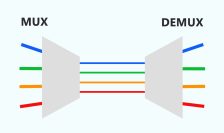
Wavelength Division Multiplexing (WDM) uses optical transceiver modules to send multiple data streams through a single fiber, boosting bandwidth and efficiency.
The Receiver Optical Sub-Assembly (ROSA) is a critical optoelectronic component in Optical Tranceivers, responsible for converting incoming optical signals into
DDM/DOM in optical transceivers provides real-time monitoring of key parameters like temperature and power, ensuring network reliability and early issue detection.
Discover the LQ‑SW40‑SR4C 40GBASE‑SR module: high-speed, low-power, QSFP+ optics for multimode fibre networks. Perfect for data centres and network upgrades.
Learn what hyperconverged infrastructure HCI is, how it compares with virtualization and dHCI, and when Nutanix, Sangfor, or SFP-based designs fit best.
Understand SFP+ 40km (10GBASE-ER) modules, including specs, SMF compatibility, and how to choose the right extended-reach optical transceiver for your network.
Subscribe to LINK-PP
newsletter
Don’t miss anything. Get all the latest posts delivered straight to your inbox.