What are SFP ports on a switch? Learn how SFP ports support fiber and Ethernet connections, how they compare with RJ45 and SFP+, and which module you need.
What Frame Check Sequence (FCS) means, how CRC-32 detects corrupted Ethernet frames, and why FCS errors are commonly associated with cable faults, fiber issues, or optical transceiver problems.
Discover the LQ‑SW40‑SR4C 40GBASE‑SR module: high-speed, low-power, QSFP+ optics for multimode fibre networks. Perfect for data centres and network upgrades.
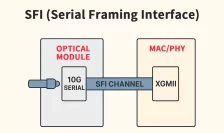
Learn how the Serial Framing Interface (SFI) enables high-speed data transmission in 10G SFP+ and 40G QSFP+ optical modules. Explore SFI channels, XGMII conversion, and module interoperability for reliable networking.
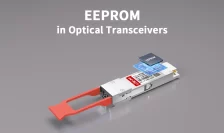
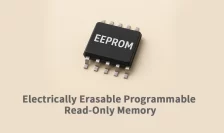
Learn why EEPROM is essential for module identification, monitoring, and compatibility, and how LINK-PP’s SFP/QSFP modules follow SFF-8472 and SFF-8024 Standard.
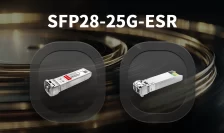
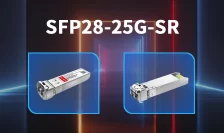
The SFP28-25G-SR transceiver delivers 25Gbps speeds, short-range fiber connectivity, and reliable performance for data centers and enterprise networks.
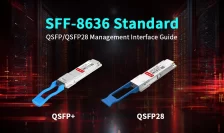
Learn what SFF-8636 is, why it matters for QSFP/QSFP28 optics, and how its 2-wire management interface, memory map, power classes, and alarms ensure interoperability.
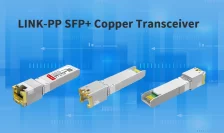
Discover the LINK-PP 10GBase-T Copper SFP+ Transceiver. Supporting 10Gbps over Cat6a/7 cables up to 80m. Compatible with Cisco, Dell, H3C, Juniper, and Arista.
Discover how EEPROM ensures reliable configuration, superior compatibility, and lifetime flexibility in networking hardware: from RJ45 to optical modules.
What are SFP ports on a switch? Learn how SFP ports support fiber and Ethernet connections, how they compare with RJ45 and SFP+, and which module you need.
An SGMII SFP transceiver enables fast Ethernet connections over copper or fiber, supporting flexible speeds and device compatibility in modern networks.
Erfahren Sie, was FMMU (Fieldbus Memory Management Unit) ist und wie es durch effizientes Memory-Mapping und Datenverarbeitung in Echtzeit EtherCAT-Kommunikation ermöglicht.
Erfahren Sie, was die PCS (Physical Coding Sublayer) ist, wie sie zuverlässiger Ethernet-Übertragung ermöglicht und warum sie für Hochgeschwindigkeitsoptiktransceiver und Netzwerkdesign wichtig ist.
Physical Medium Dependent (PMD) definiert die optischen und elektrischen Regeln eines PHY – Wellenlänge, Leistung, Reichweite und Testpunkte. Verstehen Sie PMD-Spezifikationen und wie sie bei der Auswahl von Transceivern helfen.
Erfahren Sie, was das PMA (Physical Medium Attachment) ist, wie es Seriellisierung und Clock Recovery handhabt, und warum es für moderne Hochgeschwindigkeitsoptiktransceiver essentiell ist.
Meistern Sie Mean Time to Acknowledge (MTTA), den Schlüsselmaßstab für schnelle Reaktion. Lernen Sie seine Rolle für Systemverfügbarkeit, wie man ihn berechnet, und bewährte Schritte, um MTTA zu reduzieren, um eine überlegene Netzwerkuhrzeit zu erreichen.
Meistern Sie Mean Time to Detect (MTTD), den wichtigsten Maßstab, um stille Ausfälle zu vermeiden. Lernen Sie die Berechnung, seine Rolle in moderner Observability und wie man MTTD zur Verbesserung der Systemverfügbarkeit reduziert.
Entdecken Sie MTBF (Mean Time Between Failures), seine Bedeutung für Systemzuverlässigkeit, und wie LINK‑PP-Industrieanschlüsse und SFP/SFP+-Module die maximale Uptime unterstützen.
Eine klare, professionelle Anleitung zu IIoT (Industrial Internet of Things), die Architektur, Protokolle, Sicherheitsbest Practices und geeignete Netzwerkkomponenten für industrielle Implementierungen abdeckt.
Erfahren Sie, was MTTR (Mean Time to Repair) bedeutet, warum es für Systemzuverlässigkeit wichtig ist, und wie LINK‑PP’s hot-swappable SFP/SFP+ Transceiver die Reparaturzeit reduzieren.
Discover the LQ‑SW40‑SR4C 40GBASE‑SR module: high-speed, low-power, QSFP+ optics for multimode fibre networks. Perfect for data centres and network upgrades.
Learn what hyperconverged infrastructure HCI is, how it compares with virtualization and dHCI, and when Nutanix, Sangfor, or SFP-based designs fit best.
Understand SFP+ 40km (10GBASE-ER) modules, including specs, SMF compatibility, and how to choose the right extended-reach optical transceiver for your network.
Subscribe to LINK-PP
newsletter
Don’t miss anything. Get all the latest posts delivered straight to your inbox.