What are SFP ports on a switch? Learn how SFP ports support fiber and Ethernet connections, how they compare with RJ45 and SFP+, and which module you need.
What Frame Check Sequence (FCS) means, how CRC-32 detects corrupted Ethernet frames, and why FCS errors are commonly associated with cable faults, fiber issues, or optical transceiver problems.
Discover the LQ‑SW40‑SR4C 40GBASE‑SR module: high-speed, low-power, QSFP+ optics for multimode fibre networks. Perfect for data centres and network upgrades.
Semiconductor material properties determine optical module speed, efficiency, and reliability by affecting bandgap, carrier mobility, and thermal conductivity.
Explore how Smart Industry 4.0 Networks enable intelligent manufacturing through high-speed Ethernet, fibre optics, IIoT, and edge computing integration.
Learn what the SFF-8402 specification is, how it defines the SFP28 interface standard, and why it is essential for 25G / 28G optical module interoperability and system reliability.
Erfahren Sie, wie optische Module die Leistung von SPS-Systemen verbessern und eine Hochgeschwindigkeits-, Langstreckenkommunikation sowie zuverlässige industrielle Automatisierungsnetzwerke ermöglichen.
Erfahren Sie, wie RJ45-Magjack-Steckverbinder eine robuste Ethernet-Kommunikation zwischen SPSen und SCADA-Hosts in der industriellen Automatisierung ermöglichen und so Signalintegrität sowie Systemzuverlässigkeit gewährleisten.
Ein VXLAN-Netzwerkidentifikator (VNI) ist eine eindeutige 24-Bit-Segment-ID, die eine skalierbare Netzwerksegmentierung und -isolation in großen, auf VXLAN basierenden Umgebungen ermöglicht.
Die Uplink-Fehlererkennung identifiziert Netzwerkverbindungsfehler schnell und ermöglicht eine schnelle Reaktion, um Ausfallzeiten zu verhindern und die Geschäftskontinuität sicherzustellen.
Das Open System Interconnect erklärt die sieben OSI-Schichten und zeigt, wie Geräte kommunizieren und die Interoperabilität in modernen Netzwerkumgebungen sichergestellt wird.
Erfahren Sie, wie die 25-Gbit/s-SFP28-Optikmodule von LINK-PP hyperskalare Rechenzentren mit hoher Bandbreite, geringer Latenz und Energieeffizienz optimieren. Lernen Sie wesentliche Vorteile und Einsatzgebiete kennen.
What are SFP ports on a switch? Learn how SFP ports support fiber and Ethernet connections, how they compare with RJ45 and SFP+, and which module you need.
An SGMII SFP transceiver enables fast Ethernet connections over copper or fiber, supporting flexible speeds and device compatibility in modern networks.
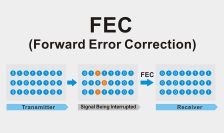
FEC (Forward Error Correction) in der optischen Kommunikation fügt Redundanz hinzu, um Fehler zu erkennen und zu korrigieren, und gewährleistet so eine zuverlässige, hochgeschwindigkeitsfähige Datenübertragung.
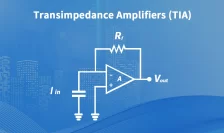
Transimpedanzverstärker (TIAs) wandeln Sensorstrom mithilfe eines Operationsverstärkers und eines Rückkopplungswiderstands in Spannung um und ermöglichen so eine präzise Signalmessung.
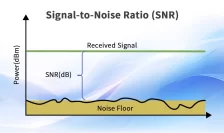
SNR, oder Signal-Rausch-Verhältnis, misst die Signalstärke im Verhältnis zum Rauschen. Ein hoher SNR bedeutet klareren Ton, schärfere Bilder und zuverlässigere Daten – also insgesamt bessere Signalqualität.
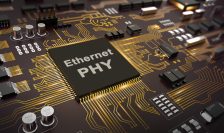
Learn what an Ethernet PHY is, how it connects MAC to network medium, core functions, signal types, and how it pairs with LINK‑PP Magnetics for Ethernet design.
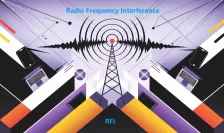
RFI (Radio Frequency Interference) sind unerwünschte Funksignale, die elektronische Geräte stören und zu Leistungsproblemen sowie Kommunikationsstörungen führen.
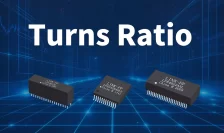
Das Windungsverhältnis bei LAN-Transformatoren definiert das Verhältnis der Wicklungen – typischerweise 1:1 – und gewährleistet Signalintegrität, Spannungsstabilität sowie die Einhaltung der Ethernet-Standards.
Was die RoHS-Zertifizierung bedeutet, welche Stoffe eingeschränkt sind und warum die Einhaltung für Hersteller und Importeure elektronischer Geräte wichtig ist.
Non-Return-to-Zero (NRZ) is a digital encoding method using two voltage levels for binary data, offering simplicity and efficiency in digital communication.
Discover the LQ‑SW40‑SR4C 40GBASE‑SR module: high-speed, low-power, QSFP+ optics for multimode fibre networks. Perfect for data centres and network upgrades.
Learn what hyperconverged infrastructure HCI is, how it compares with virtualization and dHCI, and when Nutanix, Sangfor, or SFP-based designs fit best.
Understand SFP+ 40km (10GBASE-ER) modules, including specs, SMF compatibility, and how to choose the right extended-reach optical transceiver for your network.