What are SFP ports on a switch? Learn how SFP ports support fiber and Ethernet connections, how they compare with RJ45 and SFP+, and which module you need.
What Frame Check Sequence (FCS) means, how CRC-32 detects corrupted Ethernet frames, and why FCS errors are commonly associated with cable faults, fiber issues, or optical transceiver problems.
Discover the LQ‑SW40‑SR4C 40GBASE‑SR module: high-speed, low-power, QSFP+ optics for multimode fibre networks. Perfect for data centres and network upgrades.
What are SFP ports on a switch? Learn how SFP ports support fiber and Ethernet connections, how they compare with RJ45 and SFP+, and which module you need.
What Frame Check Sequence (FCS) means, how CRC-32 detects corrupted Ethernet frames, and why FCS errors are commonly associated with cable faults, fiber issues, or optical transceiver problems.
Discover the LQ‑SW40‑SR4C 40GBASE‑SR module: high-speed, low-power, QSFP+ optics for multimode fibre networks. Perfect for data centres and network upgrades.
Discover how optical cross‑connect (OXC) enables all‑optical switching in DWDM/OTN networks, with LINK‑PP SFP modules ensuring seamless integration and superior performance.
Understand the key parameters of optical modules, including transmission rate, distance, wavelength, and fiber compatibility, for better network performance.
Industrial Grade 100G optical transceivers ensure high-speed, reliable data transmission in harsh environments, making them vital for modern network infrastructure.
AON vs. PON: Aktive und passive optische Netzwerke vergleichen. Erfahren Sie, wie AON hohe Bandbreite und Langstreckenabdeckung bietet, während PON kostengünstig für FTTH ist.
Discover the types, features, and benefits of PON modules, including OLT, ONU, and ONT devices, transmission protocols, and scalability for fiber networks.
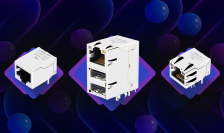
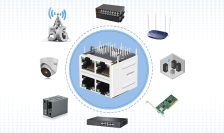
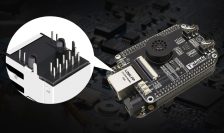
RJ45 connectors are essential for Ethernet networking, enabling stable data transfer in LANs, connecting devices like routers, switches, and supporting high-speed communication.
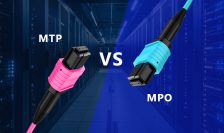
Vergleichen Sie MTP- und MPO-Stecker, um die beste Lösung für Ihr Netzwerk zu finden. Erfahren Sie, wie MTP-Stecker eine überlegene Leistung, Skalierbarkeit und Zuverlässigkeit bieten.
Was ist LWDM? LWDM ist eine LAN-WDM-Technologie, die mehrere Wellenlängen nutzt, um Bandbreite und Effizienz in lokalen Netzwerken und Rechenzentren zu steigern.
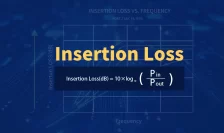
Einbauverlust bei RJ45-Steckverbindern schwächt die Signalstärke und beeinträchtigt die Netzwerkzuverlässigkeit. Erfahren Sie, wie Sie den Einbauverlust minimieren können, um optimale Leistung zu erzielen.
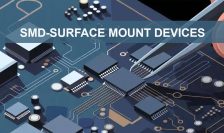
Ein Oberflächenmontagebauelement (SMD) ist ein kompaktes elektronisches Bauteil, das direkt auf einer Leiterplatte montiert wird und so kleinere, schnellere und effizientere moderne Elektronik ermöglicht.
Erfahren Sie, was ein DFB-Laser (Distributed Feedback Laser) ist, wie er funktioniert, welchen Aufbau er hat und worin sich seine wesentlichen Unterschiede zu FP- und VCSEL-Lasern zeigen.
CPRI (Common Public Radio Interface) connects baseband units to remote radio units, enabling high-speed, low-latency communication in wireless networks.
EMC Electromagnetic Compatibility ensures devices work safely and reliably in shared environments by minimizing interference and meeting compliance standards.
Bei der Durchstecktechnologie (THT) werden die Anschlussdrähte von Bauteilen in Bohrungen einer Leiterplatte eingeführt und verlötet, wodurch robuste Verbindungen für Anwendungen mit hoher Zuverlässigkeit gewährleistet werden.
SMT (Surface Mount Technology) ist ein Verfahren zum Aufbringen elektronischer Komponenten direkt auf Leiterplattenoberflächen und ermöglicht kompakte Designs sowie eine effiziente Fertigung.
Discover the LQ‑SW40‑SR4C 40GBASE‑SR module: high-speed, low-power, QSFP+ optics for multimode fibre networks. Perfect for data centres and network upgrades.
Learn what hyperconverged infrastructure HCI is, how it compares with virtualization and dHCI, and when Nutanix, Sangfor, or SFP-based designs fit best.
Understand SFP+ 40km (10GBASE-ER) modules, including specs, SMF compatibility, and how to choose the right extended-reach optical transceiver for your network.