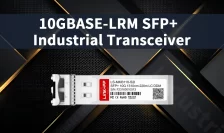
Der industrielle 10GBASE-LRM-Transceiver unterstützt 10,3 Gbit/s, eine Reichweite von 220 m über Multimode-Faser (MMF), industrielle Temperaturbereiche (−40 bis +85 °C) sowie vollständige Kompatibilität mit Cisco, Arista, Dell und H3C.
Twisted-Pair-Kupferkabel verwenden zwei isolierte Drähte, die miteinander verdrillt sind, um Störungen abzublocken und eine zuverlässige Daten- und Sprachübertragung in Netzwerken sicherzustellen.
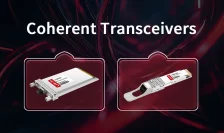
Kohärente Transceiver nutzen Phase, Amplitude und Polarisation, um Hochgeschwindigkeits- und Langstrecken-Datenübertragung mit verbesserter Signalqualität zu ermöglichen.
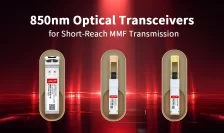
10GBASE-SR, 40GBASE-SR4, 100GBASE-SR4, and 400GBASE-SR8 850nm optical modules are the most reliable and cost-effective choice for short-reach multimode fiber connections.
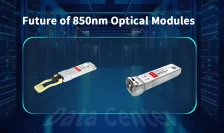
Explore the future of 850nm optical modules in data centers, covering SR8/SR16 advancements, parallel optics, and the impact of single-mode fiber adoption.
Der SFP28-25G-SR-Transceiver bietet Übertragungsgeschwindigkeiten von 25 Gbit/s, Kurzstrecken-Faseranbindung und zuverlässige Leistung für Rechenzentren und Unternehmensnetzwerke.
sfp28-25g-esr ist ein 25-G-Optiktransceiver, der schnelle, zuverlässige Datenübertragung und erweiterte Reichweite für moderne Netzwerkinfrastrukturen bietet.
Erfahren Sie, warum EEPROM für Modulidentifikation, -überwachung und -kompatibilität unverzichtbar ist und wie die SFP-/QSFP-Module von LINK-PP den Standards SFF-8472 und SFF-8024 entsprechen.
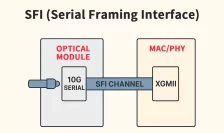
Erfahren Sie, wie die Serial Framing Interface (SFI) eine Hochgeschwindigkeitsdatenübertragung in 10G SFP+- und 40G QSFP+-optischen Modulen ermöglicht. Erforschen Sie SFI-Kanäle, XGMII-Konvertierung und Modul-Interoperabilität für ein zuverlässiges Netzwerk.
Wandeln Sie Glasfaser zwischen Multimode- und Singlemode-Technologie mithilfe intelligenter Methoden für höhere Geschwindigkeit, größere Reichweite und zuverlässige Netzwerkleistung um.
Erfahren Sie, wie der LINK-PP-RJ45-Magjack die QoS-Stabilität verbessert, indem er die Signalintegrität erhöht, elektromagnetische Störungen (EMI) reduziert und eine zuverlässige Übertragung für moderne Netzwerke sicherstellt.
Lösen Sie häufige Netzwerkprobleme in Rechenzentrumsnetzwerken – darunter Ausfälle, langsame Geschwindigkeiten und Konfigurationsfehler – mit praktischen Fehlersuchetipps.
Erforschen Sie die Rollen von LSRs und LERs in MPLS-Netzwerken. Lernen Sie deren Funktionen, Unterschiede sowie die Unterstützung durch LINK-PP-Produkte für hochgeschwindigkeitsfähige und zuverlässige label-switched paths kennen.
Interoperabilität im Netzwerk bedeutet, dass Geräte und Systeme verschiedener Hersteller mithilfe gemeinsamer Standards Verbindungen herstellen, Daten austauschen und nahtlos zusammenarbeiten können.
Entdecken Sie die Unterschiede zwischen P2P-, P2MP-, MP2P- und MP2MP-Netzwerkarchitekturen. Erfahren Sie, wie optische LINK-PP-Transceiver eine effiziente, hochgeschwindigkeitsfähige Konnektivität ermöglichen.
Discover the differences between silicon photonic modulators and traditional optical modulators, their working principles, advantages, and role in next-generation optical transceivers.
Explore how RJ45 connectors evolve to meet 6G’s ultra-low latency and ultra-high-speed communication challenges. Discover LINK-PP’s advanced high-frequency Ethernet solutions.
What Frame Check Sequence (FCS) means, how CRC-32 detects corrupted Ethernet frames, and why FCS errors are commonly associated with cable faults, fiber issues, or optical transceiver problems.
Discover how optical cross‑connect (OXC) enables all‑optical switching in DWDM/OTN networks, with LINK‑PP SFP modules ensuring seamless integration and superior performance.
Learn what Dispersion Compensation Fiber (DCF) is, how it reduces chromatic dispersion, where it is used, and why it matters in modern optical networks.
Learn what OEO means in optical communication, how optical-electrical-optical regeneration works, and when it is used in DWDM networks and optical links. Keywords:
Discover the LQ‑SW40‑SR4C 40GBASE‑SR module: high-speed, low-power, QSFP+ optics for multimode fibre networks. Perfect for data centres and network upgrades.
Learn what hyperconverged infrastructure HCI is, how it compares with virtualization and dHCI, and when Nutanix, Sangfor, or SFP-based designs fit best.
Understand SFP+ 40km (10GBASE-ER) modules, including specs, SMF compatibility, and how to choose the right extended-reach optical transceiver for your network.