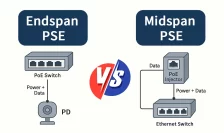
Erfahren Sie, was eine Stromversorgungseinheit (PSE) ist, wie sie in PoE-Netzwerken funktioniert, und entdecken Sie die PoE-kompatiblen RJ45-Steckverbinder und -Transformatoren von LINK-PP.
LINK-PP-Optiktransceiver bieten volle Kompatibilität mit Cisco Catalyst-9300-Switches und gewährleisten zuverlässige Leistung sowie kosteneffiziente Netzwerkerweiterung.
Die Optimierung des Stromverbrauchs optischer Transceiver im Edge-Computing reduziert den Energieverbrauch, senkt Kosten und verbessert Skalierbarkeit und Zuverlässigkeit des Netzwerks.
Explore the IEEE 802.3bt (PoE++) standard delivering up to 100W over Ethernet. Learn its key features, power types, and applications with LINK-PP PoE++ Magnetics solutions.
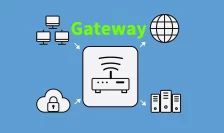
Learn what a network gateway is, how it works, and why it’s essential for connecting different networks. Understand gateway functions, types, and real-world applications in modern communication systems.
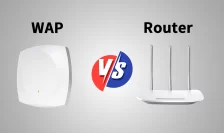
Learn the differences between a Wireless Access Point (WAP) and a router, their use cases in home and enterprise networks, and how LINK‑PP LPJK6072AONL PoE RJ45 connectors support WAP deployments.
Erfahren Sie, wie Siliziumphotonik Hochgeschwindigkeits-, energieeffiziente optische Kommunikation ermöglicht, indem sie Photonik und Siliziumelektronik integriert – Anwendungen, Vorteile und Herausforderungen.
Erfahren Sie, wie Siliziumphotonik optische Transceiver mit höherer Bandbreite, geringerem Stromverbrauch und fortschrittlicher Integration für KI, 5G und Rechenzentrumsnetzwerke neu gestaltet.
Vergleichen Sie das Network-Time-Protocol (NTP) und das Precision-Time-Protocol (PTP), um die passende Zeit-Synchronisationslösung für die Genauigkeits- und Hardware-Anforderungen Ihres Netzwerks auszuwählen.
Explore how 6G networks challenge optical transceivers with ultra-high bandwidth demands, and discover advanced solutions like CPO, silicon photonics, and LINK-PP 6G-ready optical modules.
Ein klarer, autoritativer Leitfaden zu 6G-Netzwerken: Was 6G ist, der IMT-2030-Zeitplan, Kern-Technologien (THz, ISAC, KI-native Netzwerke), zentrale Anwendungsfälle sowie Auswirkungen auf optische Module.
Time-Sensitive Networking gewährleistet zuverlässige, pünktliche Datenübertragung, während PTP sich auf die Uhrensynchronisation konzentriert. Vergleichen Sie TSN vs. PTP für Ihre Netzwerkanforderungen.
Explore the critical differences between CPRI and eCPRI fronthaul interfaces—bandwidth, latency, functional-split, transport topology—and why eCPRI is driving 5G deployments.
Explore how Ethernet transformers enable reliable, EMI-resistant data in avionics Ethernet systems. Learn their functions, design needs, and LINK-PP solutions.
Eine Katastrophenwiederherstellungslösung für optische Netze gewährleistet eine schnelle Wiederherstellung, minimiert Ausfallzeiten und schützt kritische Rechenzentrumsvorgänge vor unerwarteten Ausfällen.
Beheben Sie Netzwerkprobleme auf der Sicherungsschicht, darunter Frame-Kollisionen, MAC-Konflikte und ARP-Fehler, um stabile und sichere Verbindungen zu gewährleisten.
What Frame Check Sequence (FCS) means, how CRC-32 detects corrupted Ethernet frames, and why FCS errors are commonly associated with cable faults, fiber issues, or optical transceiver problems.
Discover how optical cross‑connect (OXC) enables all‑optical switching in DWDM/OTN networks, with LINK‑PP SFP modules ensuring seamless integration and superior performance.
Learn what Dispersion Compensation Fiber (DCF) is, how it reduces chromatic dispersion, where it is used, and why it matters in modern optical networks.
Learn what OEO means in optical communication, how optical-electrical-optical regeneration works, and when it is used in DWDM networks and optical links. Keywords:
Discover the LQ‑SW40‑SR4C 40GBASE‑SR module: high-speed, low-power, QSFP+ optics for multimode fibre networks. Perfect for data centres and network upgrades.
Learn what hyperconverged infrastructure HCI is, how it compares with virtualization and dHCI, and when Nutanix, Sangfor, or SFP-based designs fit best.
Understand SFP+ 40km (10GBASE-ER) modules, including specs, SMF compatibility, and how to choose the right extended-reach optical transceiver for your network.