exploring cloud migration and its benefits, strategies, best practices, also delve into the essential hardware, like optical modules, that make it all possible.
Erfahren Sie, wie optische Pulse Hochgeschwindigkeitsdaten in Fasernetzwerken übertragen. Erforschen Sie Prinzipien, Anwendungen und warum optische Transceiver von LINK-PP sauberere und zuverlässigere Pulse liefern.
Erfahren Sie, was FMMU (Fieldbus Memory Management Unit) ist und wie es durch effizientes Memory-Mapping und Datenverarbeitung in Echtzeit EtherCAT-Kommunikation ermöglicht.
Erfahren Sie, was der EtherCAT Slave Controller (ESC) ist und wie er Echtzeit-Frames verarbeitet, FMMU-Zuordnungen verwaltet und hochgeschwindige industrielle Automatisierung ermöglicht.
Erfahren Sie, wie PCS, PMA und PMD innerhalb der Ethernet-PHY-Schicht zusammenarbeiten, um eine zuverlässige Hochgeschwindigkeitsdatenübertragung über Glasfaser- und Kupfernetzwerke zu ermöglichen.
Erfahren Sie, was die PCS (Physical Coding Sublayer) ist, wie sie zuverlässiger Ethernet-Übertragung ermöglicht und warum sie für Hochgeschwindigkeitsoptiktransceiver und Netzwerkdesign wichtig ist.
Ein cloudbasiertes Netzwerk ermöglicht die Fernsteuerung von Geräten über ein Web-Dashboard und bietet einfache Verwaltung, automatische Updates sowie hohe Sicherheit.
Erfahren Sie, was das PMA (Physical Medium Attachment) ist, wie es Seriellisierung und Clock Recovery handhabt, und warum es für moderne Hochgeschwindigkeitsoptiktransceiver essentiell ist.
Nutzen Sie die Hochgeschwindigkeits-Industrieautomatisierung mit EtherCAT. Erfahren Sie, wie EtherCAT eine Synchronisation im Submikrosekundenbereich erreicht, welche Prinzipien dahinterstehen und warum sie für moderne Antriebssteuerung und intelligente Fabriken entscheidend ist.
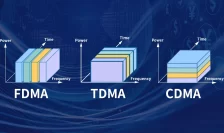
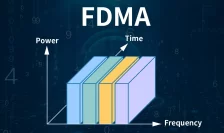
Frequency Division Multiple Access assigns each user a unique frequency band, enabling clear, simultaneous communication in phones, radios, and satellites.
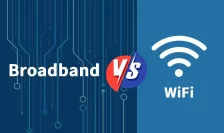
Broadband is the internet service itself, while WiFi is the wireless technology that distributes it. Learn their differences and how LINK-PP’s optical transceivers enhance broadband performance.
Discover how optical transceivers power broadband networks by enabling high-speed fiber data, low latency, and scalable infrastructure with LINK-PP solutions.
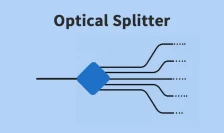
erklärt, wie optische Strahlteiler FTTH ermöglichen, welche Typen es gibt (FBT vs. PLC), wichtige Teilungsverhältnisse sowie deren Integration mit den optischen Modulen von LINK-PP für ein nahtloses Netzwerk.
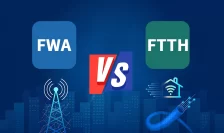
Compare FTTH and FWA broadband technologies. Learn their differences in speed, cost, deployment, and use cases. Discover how LINK-PP SFP modules support both networks.
What Frame Check Sequence (FCS) means, how CRC-32 detects corrupted Ethernet frames, and why FCS errors are commonly associated with cable faults, fiber issues, or optical transceiver problems.
Discover how optical cross‑connect (OXC) enables all‑optical switching in DWDM/OTN networks, with LINK‑PP SFP modules ensuring seamless integration and superior performance.
Learn what Dispersion Compensation Fiber (DCF) is, how it reduces chromatic dispersion, where it is used, and why it matters in modern optical networks.
Learn what OEO means in optical communication, how optical-electrical-optical regeneration works, and when it is used in DWDM networks and optical links. Keywords:
Discover the LQ‑SW40‑SR4C 40GBASE‑SR module: high-speed, low-power, QSFP+ optics for multimode fibre networks. Perfect for data centres and network upgrades.
Learn what hyperconverged infrastructure HCI is, how it compares with virtualization and dHCI, and when Nutanix, Sangfor, or SFP-based designs fit best.
Understand SFP+ 40km (10GBASE-ER) modules, including specs, SMF compatibility, and how to choose the right extended-reach optical transceiver for your network.