Learn the difference between MTTR and MTBF, how they impact system reliability, and how LINK-PP industrial connectors and SFP/SFP+ modules help improve network uptime.
Entdecken Sie MTBF (Mean Time Between Failures), seine Bedeutung für Systemzuverlässigkeit, und wie LINK‑PP-Industrieanschlüsse und SFP/SFP+-Module die maximale Uptime unterstützen.
Erfahren Sie, wie industrielle IPCs LINK-PP SFP/SFP+-Gehäuse verwenden, um Hochgeschwindigkeits-Faser-Uplinks mit EMI-Schutz für SPS und Edge-Netzwerke aufzubauen. Ideal für Industrie 4.0 und intelligente Fabriken.
Erfahren Sie, was MTTR (Mean Time to Repair) bedeutet, warum es für Systemzuverlässigkeit wichtig ist, und wie LINK‑PP’s hot-swappable SFP/SFP+ Transceiver die Reparaturzeit reduzieren.
Optisches Netzwerk bietet hohe Geschwindigkeit, Sicherheit und Skalierbarkeit für private und hybride Cloud-Deployments und gewährleistet zuverlässige und effiziente Datenkonnektivität.
Eine klare, professionelle Anleitung zu IIoT (Industrial Internet of Things), die Architektur, Protokolle, Sicherheitsbest Practices und geeignete Netzwerkkomponenten für industrielle Implementierungen abdeckt.
Optimieren Sie KI-Fabrics mit fortschrittlichen optischen Transceivern für schnellere, zuverlässige GPU-zu-GPU-Kommunikation, verbesserte Effizienz und skalierbare Leistung.
Signalintegrität und geringe Latenz bei Data-Center-Transceivern gewährleisten zuverlässige, fehlerfreie Datenübertragung und optimale Leistung für Echtzeitanwendungen.
Grüne optische Transceiver senken den Energieverbrauch und die Abfallmenge und unterstützen Ihr nachhaltiges Data Center dabei, Kosten zu senken und seine Umweltbilanz zu verbessern.
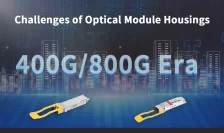
Explore the critical challenges of optical module housings in the 400G/800G era: heat management, material limits, signal integrity, and how innovation tackles them.
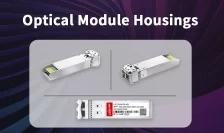
Discover the role of optical module housings in data centers & 5G. Learn about materials like ceramics & alloys, thermal challenges, and explore Link-PP's optical transceivers.
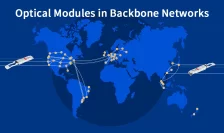
Discover how optical modules power backbone networks: high-speed data, reliability, LINK-PP advantages, and procurement tips for data centers and carriers.
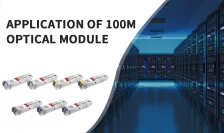
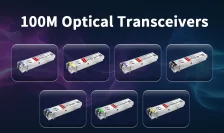
100M Optical Module enables fast, reliable connections for offices, factories, security, and telecom networks, supporting efficient short-distance data transfer.
What Frame Check Sequence (FCS) means, how CRC-32 detects corrupted Ethernet frames, and why FCS errors are commonly associated with cable faults, fiber issues, or optical transceiver problems.
Discover how optical cross‑connect (OXC) enables all‑optical switching in DWDM/OTN networks, with LINK‑PP SFP modules ensuring seamless integration and superior performance.
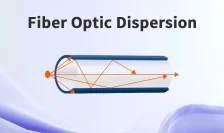
Learn what Dispersion Compensation Fiber (DCF) is, how it reduces chromatic dispersion, where it is used, and why it matters in modern optical networks.
Learn what OEO means in optical communication, how optical-electrical-optical regeneration works, and when it is used in DWDM networks and optical links. Keywords:
Learn what a Fiber Optical Light Source is, how it works, its types, and how to choose the right one for accurate fiber testing and network performance.
Discover the LQ‑SW40‑SR4C 40GBASE‑SR module: high-speed, low-power, QSFP+ optics for multimode fibre networks. Perfect for data centres and network upgrades.
Learn what hyperconverged infrastructure HCI is, how it compares with virtualization and dHCI, and when Nutanix, Sangfor, or SFP-based designs fit best.
Understand SFP+ 40km (10GBASE-ER) modules, including specs, SMF compatibility, and how to choose the right extended-reach optical transceiver for your network.