Steckbare Optik bietet flexible Upgrades, während On-Board-Optik höhere Geschwindigkeit und Integration bietet. Vergleichen Sie beide Optionen für Ihre Rechenzentrumsanforderungen.
Alterungs- und Burn-in-Tests gewährleisten die Zuverlässigkeit optischer Transceiver, indem sie Frühfehler erkennen, die Leistung verbessern und die Lebensdauer der Module verlängern.
Erfahren Sie, wie TX-Fehler und RX-LOS optische Transceiver beeinflussen. Dieser Leitfaden erläutert ihre Funktionen, häufige Auslöser und praktische Schritte zur Fehlersuche.
Die Auswahl industrieller SFP-Module erfordert die Prüfung von Kompatibilität, Link-Budget, Temperaturklasse, DDM (SFF-8472) und Herstellerunterstützung. Praktischer Leitfaden für robuste Netzwerke.
Erfahren Sie, wie Sie SFP-Module mit Ihrem Switch oder Medienkonverter abgleichen, indem Sie Kompatibilität, Geschwindigkeit, Fasertyp, Wellenlänge und Reichweite prüfen. Ein klarer und praktischer Leitfaden.
On-Board-Optics erhöht die Datengeschwindigkeit, Energieeffizienz und Kanaldichte für Rechenzentren, Supercomputer und fortschrittliche Netzwerksysteme.
Steckbare Optik ermöglicht flexible, kosteneffiziente Netzwerk-Upgrades und Hochgeschwindigkeitsverbindungen; lineare steckbare Optik steigert die Leistung von KI und Rechenzentren.
Meistern Sie Mean Time to Detect (MTTD), den wichtigsten Maßstab, um stille Ausfälle zu vermeiden. Lernen Sie die Berechnung, seine Rolle in moderner Observability und wie man MTTD zur Verbesserung der Systemverfügbarkeit reduziert.
Erfahren Sie den Unterschied zwischen MTTR und MTBF, wie sie die Systemzuverlässigkeit beeinflussen und wie LINK-PP-Industriesteckverbinder sowie SFP-/SFP+-Module die Netzwerkverfügbarkeit verbessern.
10GBASE-SR, 40GBASE-SR4, 100GBASE-SR4, and 400GBASE-SR8 850nm optical modules are the most reliable and cost-effective choice for short-reach multimode fiber connections.
The SFP28-25G-SR transceiver delivers 25Gbps speeds, short-range fiber connectivity, and reliable performance for data centers and enterprise networks.
Learn why EEPROM is essential for module identification, monitoring, and compatibility, and how LINK-PP’s SFP/QSFP modules follow SFF-8472 and SFF-8024 Standard.
Learn what SFF-8636 is, why it matters for QSFP/QSFP28 optics, and how its 2-wire management interface, memory map, power classes, and alarms ensure interoperability.
Optische Module stärken das Cloud-Computing, indem sie eine schnelle, zuverlässige und skalierbare Datenübertragung in modernen Rechenzentren ermöglichen.
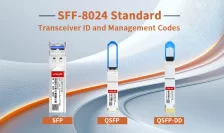
Understand how SFF-8024 ensures accurate module identification, interoperability, and scalability for SFP, SFP+, QSFP, OSFP, and next-generation optical modules.
What Frame Check Sequence (FCS) means, how CRC-32 detects corrupted Ethernet frames, and why FCS errors are commonly associated with cable faults, fiber issues, or optical transceiver problems.
Discover how optical cross‑connect (OXC) enables all‑optical switching in DWDM/OTN networks, with LINK‑PP SFP modules ensuring seamless integration and superior performance.
Learn what Dispersion Compensation Fiber (DCF) is, how it reduces chromatic dispersion, where it is used, and why it matters in modern optical networks.
Learn what OEO means in optical communication, how optical-electrical-optical regeneration works, and when it is used in DWDM networks and optical links. Keywords:
Discover the LQ‑SW40‑SR4C 40GBASE‑SR module: high-speed, low-power, QSFP+ optics for multimode fibre networks. Perfect for data centres and network upgrades.
Learn what hyperconverged infrastructure HCI is, how it compares with virtualization and dHCI, and when Nutanix, Sangfor, or SFP-based designs fit best.
Understand SFP+ 40km (10GBASE-ER) modules, including specs, SMF compatibility, and how to choose the right extended-reach optical transceiver for your network.