Erfahren Sie, was das PMA (Physical Medium Attachment) ist, wie es Seriellisierung und Clock Recovery handhabt, und warum es für moderne Hochgeschwindigkeitsoptiktransceiver essentiell ist.
Physical Medium Dependent (PMD) definiert die optischen und elektrischen Regeln eines PHY – Wellenlänge, Leistung, Reichweite und Testpunkte. Verstehen Sie PMD-Spezifikationen und wie sie bei der Auswahl von Transceivern helfen.
Ein cloudbasiertes Netzwerk ermöglicht die Fernsteuerung von Geräten über ein Web-Dashboard und bietet einfache Verwaltung, automatische Updates sowie hohe Sicherheit.
Ein Glasfaser-Kuppler teilt oder kombiniert Lichtsignale in optischen Netzwerken und verbessert so Datenfluss, Zuverlässigkeit und Netzwerkflexibilität für verschiedene Anwendungen.
Tauchen Sie ein in den IEEE 802.3bs-Standard, die Grundlage für moderne 200G- und 400G-Ethernet-Technologien. Erfahren Sie mehr über Spezifikationen, PAM4-Modulation und darüber, wie diese Technologie hyperskalige Rechenzentren mit optischen Transceivern vorantreibt.
Open Source bietet Kontrolle über den Softwarecode, während Open Networking es Ihnen ermöglicht, Hardware und Software verschiedener Anbieter zu kombinieren, um flexible Netzwerke zu erstellen.
Sie erhalten mehr Auswahlmöglichkeiten, sparen Kosten und können schneller aktualisieren. Sie können Geräte und Software verschiedener Hersteller kombinieren. Dadurch wird Ihr Netzwerk leichter anpassbar und erweiterbar.
Erfahren Sie, was IEEE 802.3bm ist und wie dieser Standard die wichtigsten PHY-Schnittstellen für 40G- und 100G-Ethernet definiert. Erforschen Sie die Technologien SR4, LR4 und CR4 sowie die Gründe dafür, dass dieser Standard moderne Rechenzentren antreibt.
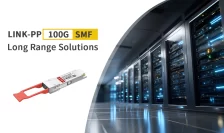
Unlock flexible, high-density 100G/112G connectivity. The LQ-LW112-LR4C is a dual-rate QSFP28 10km transceiver supporting both 100GBASE-LR4 and 112GBASE-OTU4 over SMF.
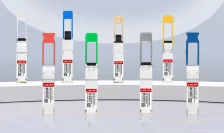
Erfahren Sie, wie Sie SFP-Module mit Ihrem Switch oder Medienkonverter abgleichen, indem Sie Kompatibilität, Geschwindigkeit, Fasertyp, Wellenlänge und Reichweite prüfen. Ein klarer und praktischer Leitfaden.
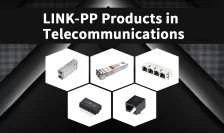
LINK-PP bietet leistungsstarke RJ45-Steckverbinder, LAN-Magnetikkomponenten und optische Module, die stabile, hochgeschwindigkeitsfähige und zuverlässige Verbindungen für IoT-Systeme sicherstellen.
Erfahren Sie mehr über den IEEE 802.3-Ethernet-Standard, seine Rolle in der Netzwerkkommunikation und darüber, wie LINK-PPs PoE-Magnetics diesen globalen Standard erfüllen.
What Frame Check Sequence (FCS) means, how CRC-32 detects corrupted Ethernet frames, and why FCS errors are commonly associated with cable faults, fiber issues, or optical transceiver problems.
Discover how optical cross‑connect (OXC) enables all‑optical switching in DWDM/OTN networks, with LINK‑PP SFP modules ensuring seamless integration and superior performance.
Learn what Dispersion Compensation Fiber (DCF) is, how it reduces chromatic dispersion, where it is used, and why it matters in modern optical networks.
Learn what OEO means in optical communication, how optical-electrical-optical regeneration works, and when it is used in DWDM networks and optical links. Keywords:
Learn what a Fiber Optical Light Source is, how it works, its types, and how to choose the right one for accurate fiber testing and network performance.
Discover the LQ‑SW40‑SR4C 40GBASE‑SR module: high-speed, low-power, QSFP+ optics for multimode fibre networks. Perfect for data centres and network upgrades.
Learn what hyperconverged infrastructure HCI is, how it compares with virtualization and dHCI, and when Nutanix, Sangfor, or SFP-based designs fit best.
Understand SFP+ 40km (10GBASE-ER) modules, including specs, SMF compatibility, and how to choose the right extended-reach optical transceiver for your network.