Machine Learning (ML) enables computers to learn from data, identify patterns, and make predictions, powering tools like voice assistants and recommendations.
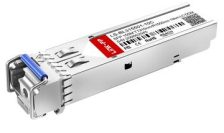
Steigern Sie die Netzwerkeffizienz mit LS-Explore: Praktische Tipps und bewährte Einsatzmethoden für den LINK-PP LS-BL332710-60C 10G-BiDi-SFP+-Transceiver (60 km). Erfahren Sie, wann BiDi zu wählen ist, wie Verbindungen validiert werden und welche Checklisten für den Einsatz relevant sind.
Discover how TSN (Time-Sensitive Networking) brings deterministic, low-latency, and reliable data delivery to Industry 4.0 and automotive Ethernet networks.
SSL encrypts data between your browser and websites, ensuring privacy and security. SSL certificates verify site identity and protect sensitive information.
User Datagram Protocol enables fast, connectionless data transfer for real-time apps like streaming, gaming, and DNS, prioritizing speed over reliability.
Discover how optical transceivers power Smart Industry 4.0 networks—enabling high-speed, low-latency, reliable connectivity in modern factories with 1G, 10G and 25G modules certified for industrial use.
Erforschen Sie den industrietauglichen LINK-PP LS-SM3125-10I SFP28-Transceiver, der 25 Gb/s über 10 km Monomode-Faser bei 1310 nm überträgt, mit DOM und Breittemperaturbereich für Backbone- und 5G-Fronthaul-Anwendungen.
SSH vs. SSL: SSH sichert Fernzugriff und Dateiübertragungen, während SSL die Webkommunikation schützt. Wählen Sie das richtige Protokoll für Ihre Sicherheitsanforderungen.
OSI vs TCP/IP: OSI is ideal for learning network concepts, while TCP/IP is used for real-world networking. Compare their layers, uses, and main differences.
Vergleichen Sie einszen-modul und mehrschicht-modul im Bereich des Kanalsgrößenmaßstabes, der Reichweiten-, Geschwindigkeits- und Preisangaben. Wählen Sie geeignetes Modul für Ihre Netzwerkspezifikationen aus.
SFP+ transceiver modules enable high-speed data transfer, seamless communication, and flexible connectivity in data centers, supporting efficient networks.
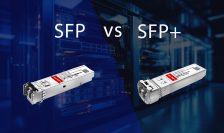
SFP- und SFP+-Transceiver unterscheiden sich hinsichtlich Geschwindigkeit, Kompatibilität und Einsatz. SFP unterstützt bis zu 1 Gbps, während SFP+ bis zu 10 Gbps für schnellere Netzwerke bewältigt.
SFP+ 10G-Transceiver ermöglichen Hochgeschwindigkeits-Datentransfer, geringe Latenz, Energieeffizienz sowie Kompatibilität mit verschiedenen Geräten für moderne Netzwerkkonfigurationen.
100G-SFP-DD-Transceiver steigern Hochdichtnetzwerke mit schnellen 100-Gbit/s-Datenraten, kompaktem Design, Energieeffizienz und langstreckiger Datenübertragung bis zu 40 km.
Ein optisches Modul wandelt elektrische Signale in Licht um, um eine schnelle und zuverlässige Datenübertragung in Netzwerken zu ermöglichen – unverzichtbar für Cloud-Computing, Telekommunikation und Rechenzentren.
Übersicht über die 100G-kohärente DWDM-Lösung: Hohe Datenraten, spektrale Effizienz und Skalierbarkeit für Telekommunikationsnetze, Rechenzentren und Unternehmensnetzwerke.
Vergleichen Sie Wi-Fi-5-ONU und Wi-Fi-6-ONU für 2025. Erfahren Sie mehr über schnellere Übertragungsraten, bessere Sicherheit und verbesserte Effizienz mit Wi-Fi 6 für moderne Netzwerke mit vielen verbundenen Geräten.
What Frame Check Sequence (FCS) means, how CRC-32 detects corrupted Ethernet frames, and why FCS errors are commonly associated with cable faults, fiber issues, or optical transceiver problems.
Discover how optical cross‑connect (OXC) enables all‑optical switching in DWDM/OTN networks, with LINK‑PP SFP modules ensuring seamless integration and superior performance.
Learn what Dispersion Compensation Fiber (DCF) is, how it reduces chromatic dispersion, where it is used, and why it matters in modern optical networks.
Learn what OEO means in optical communication, how optical-electrical-optical regeneration works, and when it is used in DWDM networks and optical links. Keywords:
Discover the LQ‑SW40‑SR4C 40GBASE‑SR module: high-speed, low-power, QSFP+ optics for multimode fibre networks. Perfect for data centres and network upgrades.
Learn what hyperconverged infrastructure HCI is, how it compares with virtualization and dHCI, and when Nutanix, Sangfor, or SFP-based designs fit best.
Understand SFP+ 40km (10GBASE-ER) modules, including specs, SMF compatibility, and how to choose the right extended-reach optical transceiver for your network.