Broadband is the internet service itself, while WiFi is the wireless technology that distributes it. Learn their differences and how LINK-PP’s optical transceivers enhance broadband performance.
Discover how optical transceivers power broadband networks by enabling high-speed fiber data, low latency, and scalable infrastructure with LINK-PP solutions.
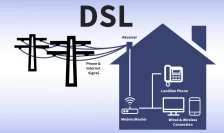
Erfahren Sie, was DSL (Digital Subscriber Line) ist, wie es funktioniert und worin sich ADSL, VDSL und andere Varianten unterscheiden. Entdecken Sie Vor- und Nachteile sowie die Zukunft der DSL-Technologie im Breitbandzugang.
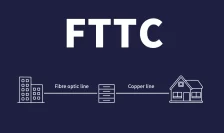
Erfahren Sie, was FTTC (Fiber to the Curb) ist, wie es funktioniert, welche Vor- und Nachteile es bietet und wie es sich zu FTTH und DSL verhält. Entdecken Sie Einsatzgebiete, erforderliche Ausrüstung und zukünftige Trends im Breitbandzugang.
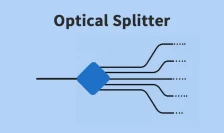
erklärt, wie optische Strahlteiler FTTH ermöglichen, welche Typen es gibt (FBT vs. PLC), wichtige Teilungsverhältnisse sowie deren Integration mit den optischen Modulen von LINK-PP für ein nahtloses Netzwerk.
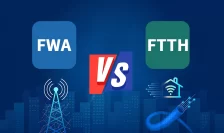
Compare FTTH and FWA broadband technologies. Learn their differences in speed, cost, deployment, and use cases. Discover how LINK-PP SFP modules support both networks.
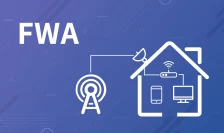
Erfahren Sie, was FWA ist, wie es Breitband über 4G-/5G-Funknetze bereitstellt und warum es für die Konnektivität wichtig ist. Lernen Sie seine Vorteile, Herausforderungen und die Unterstützung durch LINK-PP-SFP-Module für zuverlässige FWA-Einsätze kennen.
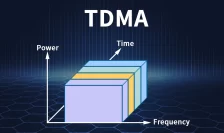
Time Division Multiple Access allows multiple users to share one channel by assigning time slots, ensuring clear calls and efficient data in modern networks.
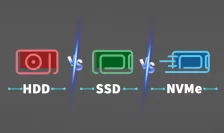
Erforschen Sie die Unterschiede zwischen HDD-, SSD- und NVMe-Laufwerken. Lernen Sie Geschwindigkeit, Kosten und optimale Einsatzgebiete kennen und erfahren Sie, wie LINK-PP-Anschlusslösungen Speichersysteme unterstützen.
Learn the difference between MTTR and MTBF, how they impact system reliability, and how LINK-PP industrial connectors and SFP/SFP+ modules help improve network uptime.
Optisches Netzwerk bietet hohe Geschwindigkeit, Sicherheit und Skalierbarkeit für private und hybride Cloud-Deployments und gewährleistet zuverlässige und effiziente Datenkonnektivität.
Optimieren Sie KI-Fabrics mit fortschrittlichen optischen Transceivern für schnellere, zuverlässige GPU-zu-GPU-Kommunikation, verbesserte Effizienz und skalierbare Leistung.
Signalintegrität und geringe Latenz bei Data-Center-Transceivern gewährleisten zuverlässige, fehlerfreie Datenübertragung und optimale Leistung für Echtzeitanwendungen.
Erfahren Sie, wie industrielle IPCs LINK-PP SFP/SFP+-Gehäuse verwenden, um Hochgeschwindigkeits-Faser-Uplinks mit EMI-Schutz für SPS und Edge-Netzwerke aufzubauen. Ideal für Industrie 4.0 und intelligente Fabriken.
Erfahren Sie, wie ein Industrie-PC (IPC) zuverlässig mit einer SPS über integrierte LINK-PP-RJ45-Steckverbinder kommuniziert – für robuste Isolation und EMI-Resistenz in industriellen Ethernet-Netzwerken.
Grüne optische Transceiver senken den Energieverbrauch und die Abfallmenge und unterstützen Ihr nachhaltiges Data Center dabei, Kosten zu senken und seine Umweltbilanz zu verbessern.
Die Senkung des Stromverbrauchs optischer Transceiver steigert die Data-Center-ROI durch geringere Energiekosten, verbesserte Effizienz und Unterstützung nachhaltigen Wachstums.
What Frame Check Sequence (FCS) means, how CRC-32 detects corrupted Ethernet frames, and why FCS errors are commonly associated with cable faults, fiber issues, or optical transceiver problems.
Discover how optical cross‑connect (OXC) enables all‑optical switching in DWDM/OTN networks, with LINK‑PP SFP modules ensuring seamless integration and superior performance.
Learn what Dispersion Compensation Fiber (DCF) is, how it reduces chromatic dispersion, where it is used, and why it matters in modern optical networks.
Learn what OEO means in optical communication, how optical-electrical-optical regeneration works, and when it is used in DWDM networks and optical links. Keywords:
Discover the LQ‑SW40‑SR4C 40GBASE‑SR module: high-speed, low-power, QSFP+ optics for multimode fibre networks. Perfect for data centres and network upgrades.
Learn what hyperconverged infrastructure HCI is, how it compares with virtualization and dHCI, and when Nutanix, Sangfor, or SFP-based designs fit best.
Understand SFP+ 40km (10GBASE-ER) modules, including specs, SMF compatibility, and how to choose the right extended-reach optical transceiver for your network.