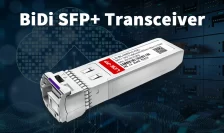
Der BiDi-SFP+-Transceiver LS-BL495510-A0C bietet eine Reichweite von 100 km, spart Glasfaser ein und ermöglicht eine einfache Installation für zuverlässige Langstrecken-Netzwerkverbindungen.
Dieser Leitfaden erläutert die Unterschiede zwischen gelöteten SFF- und 1×9-Transceiver-Formfaktoren. Erfahren Sie mehr über deren Spezifikationen, Anwendungsbereiche und wie Sie den richtigen Transceiver für Ihr Netzwerk auswählen.
Die ASK-Modulation überträgt digitale Daten durch Variation der Amplitude einer Trägerwelle und bietet eine einfache, kosteneffiziente Lösung für grundlegende digitale Kommunikationssysteme.
Bei der FSK-Modulation werden digitale Daten über eine Frequenzverschiebung des Signals für jedes Bit übertragen und bieten damit zuverlässige Kommunikation auch in störanfälligen Umgebungen.
Erfahren Sie, was eine Festplatte (HDD) ist, wie sie funktioniert und welche Rolle sie in der Datenverarbeitung spielt. Lernen Sie ihre Funktionen, Typen, Vorteile sowie den Vergleich mit SSD-Speicher kennen.
Erfahren Sie, was RAM (Random Access Memory) ist, wie es funktioniert und warum es für die Systemleistung entscheidend ist. Lernen Sie seine Funktionen, Arten sowie seine Rolle in der modernen Computertechnik kennen.
Erfahren Sie, was eine Netzwerkkarte (NIC) ist, welche Funktionen sie erfüllt und welche Arten es gibt. Entdecken Sie, wie NICs die Konnektivität in Computern, Servern und Netzwerkgeräten ermöglichen.
Vergleichen Sie den SFP-Transceiver mit dem SFF-Transceiver, um herauszufinden, welcher für Ihre Netzwerk-Hardware-Anforderungen höhere Geschwindigkeit, mehr Flexibilität und bessere Upgrade-Möglichkeiten bietet.
Das Verständnis des Unterschieds zwischen einem lötartigen SFF- und einem GBIC-Transceiver hilft Ihnen bei der Auswahl des richtigen Transceivers für Ihr Netzwerk.
What are SFP ports on a switch? Learn how SFP ports support fiber and Ethernet connections, how they compare with RJ45 and SFP+, and which module you need.
An SGMII SFP transceiver enables fast Ethernet connections over copper or fiber, supporting flexible speeds and device compatibility in modern networks.
Der zentrale Verwaltungsserver (Central Management Server) vereinfacht das Servermanagement und ermöglicht sichere, zentralisierte Steuerung, Aktualisierungen und Überwachung mehrerer Systeme an einem Ort.
Chromatische Dispersion (CD) in der Lichtwellenleitertechnik verursacht Signalstreuung und beeinträchtigt so Klarheit und Geschwindigkeit. Erfahren Sie, wie CD Netzwerke beeinflusst und welche Möglichkeiten es zur Steuerung gibt.
Erfahren Sie, wie ROADM eine flexible Wellenlängenweiterleitung in DWDM-Netzwerken ermöglicht. Entdecken Sie die kompatiblen optischen Transceiver von LINK-PP für eine nahtlose Integration.
Dispersion compensation in optical systems corrects chromatic dispersion, ensuring clear, accurate signals in fiber optic communication and imaging applications.
In-band Network Telemetry embeds real-time monitoring data in each packet, enabling instant network insights, troubleshooting, and performance analysis.
Remote network monitoring enables real-time network management, security, and troubleshooting from any location, supporting both remote teams and multiple site.
Learn what Multipoint-to-Point (MP2P) architecture is, how it works, and how LINK-PP optical transceivers enhance data efficiency in modern fiber networks.
Learn how multipoint-to-multipoint (MP2MP) networks work, their advantages, and applications in optical communications. Discover LINK-PP optical modules supporting MP2MP systems.
Explore the fundamentals of Point-to-Point (P2P) network architecture, its working principles, and how LINK-PP RJ45 connectors and optical transceivers enable reliable high-speed communication.
Erforschen Sie die Punkt-zu-Mehrpunkt-(P2MP-)Netzwerkarchitektur, ihr Funktionsprinzip, ihre Vorteile und Anwendungsbereiche. Erfahren Sie, wie optische Transceiver von LINK-PP P2MP-Einsätze unterstützen.
Discover the LQ‑SW40‑SR4C 40GBASE‑SR module: high-speed, low-power, QSFP+ optics for multimode fibre networks. Perfect for data centres and network upgrades.
Learn what hyperconverged infrastructure HCI is, how it compares with virtualization and dHCI, and when Nutanix, Sangfor, or SFP-based designs fit best.
Understand SFP+ 40km (10GBASE-ER) modules, including specs, SMF compatibility, and how to choose the right extended-reach optical transceiver for your network.
Subscribe to LINK-PP
newsletter
Don’t miss anything. Get all the latest posts delivered straight to your inbox.