SSH vs. SSL: SSH sichert Fernzugriff und Dateiübertragungen, während SSL die Webkommunikation schützt. Wählen Sie das richtige Protokoll für Ihre Sicherheitsanforderungen.
Erforschen Sie den industrietauglichen LINK-PP LS-SM3125-10I SFP28-Transceiver, der 25 Gb/s über 10 km Monomode-Faser bei 1310 nm überträgt, mit DOM und Breittemperaturbereich für Backbone- und 5G-Fronthaul-Anwendungen.
Erfahren Sie, wie optische Transceiver intelligente Industrie-4.0-Netzwerke antreiben – sie ermöglichen Hochgeschwindigkeits-, Niedriglatenz- und zuverlässige Konnektivität in modernen Fabriken mit 1-G-, 10-G- und 25-G-Modulen, die für den industriellen Einsatz zertifiziert sind.
Das User Datagram Protocol ermöglicht einen schnellen, verbindungslosen Datentransfer für Echtzeitanwendungen wie Streaming, Gaming und DNS und priorisiert dabei Geschwindigkeit vor Zuverlässigkeit.
SSL verschlüsselt Daten zwischen Ihrem Browser und Websites und gewährleistet so Privatsphäre und Sicherheit. SSL-Zertifikate verifizieren die Identität einer Website und schützen sensible Informationen.
Technical hurdles of 1.6T optical transceivers include signal integrity, power, and cooling, driving a connector revolution for reliable high-speed networks.
OSI vs TCP/IP: OSI is ideal for learning network concepts, while TCP/IP is used for real-world networking. Compare their layers, uses, and main differences.
Das TCP/IP-Modell organisiert die Netzwerkkommunikation in vier Schichten und ermöglicht den sicheren Datenaustausch zwischen Geräten über das Internet.
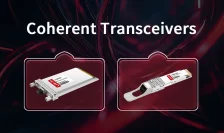
Kohärente Transceiver nutzen Phase, Amplitude und Polarisation, um Hochgeschwindigkeits- und Langstrecken-Datenübertragung mit verbesserter Signalqualität zu ermöglichen.
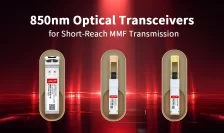
10GBASE-SR-, 40GBASE-SR4-, 100GBASE-SR4- und 400GBASE-SR8-850-nm-Optikmodule sind die zuverlässigste und kosteneffizienteste Wahl für kurze Verbindungen über Multimodefasern.
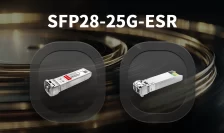
sfp28-25g-esr ist ein 25-G-Optiktransceiver, der schnelle, zuverlässige Datenübertragung und erweiterte Reichweite für moderne Netzwerkinfrastrukturen bietet.
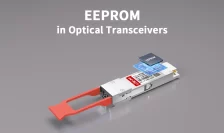
Erfahren Sie, warum EEPROM für Modulidentifikation, -überwachung und -kompatibilität unverzichtbar ist und wie die SFP-/QSFP-Module von LINK-PP den Standards SFF-8472 und SFF-8024 entsprechen.
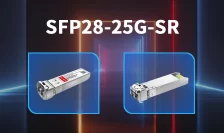
Der SFP28-25G-SR-Transceiver bietet Übertragungsgeschwindigkeiten von 25 Gbit/s, Kurzstrecken-Faseranbindung und zuverlässige Leistung für Rechenzentren und Unternehmensnetzwerke.
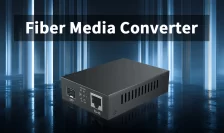
Wandeln Sie Glasfaser zwischen Multimode- und Singlemode-Technologie mithilfe intelligenter Methoden für höhere Geschwindigkeit, größere Reichweite und zuverlässige Netzwerkleistung um.
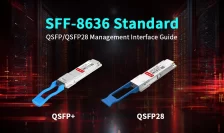
Erfahren Sie, was SFF-8636 ist, warum es für QSFP-/QSFP28-Optik wichtig ist und wie dessen 2-Draht-Management-Schnittstelle, Speicherabbildung, Leistungsklassen und Alarme die Interoperabilität sicherstellen.
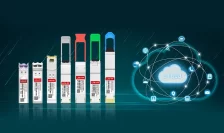
Optische Module stärken das Cloud-Computing, indem sie eine schnelle, zuverlässige und skalierbare Datenübertragung in modernen Rechenzentren ermöglichen.
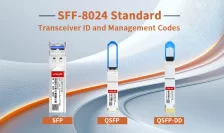
Understand how SFF-8024 ensures accurate module identification, interoperability, and scalability for SFP, SFP+, QSFP, OSFP, and next-generation optical modules.
What Frame Check Sequence (FCS) means, how CRC-32 detects corrupted Ethernet frames, and why FCS errors are commonly associated with cable faults, fiber issues, or optical transceiver problems.
Discover how optical cross‑connect (OXC) enables all‑optical switching in DWDM/OTN networks, with LINK‑PP SFP modules ensuring seamless integration and superior performance.
Learn what Dispersion Compensation Fiber (DCF) is, how it reduces chromatic dispersion, where it is used, and why it matters in modern optical networks.
Learn what OEO means in optical communication, how optical-electrical-optical regeneration works, and when it is used in DWDM networks and optical links. Keywords:
Discover the LQ‑SW40‑SR4C 40GBASE‑SR module: high-speed, low-power, QSFP+ optics for multimode fibre networks. Perfect for data centres and network upgrades.
Learn what hyperconverged infrastructure HCI is, how it compares with virtualization and dHCI, and when Nutanix, Sangfor, or SFP-based designs fit best.