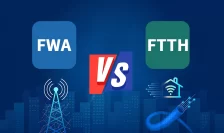
Vergleichen Sie die Breitbandtechnologien FTTH und FWA. Erfahren Sie mehr über ihre Unterschiede hinsichtlich Geschwindigkeit, Kosten, Bereitstellung und Einsatzgebieten. Erfahren Sie, wie LINK-PP-SFP-Module beide Netzwerke unterstützen.
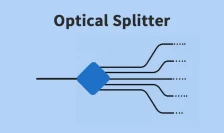
erklärt, wie optische Strahlteiler FTTH ermöglichen, welche Typen es gibt (FBT vs. PLC), wichtige Teilungsverhältnisse sowie deren Integration mit den optischen Modulen von LINK-PP für ein nahtloses Netzwerk.
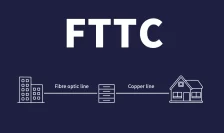
Erfahren Sie, was FTTC (Fiber to the Curb) ist, wie es funktioniert, welche Vor- und Nachteile es bietet und wie es sich zu FTTH und DSL verhält. Entdecken Sie Einsatzgebiete, erforderliche Ausrüstung und zukünftige Trends im Breitbandzugang.
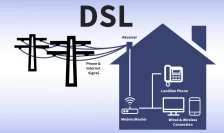
Erfahren Sie, was DSL (Digital Subscriber Line) ist, wie es funktioniert und worin sich ADSL, VDSL und andere Varianten unterscheiden. Entdecken Sie Vor- und Nachteile sowie die Zukunft der DSL-Technologie im Breitbandzugang.
Erfahren Sie, was Rechenzentren sind, wie sie funktionieren, welche Hauptarten es gibt und welche Zukunftstrends sie prägen. Erfahren Sie, warum Rechenzentren heute Cloud, KI und digitale Dienste antreiben.
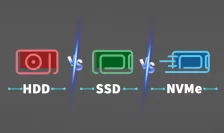
Erforschen Sie die Unterschiede zwischen HDD-, SSD- und NVMe-Laufwerken. Lernen Sie Geschwindigkeit, Kosten und optimale Einsatzgebiete kennen und erfahren Sie, wie LINK-PP-Anschlusslösungen Speichersysteme unterstützen.
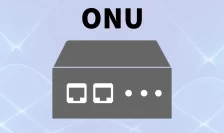
Was ist eine Optical Network Unit (ONU)? Eine ONU wandelt Glasfassersignale für Ihre Geräte um und gewährleistet schnelles, stabiles Internet zu Hause oder im Büro.
Was ist ein Optical Line Terminal (OLT)? Ein OLT ist das zentrale Gerät in Glasfasernetzen, das Signale umwandelt und Daten für schnelle, stabile Internetverbindungen verwaltet.
ONU vs. ONT erklärt: Verstehen Sie die wichtigsten Unterschiede, Funktionen und welches Gerät sich für Ihre Glasfaser-Internetanbindung zu Hause oder in gemeinschaftlich genutzten Gebäuden am besten eignet.
Discover what a MoR switch (Middle-of-Rack switch) is, how MoR compares to ToR/EoR, and which SFP+/SFP28/QSFP modules work best — a practical guide for datacenter design.
Learn what a ToR (Top-of-Rack) switch is, how ToR architecture works, and why it’s the preferred networking model in modern data centers. Includes benefits, use cases, and compatible optical transceiver solutions from LINK-PP.
HTTP vs. HTTPS: HTTPS verschlüsselt Daten für eine sichere Übertragung, während HTTP Informationen ungeschützt offenlegt. Wählen Sie HTTPS für Privatsphäre, Vertrauen und Compliance.
Vergleichen Sie 100G LR4, CWDM4 und PSM4, um den besten 100G-Transceiver für Ihr Netzwerk basierend auf Reichweite, Kosten und Verkabelungsanforderungen zu finden.
Erfahren Sie, was ein Backplane ist, wie Backplane-Kanäle Hochgeschwindigkeits-40G/100G-Ethernet unterstützen, welche wichtigen Standards gelten und welche Designherausforderungen bestehen. Lernen Sie, wie LINK-PP-RJ45-Steckverbinder die Backplane-Leistung verbessern.
Lernen Sie den IEEE-802.3bj-Standard für 100G-Ethernet-Backplane- und Kupferkabelverbindungen kennen. Erforschen Sie PAM4, FEC sowie KP4/KR4/CR4-PHYs und erfahren Sie, wie LINK-PP-Module Hochgeschwindigkeitsnetzwerke unterstützen.
Erfahren Sie mehr über die Rolle des Gearbox in modernen optischen Transceivern. Erfahren Sie, wie es Kanalausrichtung, Bitratenkonvertierung und Breakout für 50-G-, 100-G- und 200-G-Netzwerke ermöglicht.
What Frame Check Sequence (FCS) means, how CRC-32 detects corrupted Ethernet frames, and why FCS errors are commonly associated with cable faults, fiber issues, or optical transceiver problems.
Discover how optical cross‑connect (OXC) enables all‑optical switching in DWDM/OTN networks, with LINK‑PP SFP modules ensuring seamless integration and superior performance.
Learn what Dispersion Compensation Fiber (DCF) is, how it reduces chromatic dispersion, where it is used, and why it matters in modern optical networks.
Learn what OEO means in optical communication, how optical-electrical-optical regeneration works, and when it is used in DWDM networks and optical links. Keywords:
Discover the LQ‑SW40‑SR4C 40GBASE‑SR module: high-speed, low-power, QSFP+ optics for multimode fibre networks. Perfect for data centres and network upgrades.
Learn what hyperconverged infrastructure HCI is, how it compares with virtualization and dHCI, and when Nutanix, Sangfor, or SFP-based designs fit best.
Understand SFP+ 40km (10GBASE-ER) modules, including specs, SMF compatibility, and how to choose the right extended-reach optical transceiver for your network.