Passiv-optische Netze nutzen Glasfaser und nicht gespeiste Splitter, um schnell und zuverlässig Internet vom Anbieter effizient an mehrere Nutzer zu liefern.
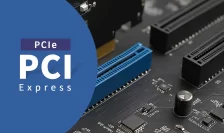
Erfahren Sie, was PCI Express (PCIe) ist, wie es funktioniert und warum es wichtig ist. Erforschen Sie PCIe-Versionen, Bandbreitengeschwindigkeiten sowie seine Rolle bei GPUs, SSDs und Rechenzentren.
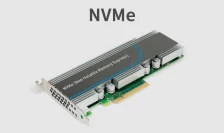
Erfahren Sie, was NVMe (Non-Volatile Memory Express) bedeutet, wie es sich mit SATA-SSDs vergleicht und warum es höhere Geschwindigkeit, geringere Latenz und bessere Effizienz bietet.
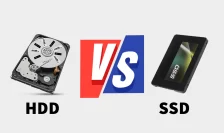
Discover the differences between HDD and SSD in speed, reliability, and cost. Learn which storage drive suits your needs and explore LINK-PP connectivity solutions.
Discover what a CPU (Central Processing Unit) is, how it works, and why it is vital in computing. Learn about its architecture, functions, and industry applications.
Differential mode delay in multimode fiber optics limits speed and data rates by causing pulse spreading, reducing signal clarity and network performance.
What are SFP ports on a switch? Learn how SFP ports support fiber and Ethernet connections, how they compare with RJ45 and SFP+, and which module you need.
An SGMII SFP transceiver enables fast Ethernet connections over copper or fiber, supporting flexible speeds and device compatibility in modern networks.
What Frame Check Sequence (FCS) means, how CRC-32 detects corrupted Ethernet frames, and why FCS errors are commonly associated with cable faults, fiber issues, or optical transceiver problems.
Discover how optical cross‑connect (OXC) enables all‑optical switching in DWDM/OTN networks, with LINK‑PP SFP modules ensuring seamless integration and superior performance.
Learn what Dispersion Compensation Fiber (DCF) is, how it reduces chromatic dispersion, where it is used, and why it matters in modern optical networks.
Learn what OEO means in optical communication, how optical-electrical-optical regeneration works, and when it is used in DWDM networks and optical links. Keywords:
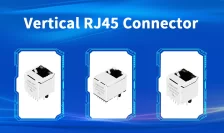
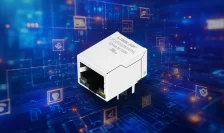
Entdecken Sie die vertikalen RJ45-Steckverbinder von LINK-PP. Sparen Sie Platz auf der Leiterplatte mit oberseitigen Einbaukonzepten, die integrierte Übertrager, Abschirmung und zuverlässige Ethernet-Leistung bieten.
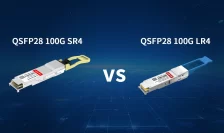
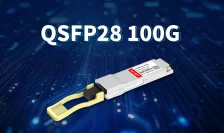
Vergleichen Sie QSFP28 100G SR4 und QSFP28 100G LR4, um den richtigen 100G-Transceiver für Ihr Netzwerk basierend auf Reichweite, Fasertyp, Steckverbindern und Budget auszuwählen.
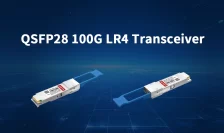
Ein 100G-LR4-Transceiver ermöglicht eine Datenübertragungsrate von 100 Gbit/s über bis zu 10 km mittels Single-Mode-Glasfaser und eignet sich ideal für hochgeschwindigkeitsfähige, langstreckige Netzwerkverbindungen.
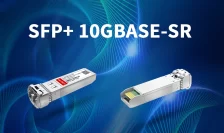
Erforschen Sie den optischen LINK-PP-LS-MM8510-S3C-SFP+-Transceiver mit 850 nm und 10GBASE-SR. Er bietet bis zu 300 m Reichweite auf Multimode-Glasfaser, geringen Stromverbrauch und vollständige Kompatibilität.
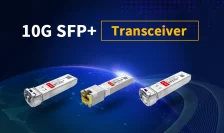
Wählen Sie den richtigen 10G-SFP+-Transceiver aus, indem Sie Kompatibilität, Geschwindigkeit, Medientyp, Reichweite und Kosten für zuverlässige Netzwerk-Upgrades vergleichen.
Entdecken Sie die hot-pluggablen optischen Module: So funktioniert Hot-Swap, welchen technischen Nutzen bietet es, welche Standards sind beteiligt und welche Aspekte sind bei der Bereitstellung zu berücksichtigen?.
Entdecken Sie den LINK-PP-LQ-M85100-SR4C-QSFP28-100G-SR4-Transceiver – ideal für kurze Reichweiten bei 100G-Ethernet über Multimode-Glasfaser (MMF). Kompatibel mit Cisco, Arista, FS, Dell und weiteren.
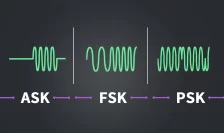
Bei der optischen Modulation werden Lichtparameter verändert, um Daten zu codieren, wodurch eine Hochgeschwindigkeits- und zuverlässige Übertragung in faseroptischen Kommunikationssystemen ermöglicht wird.
Erfahren Sie, was Datenbandbreite bedeutet, wie sie sich auf Geräte auswirkt und warum sie in der digitalen Kommunikation wichtig ist. Lernen Sie, wie LINK-PP den Hochgeschwindigkeitsdatentransfer unterstützt.
Der RJ45-Steckverbinder LPJG0926HENL mit integrierten Übertragern bietet PoE+-Unterstützung, platzsparende Bauweise und Konformität für leistungsstarke Ethernet-Anwendungen.
Subscribe to LINK-PP
newsletter
Don’t miss anything. Get all the latest posts delivered straight to your inbox.