What are SFP ports on a switch? Learn how SFP ports support fiber and Ethernet connections, how they compare with RJ45 and SFP+, and which module you need.
What Frame Check Sequence (FCS) means, how CRC-32 detects corrupted Ethernet frames, and why FCS errors are commonly associated with cable faults, fiber issues, or optical transceiver problems.
Discover the LQ‑SW40‑SR4C 40GBASE‑SR module: high-speed, low-power, QSFP+ optics for multimode fibre networks. Perfect for data centres and network upgrades.
Discover how optical cross‑connect (OXC) enables all‑optical switching in DWDM/OTN networks, with LINK‑PP SFP modules ensuring seamless integration and superior performance.
Discover what a MoR switch (Middle-of-Rack switch) is, how MoR compares to ToR/EoR, and which SFP+/SFP28/QSFP modules work best — a practical guide for datacenter design.
Erfahren Sie, was ein ToR-Switch (Top-of-Rack) ist, wie die ToR-Architektur funktioniert und warum sie das bevorzugte Netzwerkmodell in modernen Rechenzentren ist. Enthält Vorteile, Anwendungsfälle und kompatible optische Transceiver-Lösungen von LINK-PP.
WLAN umfasst alle drahtlosen lokalen Netzwerke, während Wi-Fi ein bestimmter WLAN-Typ ist, der festgelegte Standards für schnelle, zuverlässige Verbindungen verwendet.
HTTP vs. HTTPS: HTTPS verschlüsselt Daten für eine sichere Übertragung, während HTTP Informationen ungeschützt offenlegt. Wählen Sie HTTPS für Privatsphäre, Vertrauen und Compliance.
Vergleichen Sie 100G LR4, CWDM4 und PSM4, um den besten 100G-Transceiver für Ihr Netzwerk basierend auf Reichweite, Kosten und Verkabelungsanforderungen zu finden.
Erfahren Sie, was ein Backplane ist, wie Backplane-Kanäle Hochgeschwindigkeits-40G/100G-Ethernet unterstützen, welche wichtigen Standards gelten und welche Designherausforderungen bestehen. Lernen Sie, wie LINK-PP-RJ45-Steckverbinder die Backplane-Leistung verbessern.
Lernen Sie den IEEE-802.3bj-Standard für 100G-Ethernet-Backplane- und Kupferkabelverbindungen kennen. Erforschen Sie PAM4, FEC sowie KP4/KR4/CR4-PHYs und erfahren Sie, wie LINK-PP-Module Hochgeschwindigkeitsnetzwerke unterstützen.
Erfahren Sie mehr über die Rolle des Gearbox in modernen optischen Transceivern. Erfahren Sie, wie es Kanalausrichtung, Bitratenkonvertierung und Breakout für 50-G-, 100-G- und 200-G-Netzwerke ermöglicht.
Was ist LWDM? LWDM ist eine LAN-WDM-Technologie, die mehrere Wellenlängen nutzt, um Bandbreite und Effizienz in lokalen Netzwerken und Rechenzentren zu steigern.
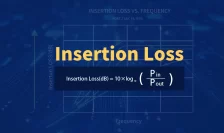
Einbauverlust bei RJ45-Steckverbindern schwächt die Signalstärke und beeinträchtigt die Netzwerkzuverlässigkeit. Erfahren Sie, wie Sie den Einbauverlust minimieren können, um optimale Leistung zu erzielen.
Ein Oberflächenmontagebauelement (SMD) ist ein kompaktes elektronisches Bauteil, das direkt auf einer Leiterplatte montiert wird und so kleinere, schnellere und effizientere moderne Elektronik ermöglicht.
Erfahren Sie, was ein DFB-Laser (Distributed Feedback Laser) ist, wie er funktioniert, welchen Aufbau er hat und worin sich seine wesentlichen Unterschiede zu FP- und VCSEL-Lasern zeigen.
CPRI (Common Public Radio Interface) verbindet Basisbandeinheiten mit entfernten Funkeinheiten und ermöglicht so Hochgeschwindigkeitskommunikation mit geringer Latenz in drahtlosen Netzwerken.
Ein mit Erbium dotierter Faserverstärker verstärkt optische Signale in Fasernetzwerken und ermöglicht so die Kommunikation über große Entfernungen mit minimalem Verlust und hoher Effizienz.
EMC (elektromagnetische Verträglichkeit) stellt sicher, dass Geräte sicher und zuverlässig in gemeinsam genutzten Umgebungen arbeiten, indem Störungen minimiert und gesetzliche Konformitätsstandards eingehalten werden.
Elektromagnetische Störungen (EMI) stören elektronische Geräte, indem sie unerwünschte elektromagnetische Energie einführen und dadurch Fehlfunktionen sowie Leistungsprobleme verursachen.
Bei der Durchstecktechnologie (THT) werden die Anschlussdrähte von Bauteilen in Bohrungen einer Leiterplatte eingeführt und verlötet, wodurch robuste Verbindungen für Anwendungen mit hoher Zuverlässigkeit gewährleistet werden.
SMT (Surface Mount Technology) ist ein Verfahren zum Aufbringen elektronischer Komponenten direkt auf Leiterplattenoberflächen und ermöglicht kompakte Designs sowie eine effiziente Fertigung.
Complete guide to GLC-SX-MMD 1000BASE-SX SFP module: specs, MMF vs SMF, DOM features, compatibility, and best alternatives for cost-effective deployment.
Learn how compatible transceivers work and how to ensure switch compatibility. Avoid SFP errors, vendor locks, and choose the right module confidently.
Learn how a 1000BASE-T SFP transceiver module works with Category 5 copper wire, including compatibility limits, heat issues, and real-world deployment tips.
Learn the SFP28 standard, including its 25G capabilities, SFP28 vs. SFP+ differences, fiber and copper options, and how to choose the right 25G solution.
Subscribe to LINK-PP
newsletter
Don’t miss anything. Get all the latest posts delivered straight to your inbox.