Learn what the SFP standard really means, including specifications, compatibility rules, and real-world limitations. Avoid costly mistakes when choosing SFP modules.
Signal integrity and low latency in data center transceivers ensure reliable, error-free data transmission and optimal performance for real-time applications.
Le jitter en optique provoque un flou d'image et des erreurs de données dans les systèmes optiques. Découvrez ses types, effets, causes, ainsi que les méthodes de mesure et de réduction du jitter.
What Frame Check Sequence (FCS) means, how CRC-32 detects corrupted Ethernet frames, and why FCS errors are commonly associated with cable faults, fiber issues, or optical transceiver problems.
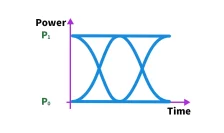
Understand what a Digital Communication Analyzer (DCA) is, how it works, and why it is essential for optical module testing, eye diagrams, and signal integrity.
Discover the Decision Feedback Equalizer (DFE), the nonlinear technique essential for minimizing ISI. Learn how DFE improves bit BER in optics transceivers and long-haul data links.
Learn what the PCS (Physical Coding Sublayer) is, how it enables reliable Ethernet transmission, and why it matters for high-speed optical transceivers and network design.
Dispersion compensation in optical systems corrects chromatic dispersion, ensuring clear, accurate signals in fiber optic communication and imaging applications.
Receiver sensitivity shows the lowest signal a device can detect. Learn how it impacts connection quality and what values mean for your device’s performance.
Discover the LINK-PP LS-MM8510-S3C, a 100% MSA-compliant & fully compatible replacement for the Juniper EX-SFP-10GE-SR. Save up to 60% without sacrificing performance. Features DDM/DOM support. Ideal for data center & enterprise networks.
Understand optical transceiver terminology like SR, LR, ER, and ZR to choose the right module for your network's speed, distance, and compatibility needs.
Subscribe to LINK-PP
newsletter
Don’t miss anything. Get all the latest posts delivered straight to your inbox.