Post

Articolo popolare

What are SFP ports on a switch? Learn how SFP ports support fiber and Ethernet connections, how they compare with RJ45 and SFP+, and which module you need.
Learn what an SFP link is, why it fails, and how to fix compatibility, cabling, and link-flap issues with practical checks and clear steps.
What Frame Check Sequence (FCS) means, how CRC-32 detects corrupted Ethernet frames, and why FCS errors are commonly associated with cable faults, fiber issues, or optical transceiver problems.
Discover the LQ‑SW40‑SR4C 40GBASE‑SR module: high-speed, low-power, QSFP+ optics for multimode fibre networks. Perfect for data centres and network upgrades.
What are SFP ports on a switch? Learn how SFP ports support fiber and Ethernet connections, how they compare with RJ45 and SFP+, and which module you need.
Learn what an SFP link is, why it fails, and how to fix compatibility, cabling, and link-flap issues with practical checks and clear steps.
Optical transceivers in UAVs enable high-speed, secure, and low-latency drone communication for real-time video, telemetry, and mission-critical data.
Explore the technology behind 400 G QSFP‑DD transceivers, including form factor, modulation, optical lanes, and thermal design.
Understand hot‑pluggable optical modules insertion cycle limits, and learn care tips—including ESD-safe handling, dust prevention, and heat management.
Understand what CRC is, how cyclic redundancy check errors happen, how to fix them, and why CRC matters in networking, storage, and SFP modules.
What Frame Check Sequence (FCS) means, how CRC-32 detects corrupted Ethernet frames, and why FCS errors are commonly associated with cable faults, fiber issues, or optical transceiver problems.
Discover the LQ‑SW40‑SR4C 40GBASE‑SR module: high-speed, low-power, QSFP+ optics for multimode fibre networks. Perfect for data centres and network upgrades.
Discover how optical cross‑connect (OXC) enables all‑optical switching in DWDM/OTN networks, with LINK‑PP SFP modules ensuring seamless integration and superior performance.
Discover how EML works in optical modules, why it’s vital for high‑speed, long‑distance links, and how LINK‑PP brings EML‑based optical transceivers.
MUX e DEMUX semplificano la trasmissione dei dati combinando e suddividendo i segnali, riducendo il numero di cavi e migliorando l’efficienza e l’affidabilità della rete.
Scopri come gli impulsi ottici trasmettono dati ad alta velocità nelle reti in fibra. Esplora i principi, le applicazioni e il motivo per cui i transceiver ottici LINK-PP generano impulsi più puliti e affidabili.
La virtualizzazione del data center utilizza software per creare server virtuali, archiviazione e reti, migliorando l'efficienza, riducendo i costi e potenziando la flessibilità.
Confronta le funzioni, le perdite di segnale e gli utilizzi ideali dei divisori e degli accoppiatori ottici per scegliere il dispositivo più adatto alla distribuzione efficiente nelle moderne reti.
Una rete gestita dal cloud ti consente di controllare i dispositivi da remoto tramite una dashboard web, offrendo una gestione semplificata, aggiornamenti automatici e una sicurezza avanzata.
Scopri come EtherCAT permette l'automazione industriale ad alta velocità. Impara come EtherCAT raggiunge la sincronizzazione sub-microsecondo, i suoi principi e perché è cruciale per il controllo moderno del movimento e le smart factory.
Scopri come PCS, PMA e PMD operano congiuntamente all'interno della PHY Ethernet, abilitando una trasmissione dati ad alta velocità affidabile su reti in fibra ottica e in rame.
Approfondisci lo standard IEEE 802.3bs, la base per l’Ethernet moderna a 200G e 400G. Scopri le specifiche, la modulazione PAM4 e come questa tecnologia sta guidando i data center iperscalari con i transceiver ottici.
Scopri cos’è IEEE 802.3bm e come definisce le principali interfacce fisiche (PHY) per l’Ethernet 40G e 100G. Esplora le tecnologie SR4, LR4, CR4 e perché questo standard alimenta i data center moderni.
L'open source offre il controllo sul codice software, mentre l'open networking consente di combinare hardware e software provenienti da diversi fornitori per ottenere reti flessibili.
Cos’è LWDM? LWDM è una tecnologia WDM per LAN che utilizza più lunghezze d’onda per aumentare larghezza di banda ed efficienza nelle reti locali e nei data center.
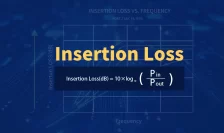
Le perdite per inserzione nei connettori RJ45 indeboliscono la potenza del segnale, compromettendo l'affidabilità della rete. Scopri come ridurre al minimo le perdite per inserzione per prestazioni ottimali.
Un dispositivo a montaggio superficiale (SMD) è un componente elettronico compatto montato direttamente su una scheda a circuito stampato (PCB), consentendo elettronica moderna più piccola, più veloce e più efficiente.
Scopri cos’è un laser DFB (Distributed Feedback Laser), il suo principio di funzionamento, la sua struttura e le principali differenze rispetto ai laser FP e VCSEL.
Un amplificatore ottico a fibra drogata con erbio (EDFA) potenzia i segnali ottici nelle reti in fibra, consentendo comunicazioni su lunghe distanze con perdite minime e alta efficienza.
CPRI (Common Public Radio Interface) collega le unità di baseband alle unità radio remote, abilitando comunicazioni ad alta velocità e bassa latenza nelle reti wireless.
EMC (Compatibilità elettromagnetica) garantisce che i dispositivi funzionino in modo sicuro e affidabile in ambienti condivisi, riducendo al minimo le interferenze e rispettando gli standard di conformità.
Electromagnetic interference (EMI) disrupts electronic devices by introducing unwanted electromagnetic energy, causing malfunctions and performance issues.
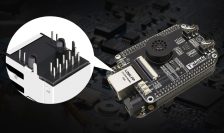
La tecnologia Through-Hole (THT) prevede l’inserimento dei terminali dei componenti nei fori della scheda a circuito stampato (PCB) e la loro saldatura, garantendo connessioni durevoli per applicazioni ad alta affidabilità.
SMT, o Surface Mount Technology (tecnologia di montaggio superficiale), è un metodo per montare direttamente componenti elettronici sulle superfici delle schede a circuito stampato (PCB), consentendo progettazioni compatte e una produzione efficiente.

Discover the LQ‑SW40‑SR4C 40GBASE‑SR module: high-speed, low-power, QSFP+ optics for multimode fibre networks. Perfect for data centres and network upgrades.
Learn what hyperconverged infrastructure HCI is, how it compares with virtualization and dHCI, and when Nutanix, Sangfor, or SFP-based designs fit best.
What an FC SFP module is, how it differs from Ethernet SFPs, which speeds and fiber types it supports, and how to choose the right one.

Learn the real difference between 1000base-lh and 1000base-lx, including wavelength, fiber compatibility, Cisco naming, and when to use each.
Learn what a Gigabit SFP transceiver is, compare 1000BASE-SX, LX, and T options, and solve common compatibility and setup issues with confidence.
Learn what a 10/100/1000BASE-T SFP is, how RJ45 copper SFP modules work, compatibility issues, heat concerns, and best use cases in networks.
Compare CFP4 vs. QSFP28 by size, power, density, and deployment fit. Learn which 100G module is better for data centers, telecom, and upgrades.
Explore the Netgear AGM731F datasheet with specs, LC connector, OM1/OM3/OM4 distances, compatibility, power use, and operating limits.
Understand SFP+ 40km (10GBASE-ER) modules, including specs, SMF compatibility, and how to choose the right extended-reach optical transceiver for your network.
Learn QSFP+ 40GBASE-LR4 specs, distance limits, compatibility tips, and buying advice. Avoid common deployment issues with this expert guide.

Add Your Heading Text Here