What are SFP ports on a switch? Learn how SFP ports support fiber and Ethernet connections, how they compare with RJ45 and SFP+, and which module you need.
What Frame Check Sequence (FCS) means, how CRC-32 detects corrupted Ethernet frames, and why FCS errors are commonly associated with cable faults, fiber issues, or optical transceiver problems.
Discover the LQ‑SW40‑SR4C 40GBASE‑SR module: high-speed, low-power, QSFP+ optics for multimode fibre networks. Perfect for data centres and network upgrades.
Lo splitter FBT offre un modo economico per suddividere i segnali ottici nelle reti in fibra, ideale per configurazioni ridotte che richiedono una distribuzione semplice e personalizzabile del segnale.
Scopri come funziona la traduzione degli indirizzi di rete (NAT, Network Address Translation), i suoi tipi, i vantaggi, i limiti e le migliori pratiche per le implementazioni IPv6 e aziendali.
Scoprite cos’è un telefono VoIP, come funziona e perché è fondamentale per le moderne comunicazioni. Conoscete i principali vantaggi e come i connettori RJ45 LINK-PP li supportano.
Scoprite cos’è un connettore RJ45, il suo schema di pinout, i tipi di cablaggio e come supporta reti Ethernet, PoE e Gigabit. Scoprite le soluzioni RJ45 LINK-PP per una connettività affidabile.
Scoprite come le prese magnetiche RJ45 garantiscono un'alimentazione stabile, segnali puliti e connessioni di rete affidabili nei telefoni VoIP — con soluzioni RJ45 pronte per PoE LINK-PP.
Un indirizzo IPv4 identifica in modo univoco il vostro dispositivo su una rete, consentendo l’accesso a Internet e il trasferimento sicuro di dati tra dispositivi in tutto il mondo.
Il Tempo Medio Tra Guasti (MTBF) indica per quanto tempo un apparecchio funziona prima di guastarsi, aiutandovi a pianificare la manutenzione e ad aumentare l'affidabilità.
Learn the key differences between IEEE 802.3af (PoE), 802.3at (PoE+), and 802.3bt (PoE++). Understand power levels, compatibility, and applications with LINK-PP’s PoE magnetics solutions.
RDMA over Converged Ethernet enables fast, low-latency data transfers using standard Ethernet hardware, reducing CPU usage and improving network efficiency.
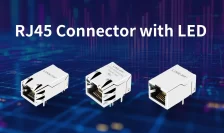
I LED su un connettore RJ45 con LED indicano lo stato del collegamento, la velocità di connessione e l’attività dei dati, aiutando gli utenti a diagnosticare rapidamente i problemi di rete.
Applications of LAN transformers include protecting network devices, ensuring signal integrity, and supporting reliable data in Ethernet, PoE, and industrial systems.
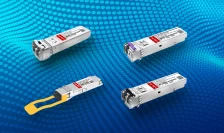
Optical Modules differ by fiber count and mode: single/dual fiber affects cabling, while single-mode/multi-mode impacts distance and speed in networks.
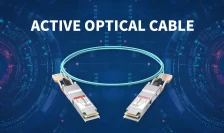
Un cavo ottico attivo utilizza trasceivers integrati per convertire i segnali elettrici in luce, consentendo la trasmissione di dati ad alta velocità e su lunghe distanze con perdite minime.
CPO vs LPO: Compare key differences, benefits, power savings, and best use cases for data centers to choose the right optical technology for your needs.
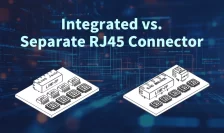
Learn the differences between integrated and separate RJ45 connectors from LINK-PP. Discover how to choose the right solution for your Ethernet applications.
LPO transceivers cut power use, lower latency, and boost reliability in data centers, making them ideal for high-speed, energy-efficient optical links.
What Frame Check Sequence (FCS) means, how CRC-32 detects corrupted Ethernet frames, and why FCS errors are commonly associated with cable faults, fiber issues, or optical transceiver problems.
Discover how optical cross‑connect (OXC) enables all‑optical switching in DWDM/OTN networks, with LINK‑PP SFP modules ensuring seamless integration and superior performance.
Learn what Dispersion Compensation Fiber (DCF) is, how it reduces chromatic dispersion, where it is used, and why it matters in modern optical networks.
Learn what OEO means in optical communication, how optical-electrical-optical regeneration works, and when it is used in DWDM networks and optical links. Keywords:
Discover the LQ‑SW40‑SR4C 40GBASE‑SR module: high-speed, low-power, QSFP+ optics for multimode fibre networks. Perfect for data centres and network upgrades.
Learn what hyperconverged infrastructure HCI is, how it compares with virtualization and dHCI, and when Nutanix, Sangfor, or SFP-based designs fit best.
Understand SFP+ 40km (10GBASE-ER) modules, including specs, SMF compatibility, and how to choose the right extended-reach optical transceiver for your network.
Subscribe to LINK-PP
newsletter
Don’t miss anything. Get all the latest posts delivered straight to your inbox.