What are SFP ports on a switch? Learn how SFP ports support fiber and Ethernet connections, how they compare with RJ45 and SFP+, and which module you need.
What Frame Check Sequence (FCS) means, how CRC-32 detects corrupted Ethernet frames, and why FCS errors are commonly associated with cable faults, fiber issues, or optical transceiver problems.
Discover the LQ‑SW40‑SR4C 40GBASE‑SR module: high-speed, low-power, QSFP+ optics for multimode fibre networks. Perfect for data centres and network upgrades.
Esplora come le reti 6G mettano alla prova i transceiver ottici con esigenze di larghezza di banda ultra-elevata e scopri soluzioni avanzate come CPO, fotonica su silicio e moduli ottici LINK-PP pronti per la 6G.
Confronta il Protocollo di sincronizzazione dell’ora di rete (NTP) e il Protocollo di sincronizzazione temporale di precisione (PTP) per scegliere la soluzione di sincronizzazione temporale più adatta alle esigenze di accuratezza e hardware della tua rete.
Scopri come la fotonica su silicio stia ridefinendo i transceiver ottici con larghezza di banda maggiore, minore consumo energetico e integrazione avanzata per reti AI, 5G e data center.
Scopri come la fotonica su silicio abilita comunicazioni ottiche ad alta velocità ed energeticamente efficienti integrando fotonica ed elettronica su silicio—applicazioni, vantaggi e sfide.
Il Protocollo di sincronizzazione dell’ora di rete (NTP) sincronizza gli orologi dei dispositivi attraverso le reti, garantendo un’ora precisa per l’integrità dei dati, la sicurezza e il corretto funzionamento.
Fibre Channel over Ethernet (FCoE) consente al traffico di storage Fibre Channel di viaggiare sulle reti Ethernet, semplificando la connettività del data center e riducendo i costi.
L’operazione multi-link (MLO) in Wi-Fi consente ai dispositivi di utilizzare contemporaneamente più bande, migliorando velocità, stabilità e prestazioni nelle reti Wi-Fi 7.
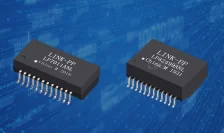
Esplora come i trasformatori Ethernet consentono una trasmissione dati affidabile e resistente all'EMI nei sistemi Ethernet avionici. Impara le loro funzioni, i requisiti di progettazione e le soluzioni LINK-PP.
Esplora le differenze fondamentali tra le interfacce di fronthaul CPRI ed eCPRI — larghezza di banda, latenza, functional-split, topologia di trasporto — e perché l’eCPRI sta guidando le implementazioni 5G.
Il Time-Sensitive Networking garantisce una consegna affidabile e puntuale dei dati, mentre il PTP si concentra sulla sincronizzazione degli orologi. Confronta TSN e PTP per le tue esigenze di rete.
I moduli ottici LINK-PP offrono elevata larghezza di banda, bassa latenza e affidabilità per carichi di lavoro di intelligenza artificiale, IoT e Big Data in reti scalabili ed energeticamente efficienti.
Scopri come i connettori RJ45 LINK-PP, le soluzioni PoE e i trasformatori LAN migliorano le prestazioni delle telecamere PTZ, fornendo alimentazione stabile, dati ad alta velocità e protezione contro le interferenze elettromagnetiche (EMI) per reti intelligenti di videosorveglianza.
Scopri le funzioni essenziali dei trasformatori LAN PoE e in che modo i componenti magnetici LINK-PP assicurano un’erogazione stabile di energia e una trasmissione dati Ethernet ad alta velocità.
demistificare la protezione PON, partendo dall’architettura di base a singolo collegamento (single-homing), per poi concentrarsi sulla ridondanza avanzata a doppio collegamento (dual-homing) di tipo B
Riduci il consumo energetico dei transceiver ottici mediante moduli efficienti, raffreddamento intelligente e gestione intelligente nei moderni data center.
L'indirizzo IPv4 utilizza un formato numerico a 32 bit, mentre IPv6 offre indirizzi alfanumerici a 128 bit, maggiore capacità e miglior sicurezza per reti in crescita.
L’ottico riflettometro nel dominio del tempo (OTDR) individua i guasti, misura le perdite di giunzione e garantisce l'affidabilità dei cavi in fibra ottica per una manutenzione efficiente della rete.
Scopri cos’è la FCC, come le parti 15 e 68 della normativa FCC influenzano i dispositivi di rete e come i connettori RJ45 magnetici LINK-PP supportano la conformità FCC in materia di EMI.
Discover what VoIP Phones are, how they work, and why they matter for modern communication. Learn key benefits and how LINK-PP RJ45 connectors support them.
What Frame Check Sequence (FCS) means, how CRC-32 detects corrupted Ethernet frames, and why FCS errors are commonly associated with cable faults, fiber issues, or optical transceiver problems.
Discover how optical cross‑connect (OXC) enables all‑optical switching in DWDM/OTN networks, with LINK‑PP SFP modules ensuring seamless integration and superior performance.
Learn what Dispersion Compensation Fiber (DCF) is, how it reduces chromatic dispersion, where it is used, and why it matters in modern optical networks.
Learn what OEO means in optical communication, how optical-electrical-optical regeneration works, and when it is used in DWDM networks and optical links. Keywords:
Discover the LQ‑SW40‑SR4C 40GBASE‑SR module: high-speed, low-power, QSFP+ optics for multimode fibre networks. Perfect for data centres and network upgrades.
Learn what hyperconverged infrastructure HCI is, how it compares with virtualization and dHCI, and when Nutanix, Sangfor, or SFP-based designs fit best.
Understand SFP+ 40km (10GBASE-ER) modules, including specs, SMF compatibility, and how to choose the right extended-reach optical transceiver for your network.