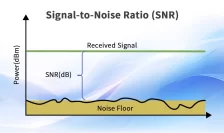
L’SNR, ovvero il rapporto segnale-rumore, misura l’intensità del segnale rispetto al rumore. Un valore elevato di SNR significa audio, immagini e dati più chiari, con una qualità complessiva del segnale migliore.
Learn what an Ethernet PHY is, how it connects MAC to network medium, core functions, signal types, and how it pairs with LINK‑PP Magnetics for Ethernet design.
SFP28 è un modulo trasceiver 25G per il trasferimento rapido ed efficiente dei dati nelle reti moderne, offrendo elevata velocità, compatibilità e risparmio energetico.
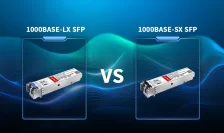
1000BASE-LX SFP supports up to 10km over single-mode fiber, while 1000BASE-SX is ideal for short-range links. Compare specs, fiber types, and use cases.
Un SFP 1000BASE-SX è un transceiver gigabit per fibra multimodale, che consente connessioni Ethernet da 1 Gbps fino a 550 metri utilizzando una lunghezza d’onda di 850 nm.
L’SFP 1000BASE-LX consente connessioni in fibra affidabili da 1 Gbps fino a 10 km, supportando sia fibra monomodale che multimodale per dispositivi di rete moderni.
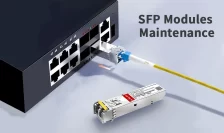
Scopri come pulire, utilizzare e monitorare i transceiver ottici SFP per migliorare l'affidabilità della rete e prolungare la vita utile dei moduli SFP.
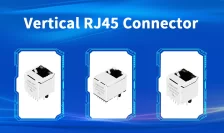
Scopri i connettori RJ45 verticali LINK-PP. Risparmia spazio sulla scheda con design a inserimento superiore che offrono magnetics integrati, schermatura e prestazioni Ethernet affidabili.
Scopri in che modo il connettore RJ45 Magjack LINK-PP migliora la stabilità della QoS potenziando l’integrità del segnale, riducendo le interferenze elettromagnetiche (EMI) e garantendo una trasmissione affidabile per le reti moderne.
L’interoperabilità nelle reti significa che dispositivi e sistemi provenienti da diversi produttori possono connettersi, condividere dati e funzionare insieme in modo senza soluzione di continuità utilizzando standard comuni.
Risolvi i problemi comuni nelle reti dei data center, tra cui interruzioni del servizio, velocità ridotte ed errori di configurazione, con pratici consigli per il troubleshooting.
Esplora i ruoli dei router di commutazione di etichette (LSR) e dei router di bordo di etichette (LER) nelle reti MPLS. Scopri le loro funzioni, le differenze tra loro e come i prodotti LINK-PP supportano percorsi commutati tramite etichette ad alta velocità e affidabili.
Scopri le differenze tra le architetture di rete P2P, P2MP, MP2P e MP2MP. Scopri come i transceiver ottici LINK-PP abilitano una connettività efficiente e ad alta velocità.
Riduci il jitter nelle reti ottiche ottimizzando il design, utilizzando QoS, aggiornando l'hardware e monitorando le prestazioni per connessioni stabili e a bassa latenza.
Scopri le differenze tra modulatori fotonici al silicio e modulatori ottici tradizionali, i loro principi di funzionamento, i vantaggi e il loro ruolo nei trasceivers ottici di nuova generazione.
Esplora come i connettori RJ45 evolvono per affrontare le sfide del 6G relative alla latenza ultra-bassa e alle comunicazioni ultra-veloci. Scopri le avanzate soluzioni Ethernet ad alta frequenza di LINK-PP.
What Frame Check Sequence (FCS) means, how CRC-32 detects corrupted Ethernet frames, and why FCS errors are commonly associated with cable faults, fiber issues, or optical transceiver problems.
Discover how optical cross‑connect (OXC) enables all‑optical switching in DWDM/OTN networks, with LINK‑PP SFP modules ensuring seamless integration and superior performance.
Learn what Dispersion Compensation Fiber (DCF) is, how it reduces chromatic dispersion, where it is used, and why it matters in modern optical networks.
Learn what OEO means in optical communication, how optical-electrical-optical regeneration works, and when it is used in DWDM networks and optical links. Keywords:
Discover the LQ‑SW40‑SR4C 40GBASE‑SR module: high-speed, low-power, QSFP+ optics for multimode fibre networks. Perfect for data centres and network upgrades.
Learn what hyperconverged infrastructure HCI is, how it compares with virtualization and dHCI, and when Nutanix, Sangfor, or SFP-based designs fit best.
Understand SFP+ 40km (10GBASE-ER) modules, including specs, SMF compatibility, and how to choose the right extended-reach optical transceiver for your network.