Confronta il Protocollo di sincronizzazione dell’ora di rete (NTP) e il Protocollo di sincronizzazione temporale di precisione (PTP) per scegliere la soluzione di sincronizzazione temporale più adatta alle esigenze di accuratezza e hardware della tua rete.
Il Precision Time Protocol sincronizza gli orologi dei dispositivi di rete con un’accuratezza nell’ordine dei microsecondi, riducendo gli errori e migliorando l'affidabilità nelle applicazioni critiche.
Scopri cos’è l’eCPRI (Enhanced Common Public Radio Interface), come abilita un fronthaul 5G efficiente con latenza ridotta e come i moduli ottici supportano le reti eCPRI.
Un Converged Network Adapter combina connettività di rete e di storage in un unico dispositivo, riducendo l’hardware e semplificando la gestione del data center.
Il Time-Sensitive Networking garantisce una consegna affidabile e puntuale dei dati, mentre il PTP si concentra sulla sincronizzazione degli orologi. Confronta TSN e PTP per le tue esigenze di rete.
Esplora come i trasformatori Ethernet consentono una trasmissione dati affidabile e resistente all'EMI nei sistemi Ethernet avionici. Impara le loro funzioni, i requisiti di progettazione e le soluzioni LINK-PP.
Esplora le differenze fondamentali tra le interfacce di fronthaul CPRI ed eCPRI — larghezza di banda, latenza, functional-split, topologia di trasporto — e perché l’eCPRI sta guidando le implementazioni 5G.
Una soluzione di ripristino di emergenza per reti ottiche garantisce un recupero rapido, riduce al minimo i tempi di inattività e protegge le operazioni critiche del data center da guasti imprevisti.
Scopri le differenze tra CPU, GPU, TPU ed NPU. Questa guida approfondita spiega le loro architetture, i casi d’uso e le prestazioni nell’IA, nel cloud e nel computing edge.
Discover what HDI PCB (High-Density Interconnect) is, its advantages, manufacturing techniques, and key applications in modern electronics and 5G devices.
Explaining what true SFF modules are, their critical advantages in fixed-configuration systems, and why they remain a cornerstone of modern network design.
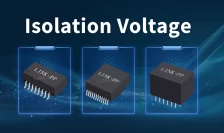
Discover the role of isolation voltage in LAN transformers, why IEEE 802.3 sets 1500 Vrms, and how LINK-PP products ensure safe, reliable Ethernet connections.
What Frame Check Sequence (FCS) means, how CRC-32 detects corrupted Ethernet frames, and why FCS errors are commonly associated with cable faults, fiber issues, or optical transceiver problems.
Discover how optical cross‑connect (OXC) enables all‑optical switching in DWDM/OTN networks, with LINK‑PP SFP modules ensuring seamless integration and superior performance.
Learn what Dispersion Compensation Fiber (DCF) is, how it reduces chromatic dispersion, where it is used, and why it matters in modern optical networks.
Learn what OEO means in optical communication, how optical-electrical-optical regeneration works, and when it is used in DWDM networks and optical links. Keywords:
Discover the LQ‑SW40‑SR4C 40GBASE‑SR module: high-speed, low-power, QSFP+ optics for multimode fibre networks. Perfect for data centres and network upgrades.
Learn what hyperconverged infrastructure HCI is, how it compares with virtualization and dHCI, and when Nutanix, Sangfor, or SFP-based designs fit best.
Understand SFP+ 40km (10GBASE-ER) modules, including specs, SMF compatibility, and how to choose the right extended-reach optical transceiver for your network.
Subscribe to LINK-PP
newsletter
Don’t miss anything. Get all the latest posts delivered straight to your inbox.