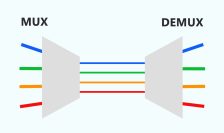
MUX e DEMUX semplificano la trasmissione dei dati combinando e suddividendo i segnali, riducendo il numero di cavi e migliorando l’efficienza e l’affidabilità della rete.
Apprendi cosa è il PMA (Physical Medium Attachment), come gestisce la serializzazione e il ritorno del clock e perché è essenziale per i moderni trasmettitori ottici a alta velocità.
Il Physical Medium Dependent (PMD) definisce le regole ottiche e elettroniche di un PHY – lunghezza d'onda, potenza, distanza e punti di prova. Comprendi le specifiche PMD e come guidano la selezione dei trasmettitori.
Apprendi cosa è il PCS (Physical Coding Sublayer), come abilita la trasmissione Ethernet affidabile e perché è importante per i trasmettitori ottici a alta velocità e il progettazione della rete.
Scopri come PCS, PMA e PMD operano congiuntamente all'interno della PHY Ethernet, abilitando una trasmissione dati ad alta velocità affidabile su reti in fibra ottica e in rame.
Scopri come EtherCAT permette l'automazione industriale ad alta velocità. Impara come EtherCAT raggiunge la sincronizzazione sub-microsecondo, i suoi principi e perché è cruciale per il controllo moderno del movimento e le smart factory.
Una rete gestita dal cloud ti consente di controllare i dispositivi da remoto tramite una dashboard web, offrendo una gestione semplificata, aggiornamenti automatici e una sicurezza avanzata.
Confronta le funzioni, le perdite di segnale e gli utilizzi ideali dei divisori e degli accoppiatori ottici per scegliere il dispositivo più adatto alla distribuzione efficiente nelle moderne reti.
La virtualizzazione del data center utilizza software per creare server virtuali, archiviazione e reti, migliorando l'efficienza, riducendo i costi e potenziando la flessibilità.
Scopri cos’è IEEE 802.3bm e come definisce le principali interfacce fisiche (PHY) per l’Ethernet 40G e 100G. Esplora le tecnologie SR4, LR4, CR4 e perché questo standard alimenta i data center moderni.
What are SFP ports on a switch? Learn how SFP ports support fiber and Ethernet connections, how they compare with RJ45 and SFP+, and which module you need.
An SGMII SFP transceiver enables fast Ethernet connections over copper or fiber, supporting flexible speeds and device compatibility in modern networks.
Power Over Ethernet (PoE) combines power and data delivery via a single cable, simplifying installations for devices like IP cameras, VoIP phones, and IoT systems.
Wavelength Division Multiplexing (WDM) uses optical transceiver modules to send multiple data streams through a single fiber, boosting bandwidth and efficiency.
Il Sottoinsieme Ottico Ricevente (ROSA) è un componente optoelettronico critico nei transceiver ottici, responsabile della conversione dei segnali ottici in ingresso in
DDM/DOM in optical transceivers provides real-time monitoring of key parameters like temperature and power, ensuring network reliability and early issue detection.
Discover the LQ‑SW40‑SR4C 40GBASE‑SR module: high-speed, low-power, QSFP+ optics for multimode fibre networks. Perfect for data centres and network upgrades.
Learn what hyperconverged infrastructure HCI is, how it compares with virtualization and dHCI, and when Nutanix, Sangfor, or SFP-based designs fit best.