Scopri le principali specifiche elettriche, meccaniche e ambientali dei connettori RJ45 integrati per selezionare la soluzione più adatta alle tue applicazioni Ethernet.
Comprendi il ruolo dei trasceivers 1x9 nelle reti in fibra ottica, la loro convenienza economica, la compatibilità con i sistemi legacy e la trasmissione affidabile dei dati.
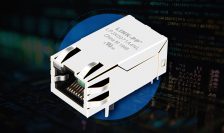
Analisi del magjack RJ45 LINK-PP LPJK0071AINL 100/1000 Base-T, con particolare attenzione alle sue magnetics integrate, alla schermatura EMI e alle prestazioni Ethernet ad alta velocità.
Confronta i transceiver XFP e SFP+: XFP offre prestazioni ad alta velocità su lunghe distanze, mentre SFP+ è compatto, energeticamente efficiente e ideale per compiti a breve distanza.
Power Over Ethernet (PoE) combines power and data delivery via a single cable, simplifying installations for devices like IP cameras, VoIP phones, and IoT systems.
Le certificazioni di qualità come ISO 9001:2015, RoHS e FCC garantiscono che i trasceivers ottici rispettino rigorosi standard di affidabilità, conformità e prestazioni.
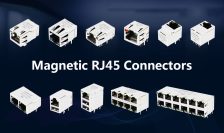
Un connettore RJ45 con magnetics integra trasformatori e induttori per migliorare la qualità del segnale, ridurre le interferenze elettromagnetiche (EMI) e semplificare i progetti. Ideale per l’uso con presa RJ45 magnetica.
I transceiver a fibra singola, come il transceiver Bidi, utilizzano una sola fibra per i dati bidirezionali, mentre i transceiver a doppia fibra richiedono due fibre per TX e RX separate.
I connettori RJ45 integrati LINK-PP offrono magnetics integrati, schermatura EMI, supporto PoE e velocità Ethernet elevate, garantendo reti affidabili ed efficienti.
COB, BOX, and TO-CAN packaging impact optical devices by balancing size, cost, and reliability. Learn how COB excels in compact, high-speed applications.
Scopri cosa è uno switch MoR (Middle-of-Rack), come lo MoR si confronta con ToR/EoR, e quali moduli SFP+/SFP28/QSFP funzionano meglio — una guida pratica per la progettazione dei data center.
Scopri cos’è uno switch ToR (Top-of-Rack), come funziona l’architettura ToR e perché è il modello di rete preferito nei moderni data center. Include vantaggi, casi d’uso e soluzioni compatibili di transceiver ottici da LINK-PP.
WLAN comprende tutte le reti locali wireless, mentre Wi-Fi è un tipo specifico di WLAN che utilizza standard definiti per connessioni veloci e affidabili.
HTTP vs HTTPS: HTTPS crittografa i dati per una trasmissione sicura, mentre HTTP lascia le informazioni esposte. Scegli HTTPS per privacy, fiducia e conformità.
Scopri cos’è un backplane, come i canali backplane supportano Ethernet ad alta velocità da 40G/100G, gli standard chiave e le sfide progettuali. Scopri come i connettori LINK-PP RJ45 migliorano le prestazioni del backplane.
Impara lo standard IEEE 802.3bj per Ethernet da 100G su backplane e interconnessioni in cavo di rame. Esplora PAM4, FEC e i PHY KP4/KR4/CR4, e come i moduli LINK-PP supportano reti ad alta velocità.
Scopri il ruolo del Gearbox nei moderni transceiver ottici. Impara come consente l’allineamento dei canali, la conversione di velocità e il breakout per reti da 50G, 100G e 200G.
Scopri cosa definisce IEEE 802.3cd per Ethernet 50G, 100G e 200G. Esplora la tecnologia PAM4, i principali PMD, gli scenari di impiego e i transceiver ottici LINK-PP adatti.
What Frame Check Sequence (FCS) means, how CRC-32 detects corrupted Ethernet frames, and why FCS errors are commonly associated with cable faults, fiber issues, or optical transceiver problems.
Discover how optical cross‑connect (OXC) enables all‑optical switching in DWDM/OTN networks, with LINK‑PP SFP modules ensuring seamless integration and superior performance.
Learn what Dispersion Compensation Fiber (DCF) is, how it reduces chromatic dispersion, where it is used, and why it matters in modern optical networks.
Learn what OEO means in optical communication, how optical-electrical-optical regeneration works, and when it is used in DWDM networks and optical links. Keywords:
Discover the LQ‑SW40‑SR4C 40GBASE‑SR module: high-speed, low-power, QSFP+ optics for multimode fibre networks. Perfect for data centres and network upgrades.
Learn what hyperconverged infrastructure HCI is, how it compares with virtualization and dHCI, and when Nutanix, Sangfor, or SFP-based designs fit best.