Scopri cosa è uno switch MoR (Middle-of-Rack), come lo MoR si confronta con ToR/EoR, e quali moduli SFP+/SFP28/QSFP funzionano meglio — una guida pratica per la progettazione dei data center.
Scopri cosa sono gli switch EoR (End-of-Row), come funziona l'architettura, i loro vantaggi e svantaggi, le differenze tra EoR e ToR, le migliori pratiche di implementazione e i moduli ottici consigliati.
AWS (Amazon Web Services) alimenta il calcolo cloud globale con servizi scalabili e reti di data center ad alta velocità. Scopri i concetti base di AWS, l'architettura e come i moduli ottici supportino la connettività AWS.
Il ruolo dell'SDN nell'interconnessione dei data center consente l'automazione, il controllo centralizzato, la scalabilità e la gestione sicura ed efficiente della rete.
Il Multi-Gig Ethernet aumenta le velocità di rete fino a 2,5, 5 o 10Gbps utilizzando cavi esistenti, rendendo gli aggiornamenti semplici per una trasmissione streaming, gaming e trasferimenti file più veloci.
Scopri cos’è uno switch ToR (Top-of-Rack), come funziona l’architettura ToR e perché è il modello di rete preferito nei moderni data center. Include vantaggi, casi d’uso e soluzioni compatibili di transceiver ottici da LINK-PP.
Scopri l’equalizzatore con feedback decisionale (DFE), la tecnica non lineare essenziale per ridurre al minimo l’ISI. Impara come il DFE migliora il BER dei bit nei transceiver ottici e nei collegamenti dati a lunga distanza.
Scopri cos’è l’FFE (equalizzatore feed-forward), come funziona l’equalizzazione in trasmissione e perché l’FFE è essenziale per i moduli ottici ad alta velocità e per l’integrità del segnale SerDes.
I moduli da 100 G con singolo lambda garantiscono velocità superiori, minore consumo energetico e aggiornamenti più semplici per data center e reti telecom.
Scopri come i connettori RJ45 integrati supportano dati e alimentazione — coprendo gli standard IEEE PoE, la corrente nominale per contatto/coppia e le informazioni affidabili sui prodotti LINK-PP.
Scopri come i moduli SFP+ LINK-PP rispettano lo standard dell’interfaccia elettrica SFF-8431, garantendo l’integrità del segnale a 10 Gb/s, la compatibilità con l’host e le diagnosi in tempo reale
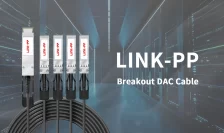
Un cavo DAC breakout collega una porta ad alta velocità a diverse porte a velocità inferiore, consentendo connessioni di rete rapide, economiche e affidabili su brevi distanze.
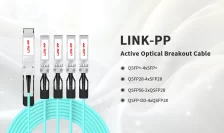
Un cavo AOC breakout suddivide una porta ad alta velocità in più porte, offrendo connessioni di rete rapide, flessibili ed energeticamente efficienti per i data center del 2025.
Lo standard GR-468-CORE Telcordia rappresenta il riferimento globale per l'affidabilità dei componenti ottici. Scopri come i moduli ottici LINK-PP soddisfano i requisiti GR-468.
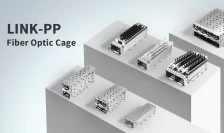
Seleziona la migliore custodia per fibra ottica considerando compatibilità, densità di porte, gestione termica (opzioni di dissipatori di calore), integrazione di light pipe, schermatura EMI, ecc.
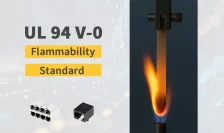
Cos’è UL94 V-0? Scopri la classificazione più rigorosa in materia di sicurezza antincendio, il suo reale valore per gli acquisti, gli scenari di conformità e soluzioni di rete certificate UL94 V-0 LINK-PP.
Scopri i test di saldabilità J-STD-002 e come le soluzioni integrate LINK-PP — RJ45, trasformatori LAN, prese modulari e custodie per fibra ottica — soddisfano questo standard.
What Frame Check Sequence (FCS) means, how CRC-32 detects corrupted Ethernet frames, and why FCS errors are commonly associated with cable faults, fiber issues, or optical transceiver problems.
Discover how optical cross‑connect (OXC) enables all‑optical switching in DWDM/OTN networks, with LINK‑PP SFP modules ensuring seamless integration and superior performance.
Learn what Dispersion Compensation Fiber (DCF) is, how it reduces chromatic dispersion, where it is used, and why it matters in modern optical networks.
Learn what OEO means in optical communication, how optical-electrical-optical regeneration works, and when it is used in DWDM networks and optical links. Keywords:
Discover the LQ‑SW40‑SR4C 40GBASE‑SR module: high-speed, low-power, QSFP+ optics for multimode fibre networks. Perfect for data centres and network upgrades.
Learn what hyperconverged infrastructure HCI is, how it compares with virtualization and dHCI, and when Nutanix, Sangfor, or SFP-based designs fit best.
Understand SFP+ 40km (10GBASE-ER) modules, including specs, SMF compatibility, and how to choose the right extended-reach optical transceiver for your network.
Subscribe to LINK-PP
newsletter
Don’t miss anything. Get all the latest posts delivered straight to your inbox.