I moduli ottici consentono collegamenti a velocità elevate e bassa latenza per i fronthaul, midhaul e backhaul. Scopri come i tipi di trasmissore, gli standard e le esigenze di installazione definiscono le reti di telecomunicazioni moderne.
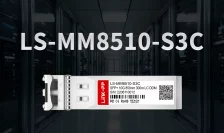
Scopri il LINK-PP LS-MM8510-S3C, sostituzione conforme allo standard MSA 100% e pienamente compatibile con il Juniper EX-SFP-10GE-SR. Risparmia fino al 60% senza compromettere le prestazioni. Include supporto DDM/DOM. Ideale per reti data center ed enterprise.
Explore what a telecom network is, how it works, and its role in 5G. Learn opportunities, challenges, and how LINK‑PP solutions support next-gen networks.
Esplora come le soluzioni di connettività RJ45 Magjack da LINK-PP migliorano l'infrastruttura delle telecomunicazioni, aumentando la affidabilità, il supporto PoE e l'integrazione per le reti del futuro.
Scopri come TSN (Time-Sensitive Networking) garantisce una consegna deterministica, a bassa latenza e affidabile dei dati nelle reti Ethernet per l’Industria 4.0 e il settore automobilistico.
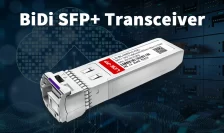
Massimizza l’efficienza della rete con LS-Scopri consigli pratici e linee guida per le migliori pratiche di implementazione del modulo BiDi SFP+ LINK-PP LS-BL332710-60C da 10G (60 km). Impara quando scegliere la tecnologia BiDi, come verificare i collegamenti e utilizzare gli elenchi di controllo per l’implementazione.
Il Machine Learning (ML) consente ai computer di apprendere dai dati, identificare schemi e formulare previsioni, alimentando strumenti come gli assistenti vocali e i sistemi di raccomandazione.
VRF vs VLAN illustra le principali differenze, gli scenari d’uso e i vantaggi in termini di sicurezza di ciascun metodo di segmentazione della rete, per aiutarti a scegliere la soluzione più adatta.
Scopri cosa definisce l’SFP28 MSA (Small Form-factor Pluggable 28 Multi-Source Agreement), perché è fondamentale per l’Ethernet 25G e come garantisce l’interoperabilità dei moduli.
Il Virtual Routing and Forwarding (VRF) consente di disporre di più tabelle di routing private su un singolo dispositivo, migliorando la sicurezza della rete, la segmentazione e la gestione del traffico.
What are SFP ports on a switch? Learn how SFP ports support fiber and Ethernet connections, how they compare with RJ45 and SFP+, and which module you need.
An SGMII SFP transceiver enables fast Ethernet connections over copper or fiber, supporting flexible speeds and device compatibility in modern networks.
What Frame Check Sequence (FCS) means, how CRC-32 detects corrupted Ethernet frames, and why FCS errors are commonly associated with cable faults, fiber issues, or optical transceiver problems.
Discover how optical cross‑connect (OXC) enables all‑optical switching in DWDM/OTN networks, with LINK‑PP SFP modules ensuring seamless integration and superior performance.
Learn what Dispersion Compensation Fiber (DCF) is, how it reduces chromatic dispersion, where it is used, and why it matters in modern optical networks.
Learn what OEO means in optical communication, how optical-electrical-optical regeneration works, and when it is used in DWDM networks and optical links. Keywords:
Il transceiver ottico LINK-PP LS-MM8510-S3C corrisponde all’Aruba J9150D per velocità, compatibilità e affidabilità, offrendo una sostituzione economica e senza interruzioni.
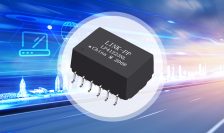
Scopri il trasformatore magneto PoE+ LINK-PP LP41223NL per Ethernet 10/100 Base-T. Isolamento elevato, perdite ridotte e ideale per dispositivi di rete PoE/PoE+.
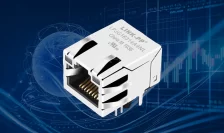
Il connettore RJ45 a singola porta LPJG16314A4NL offre magnetics integrati, schermatura EMI e indicatori LED per un’Ethernet 10/100/1000 Base-T affidabile.
Scopri come i trascevitori SFP/SFP+ ad alte prestazioni di LINK-PP abilitano connettività a bassa latenza e scalabile per database moderni e data center. Esplora le specifiche tecniche, gli scenari d’uso e i consigli per l’integrazione.
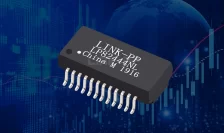
LP82444NL PoE LAN Transformer boosts network reliability, signal integrity, and power delivery for efficient, safe, and high-speed modern Ethernet applications.
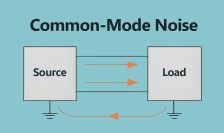
Comprendi il rumore in modo comune: cos’è, come influisce sull’Ethernet/EMI e come sopprimerlo mediante componenti magnetici e filtri. Una guida pratica per ingegneri.
Scopri come i circuiti integrati (IC) interagiscono con i prodotti LINK-PP, quali connettori RJ45, trasformatori LAN e trasceivers ottici. Esplora le applicazioni in Ethernet, PoE e data center.
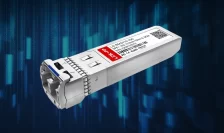
Il transceiver BiDi SFP+ LS-BL495510-A0C offre una portata di 100 km, riduce l’uso di fibre e consente un’installazione semplice per connessioni di rete affidabili a lunga distanza.
Confronta i trascevitori 10G SFP+ LR e 25G SFP28 LR a 1310 nm per collegamenti su fibra monomodale (SMF) fino a 10 km. Scopri le differenze in termini di throughput, consumo energetico, tipo di laser, costo e quando procedere all’aggiornamento. Esplora i modelli LINK-PP.